 Roofing Cost Calculator
Your Complete Homeowner's Guide (2026)
Replacing a roof is one of the biggest investments a homeowner can make, but waiting too long can lead to expensive water damage, mold growth, structural issues, and reduced energy efficiency. The challenge is knowing when a roof has reached the end of its service life.
While some roofing problems can be repaired, others indicate that a full replacement is the safer and more cost-effective solution. Understanding these warning signs can help you avoid emergency repairs and better plan your budget.
This guide explains the most common signs that a roof needs replacing, when repairs may still be an option, and how to decide on the next steps.
Why Early Detection Matters
A roof protects your home from rain, snow, wind, sunlight, and changing temperatures every day. Small problems often develop gradually and may go unnoticed until they become major issues.
Replacing a roof before severe damage occurs can:
- Prevent interior water damage
- Protect insulation and structural framing
- Improve energy efficiency
- Increase property value
- Reduce the likelihood of costly emergency repairs
Regular inspections are one of the best ways to identify problems before they worsen.
1. Your Roof Is Near the End of Its Lifespan
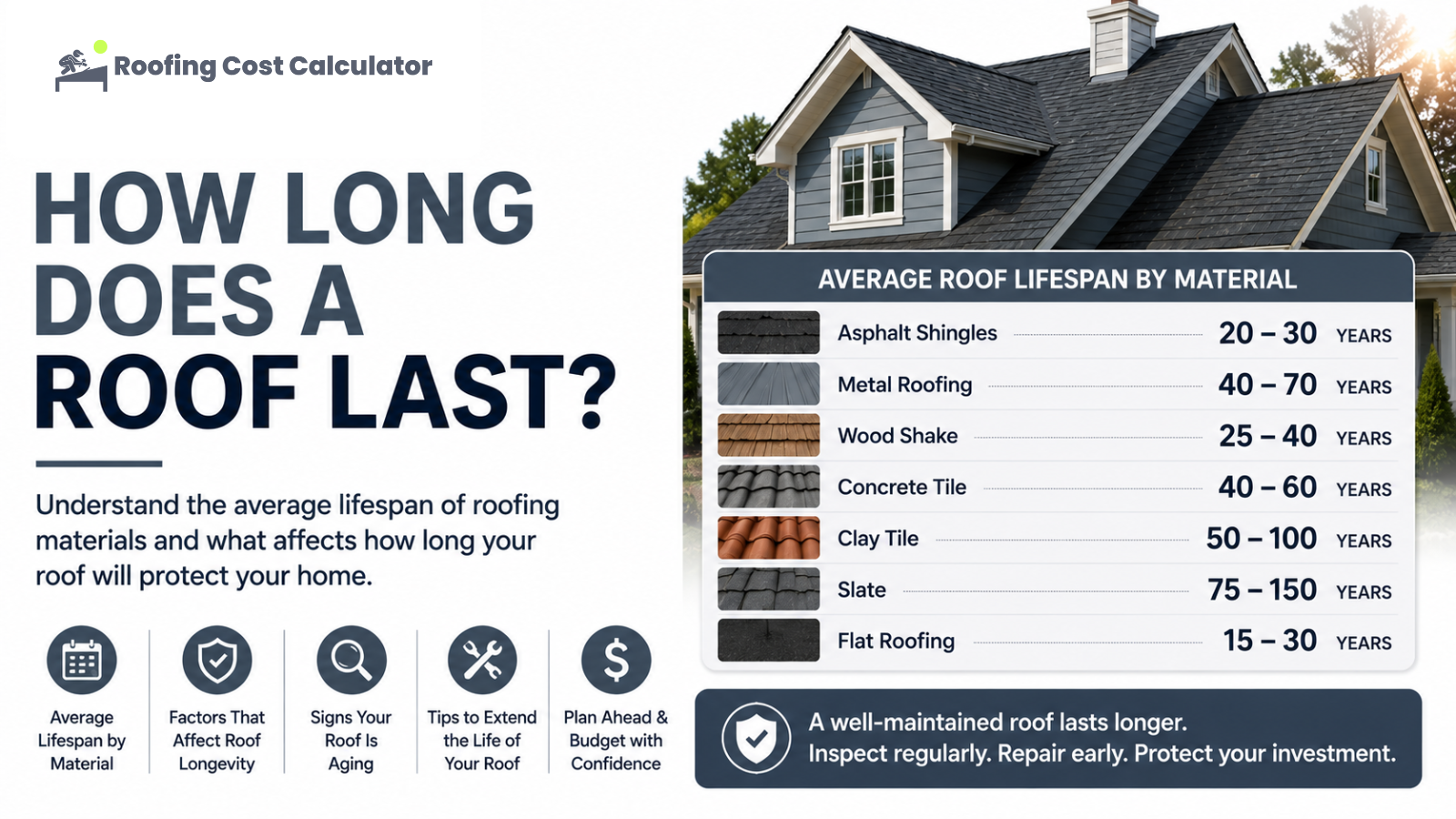
Every roofing material has an expected service life.
| Roofing Material | Typical Lifespan |
|---|---|
| Asphalt Shingles | 20–30 years |
| Architectural Shingles | 25–35 years |
| Metal Roofing | 40–70 years |
| Wood Shake | 25–40 years |
| Clay Tile | 50–100 years |
| Concrete Tile | 40–60 years |
| Slate | 75–150 years |
If your roof is approaching or exceeding its expected lifespan, it's a good idea to schedule a professional inspection—even if it still appears to be in reasonable condition.
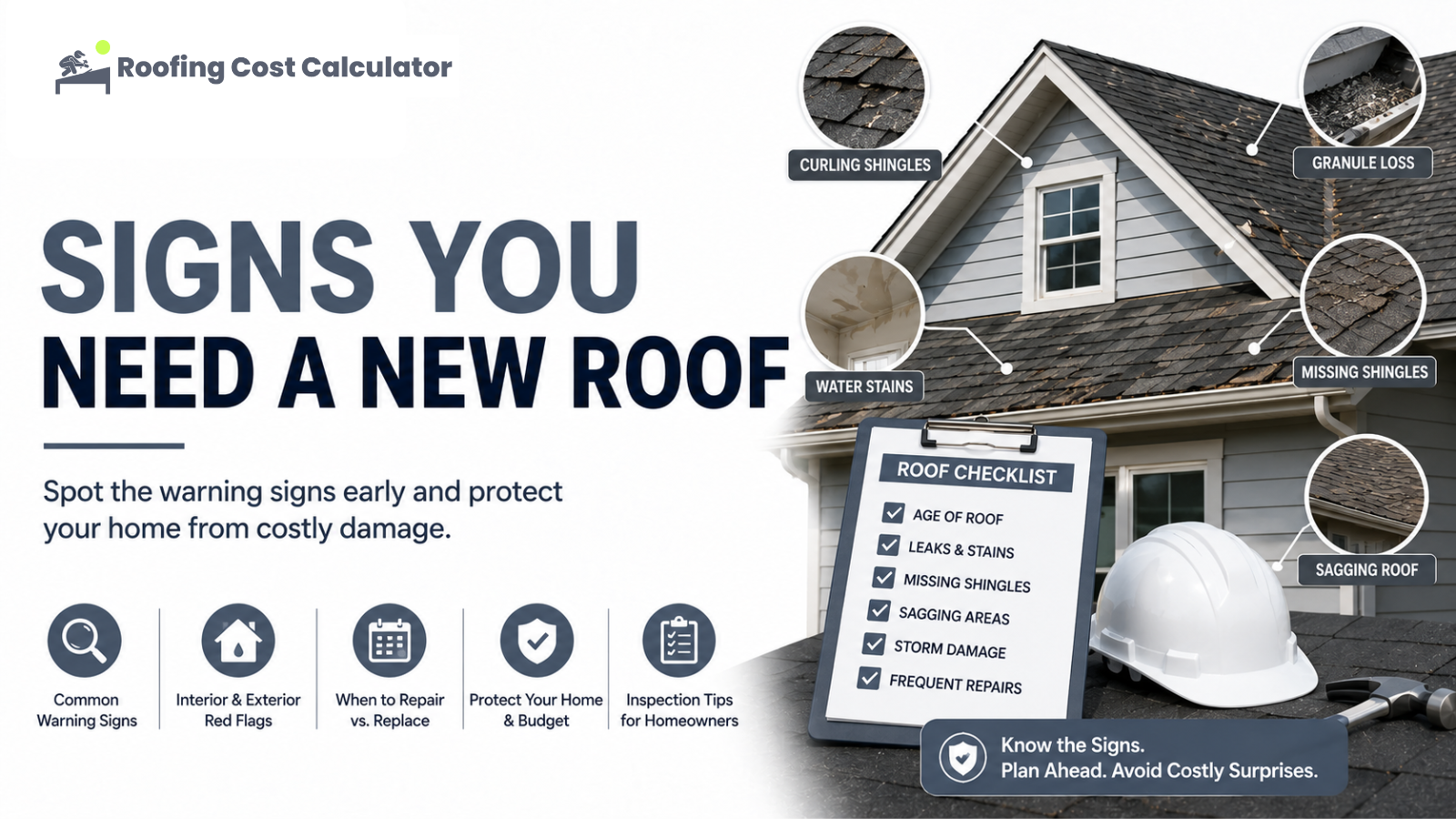
2. Missing or Damaged Shingles
Missing shingles expose the underlayment to the weather, allowing water to reach the roof deck.
Look for:
- Missing shingles
- Broken shingles
- Cracked shingles
- Loose shingles
- Curled edges
- Lifted corners
A few damaged shingles can often be replaced, but widespread deterioration usually indicates that the roof is nearing the end of its useful life.
3. Granules Collecting in Gutters
Asphalt shingles lose protective granules as they age.
Check your gutters after heavy rain.
Large amounts of dark, sand-like granules may indicate that the shingles are wearing out and becoming less effective at protecting the roof from UV damage.
4. Water Leaks Inside the Home
Water stains on ceilings or walls are among the clearest warning signs of roof problems.
Watch for:
- Brown ceiling stains
- Damp drywall
- Mold growth
- Peeling paint
- Dripping water during rainstorms
Not every leak requires a complete roof replacement, but repeated leaks in different locations often suggest widespread roofing deterioration.
5. Sagging Roof Areas
A sagging roof should never be ignored.
Possible causes include:
- Water damage
- Rotten roof decking
- Structural issues
- Excessive weight
- Long-term moisture infiltration
Because sagging may indicate structural damage, it should be inspected by a qualified roofing professional as soon as possible.
6. Daylight Visible in the Attic
Visit your attic on a sunny day.
If you can see daylight entering through the roof boards, moisture can likely enter as well.
Also look for:
- Wet insulation
- Mold
- Damp wood
- Water stains
These signs may indicate that the roof covering or underlying structure has been compromised.
7. Moss, Algae, or Extensive Vegetation
Small amounts of algae are usually cosmetic.
However, heavy moss growth can trap moisture against the roof surface, accelerating deterioration.
If moss repeatedly returns after cleaning, it may indicate that the roof is retaining excessive moisture or has reached the end of its lifespan.
8. Storm Damage
Severe weather can shorten a roof's life considerably.
After major storms, inspect for:
- Missing shingles
- Impact marks
- Lifted flashing
- Damaged vents
- Fallen branches
- Visible holes
Even if damage appears minor, hidden problems may exist beneath the roofing material.
9. Rising Energy Bills
A failing roof can reduce your home's energy efficiency.
Damaged roofing materials and poor attic ventilation may allow heat to escape during winter and enter during summer, increasing heating and cooling costs.
While insulation also plays a role, an aging roof may contribute to higher utility bills.
10. Multiple Previous Repairs
If you've repaired your roof several times over the past few years, replacement may become the more economical choice.
Frequent repairs can add up quickly, especially if the underlying roofing system continues to deteriorate.
A professional inspection can help determine whether additional repairs are worthwhile or if replacement is the better long-term investment.
Repair or Replace?
In many cases, a repair is sufficient.
Repairs are generally appropriate when:
- Damage is limited to a small area.
- The roof is relatively new.
- The underlying structure is in good condition.
Replacement may be the better option when:
- The roof has reached the end of its lifespan.
- Damage affects multiple areas.
- Leaks occur repeatedly.
- Structural deterioration is present.
- Repair costs continue to increase.
Tips for Homeowners
- Inspect your roof twice each year.
- Check after major storms.
- Keep gutters clean.
- Trim overhanging tree branches.
- Address minor damage promptly.
- Schedule periodic professional inspections.
Preventive maintenance can often extend the life of a roof and reduce long-term costs.
Frequently Asked Questions
How often should a roof be inspected?
Most homeowners should inspect their roof visually in spring and fall, with a professional inspection every few years or after severe storms.
Can a roof last longer than its expected lifespan?
Yes. Proper installation, regular maintenance, favorable weather conditions, and quality materials can all extend a roof's service life.
Is a leaking roof always a sign that replacement is necessary?
Not necessarily. Some leaks can be repaired successfully, particularly if the roof is relatively new and the damage is localized.
Should I replace my roof before selling my home?
It depends on the roof's condition and your local real estate market. A new roof may improve buyer confidence and reduce negotiation over repair costs.
Can I install a new roof over the existing one?
Building codes and roofing conditions vary by location. In some cases, an additional layer may be permitted, but a complete tear-off is often recommended for better long-term performance.
Final Thoughts
Recognizing the warning signs of roof deterioration can help homeowners avoid costly surprises and make informed decisions about maintenance and replacement. While some issues can be repaired, widespread damage, repeated leaks, or an aging roof often indicate that replacement is the better long-term investment.
If your roof is showing several of the signs discussed in this guide, consider arranging a professional inspection and using our Roofing Cost Calculator to estimate the potential cost of your project before requesting contractor quotes.