 Roofing Cost Calculator
A Homeowner's Guide to Hiring the Right Professional (2026)
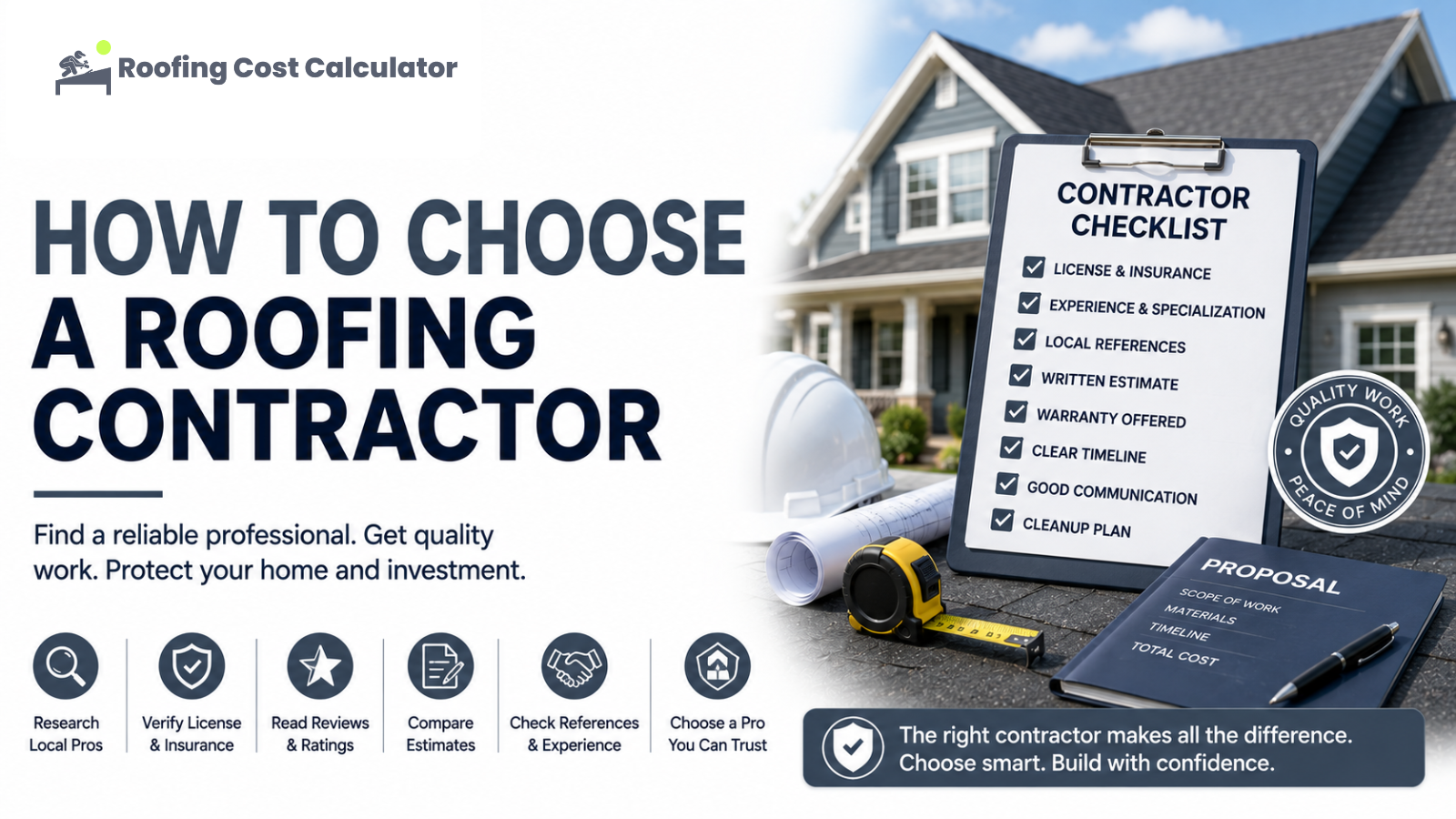
Replacing or repairing a roof is a major investment, and the contractor you choose can have a significant impact on the quality, durability, and overall success of the project. Even the best roofing materials can fail prematurely if they are installed incorrectly, while a skilled contractor can help ensure your new roof performs as expected for decades.
With so many roofing companies advertising their services, it can be difficult to know who to trust. Taking time to compare contractors, verify credentials, and ask the right questions can help you avoid costly mistakes and feel more confident throughout the process.
This guide explains what to look for when hiring a roofing contractor, the questions to ask before signing a contract, and common warning signs to avoid.
Why Choosing the Right Contractor Matters
A roof protects your home from weather, moisture, and temperature extremes every day. Poor workmanship can lead to leaks, structural damage, reduced energy efficiency, and expensive repairs long after the installation is complete.
Choosing an experienced and reputable contractor can provide benefits such as:
- Proper installation techniques
- High-quality workmanship
- Manufacturer-compliant installation
- Better warranties
- Reliable communication
- Reduced risk of future repairs
A lower price is not always the best value if workmanship is compromised.
Start With Local Roofing Companies
Whenever possible, begin your search with established local roofing contractors.
Local companies often:
- Understand regional building codes.
- Have experience with local weather conditions.
- Are easier to contact if warranty work is needed.
- Have an established reputation within the community.
A contractor with several years of local experience is generally a safer choice than someone who appears only after major storms.
Verify Licensing and Insurance
Before requesting an estimate, confirm that the contractor meets your area's licensing requirements.
You should also verify that they carry appropriate insurance, including:
- General liability insurance
- Workers' compensation insurance (where applicable)
Insurance helps protect both the homeowner and the contractor if an accident occurs during the project.
Read Reviews Carefully
Online reviews can provide valuable insight into a contractor's reputation.
Look for consistent comments about:
- Work quality
- Communication
- Timeliness
- Professionalism
- Cleanup
- Warranty service
Rather than focusing on one or two reviews, look for overall patterns across multiple review platforms.
Ask About Experience
Not every roofing contractor specializes in every roofing material.
Ask questions such as:
- How long have you been installing this roofing material?
- How many similar projects have you completed?
- Do you specialize in residential roofing?
- Can you provide references?
Experience with your specific roofing system can help reduce installation errors.
Request Multiple Estimates
Obtaining at least three written estimates allows you to compare:
- Total project cost
- Materials
- Labor
- Warranty coverage
- Estimated completion time
Be cautious of unusually low bids. A significantly cheaper estimate may indicate lower-quality materials, incomplete work, or unexpected additional charges later.
Understand the Scope of Work
Before signing a contract, make sure you understand exactly what is included.
A detailed estimate should specify:
- Roofing material
- Underlayment
- Flashing replacement
- Ventilation improvements
- Tear-off of old roofing
- Disposal of debris
- Cleanup
- Estimated timeline
The more detailed the proposal, the fewer surprises you are likely to encounter.
Ask About Warranties
Most roofing projects include two types of warranties.
Manufacturer Warranty
Covers defects in roofing materials.
Workmanship Warranty
Covers installation-related issues performed by the contractor.
Understanding both warranties helps clarify what is covered after the project is completed.
Don't Base Your Decision on Price Alone
While budget is important, choosing the lowest estimate is not always the best decision.
Instead, consider:
- Experience
- Reputation
- Communication
- Materials
- Warranty
- Overall value
A quality installation may save thousands of dollars in future repairs.
Warning Signs to Watch For
Some contractors should be approached with caution.
Potential warning signs include:
- High-pressure sales tactics
- Requests for full payment upfront
- No written estimate
- No physical business address
- Lack of insurance
- Extremely low pricing
- Poor communication
- Reluctance to answer questions
Trustworthy contractors are generally transparent and willing to explain every aspect of the project.
Questions to Ask Before Hiring
Consider asking the following questions during the estimate process:
- Are you licensed and insured?
- How long have you been in business?
- Can you provide references?
- What roofing materials do you recommend?
- How long will the project take?
- Will permits be required?
- How will the property be protected during installation?
- Who supervises the crew?
- What warranties are included?
- How will cleanup be handled?
These questions can help you compare contractors more effectively.
Preparing Before Work Begins
Once you've selected a contractor, you can help the project run smoothly by:
- Moving vehicles away from the work area.
- Protecting items stored in the attic.
- Informing neighbors about the project.
- Removing fragile decorations from walls if heavy vibrations are expected.
- Securing pets during construction.
A little preparation can reduce disruptions while work is underway.
Frequently Asked Questions
How many roofing estimates should I get?
Most homeowners benefit from comparing at least three written estimates before making a decision.
Should I choose the cheapest roofing contractor?
Not necessarily. Consider experience, workmanship, warranties, and reputation in addition to price.
Is it important for a contractor to be insured?
Yes. Proper insurance helps protect homeowners from liability if accidents occur during the project.
How long should a roof replacement take?
Many residential roof replacements are completed within one to several days, although project duration depends on roof size, weather conditions, and complexity.
Can I stay in my home during roof replacement?
In many cases, yes. However, homeowners should expect noise and vibrations throughout the installation process.
Final Thoughts
Hiring the right roofing contractor is one of the most important decisions you'll make during a roof repair or replacement project. By comparing multiple estimates, verifying credentials, asking detailed questions, and reviewing warranties carefully, homeowners can make informed decisions and reduce the likelihood of costly problems later.
Before requesting estimates, use our Roofing Cost Calculator to develop a preliminary budget and better understand the potential cost of your roofing project.