 Roofing Cost Calculator
A Complete Homeowner's Guide to Roof Lifespan (2026)
Your roof is one of the hardest-working parts of your home. Every day it protects your family from rain, snow, hail, wind, intense sunlight, and changing temperatures. Like every part of a house, however, a roof has a limited lifespan.
Knowing how long a roof typically lasts can help homeowners plan ahead, avoid unexpected repairs, and budget for one of the largest home improvement projects they'll ever undertake.
Although roofing materials have estimated service lives, many factors—including climate, installation quality, maintenance, and weather—can significantly affect how long a roof remains in good condition.
This guide explains the average lifespan of different roofing materials, the factors that influence longevity, warning signs of an aging roof, and practical tips to maximize your roof's life.
Average Roof Lifespan by Material
Different roofing materials are designed to last for different lengths of time.
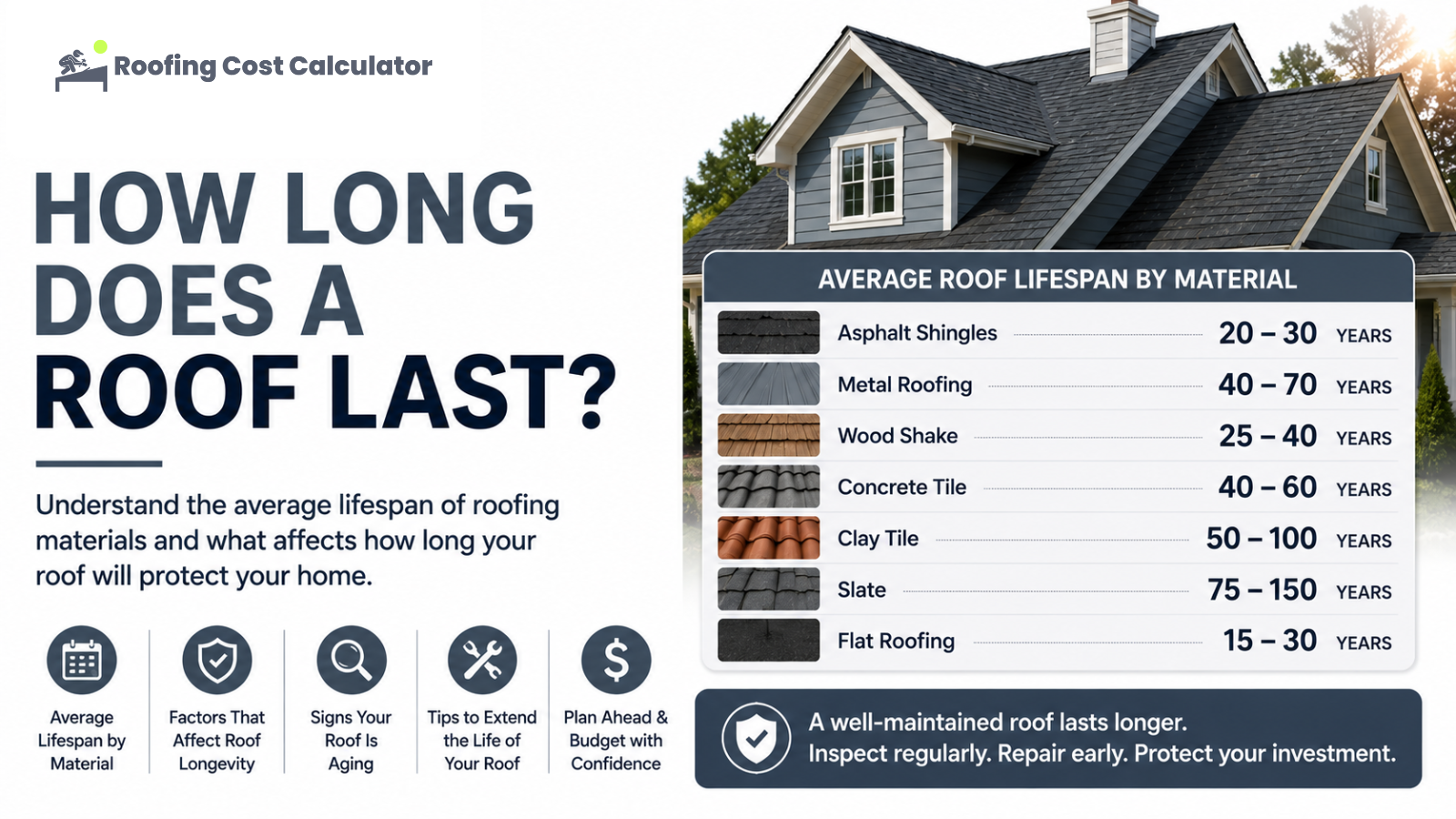
| Roofing Material | Typical Lifespan |
|---|---|
| Asphalt 3-Tab Shingles | 20–25 years |
| Architectural Shingles | 25–35 years |
| Metal Roofing | 40–70 years |
| Wood Shake | 25–40 years |
| Concrete Tile | 40–60 years |
| Clay Tile | 50–100 years |
| Slate Roofing | 75–150 years |
| Flat Roofing Systems | 15–30 years |
These figures represent typical expectations under normal conditions. Proper installation and regular maintenance can help many roofs last longer.
What Determines How Long a Roof Lasts?
Several factors influence the lifespan of a roof.
Roofing Material
The material itself is one of the biggest factors.
Premium roofing materials generally offer:
- Better weather resistance
- Longer manufacturer warranties
- Improved durability
- Lower maintenance requirements
However, they also tend to have higher installation costs.
Installation Quality
Even high-quality roofing materials may fail prematurely if they are installed incorrectly.
Proper installation includes:
- Correct fastening methods
- Proper flashing installation
- Adequate attic ventilation
- Correct underlayment
- Manufacturer-approved installation practices
Hiring an experienced roofing contractor is often just as important as selecting quality materials.
Local Climate
Weather conditions vary greatly across the United States.
Roofs in areas with frequent hailstorms, hurricanes, heavy snowfall, or extreme heat may experience faster wear than roofs in milder climates.
Factors that can shorten roof life include:
- UV exposure
- High winds
- Heavy rain
- Snow accumulation
- Ice dams
- Hail impacts
- Rapid temperature changes
Roof Maintenance
Routine maintenance helps identify small problems before they become expensive repairs.
Simple maintenance includes:
- Cleaning gutters
- Removing debris
- Trimming nearby tree branches
- Inspecting flashing
- Replacing damaged shingles promptly
Neglected roofs often deteriorate more quickly.
Attic Ventilation
Proper attic ventilation helps regulate temperature and moisture.
Poor ventilation can:
- Increase heat buildup during summer
- Trap moisture
- Shorten shingle life
- Promote mold growth
- Damage roof decking
Balanced intake and exhaust ventilation contribute to a healthier roofing system.
Signs Your Roof Is Near the End of Its Life
Even if your roof has not yet reached its expected lifespan, certain warning signs may indicate it is beginning to fail.
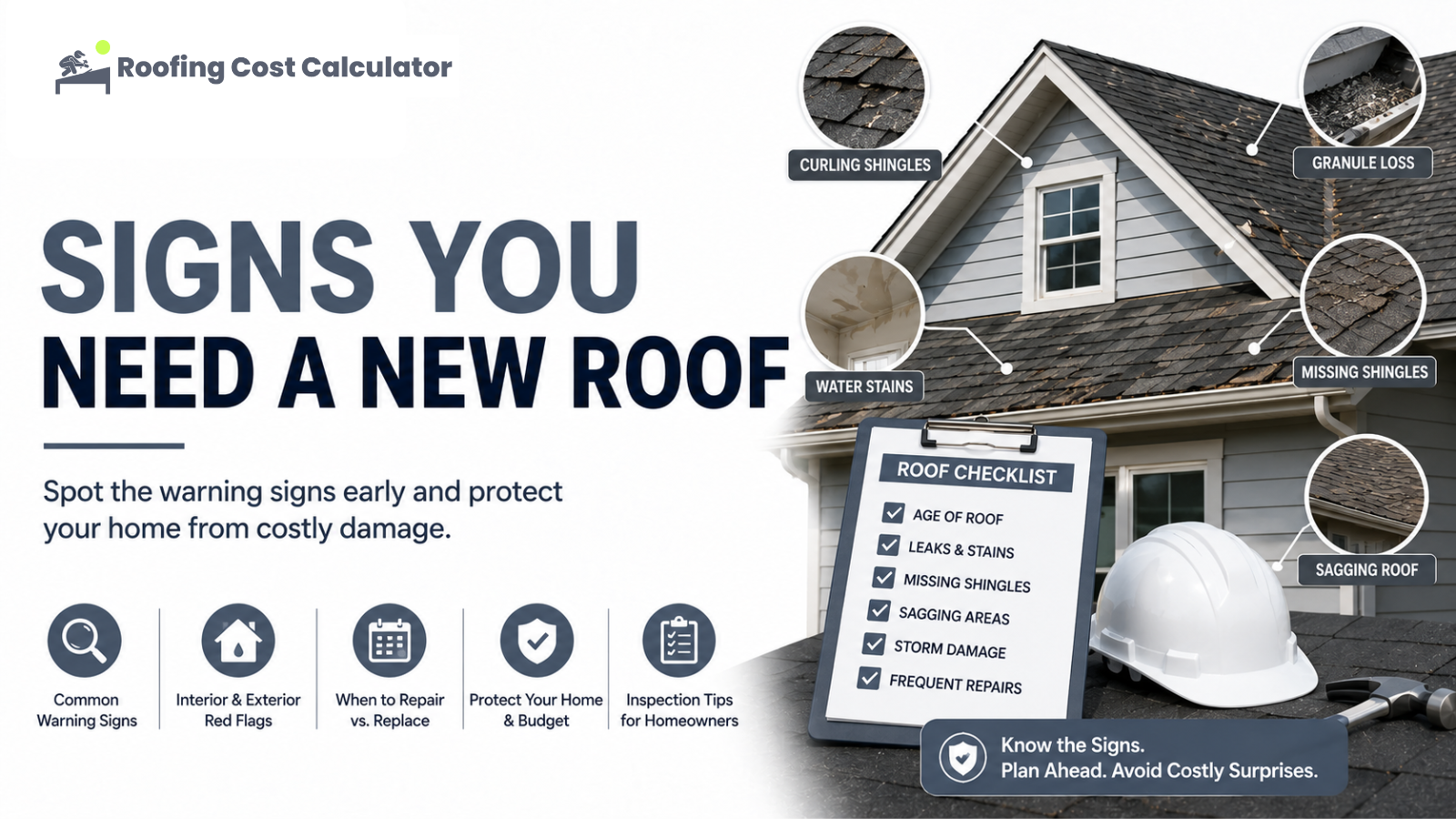
Common signs include:
- Curling shingles
- Cracked shingles
- Missing shingles
- Granules collecting in gutters
- Repeated leaks
- Water stains on ceilings
- Sagging roof sections
- Moss growth
- Loose flashing
- Rising repair costs
If several of these signs appear together, it may be time to arrange a professional inspection.
Can a Roof Last Longer Than Expected?
Yes.
Many roofs exceed their expected lifespan when they receive:
- Professional installation
- Regular maintenance
- Prompt repairs
- Good attic ventilation
- Favorable weather conditions
Conversely, severe storms or poor installation can significantly reduce a roof's lifespan.
How Often Should a Roof Be Inspected?
Most roofing professionals recommend:
- Visual inspections twice each year
- Additional inspections after major storms
- Professional inspections every few years, particularly as the roof ages
Regular inspections help identify problems before they become major repairs.
Does Roof Color Affect Lifespan?
Roof color mainly affects heat absorption rather than structural durability.
Lighter-colored roofs may stay cooler in warm climates, while darker roofs absorb more heat.
Although color alone rarely determines roof lifespan, temperature differences can influence long-term aging in certain climates.
How Weather Affects Roofing Materials
Hot Climates
Constant UV exposure can accelerate aging in asphalt shingles.
Cold Climates
Freeze-thaw cycles may stress roofing materials and increase the risk of ice dams.
Coastal Areas
Salt air can contribute to corrosion of some metal components.
Storm-Prone Regions
High winds and hail may shorten the service life of many roofing systems.
Choosing materials suited to the local climate can improve long-term performance.
Extending the Life of Your Roof
Homeowners can maximize roof life by following several simple practices.
Keep Gutters Clean
Blocked gutters allow water to back up beneath roofing materials.
Remove Debris
Leaves, branches, and other debris can trap moisture and promote deterioration.
Trim Overhanging Trees
Branches rubbing against roofing materials can cause damage during windy conditions.
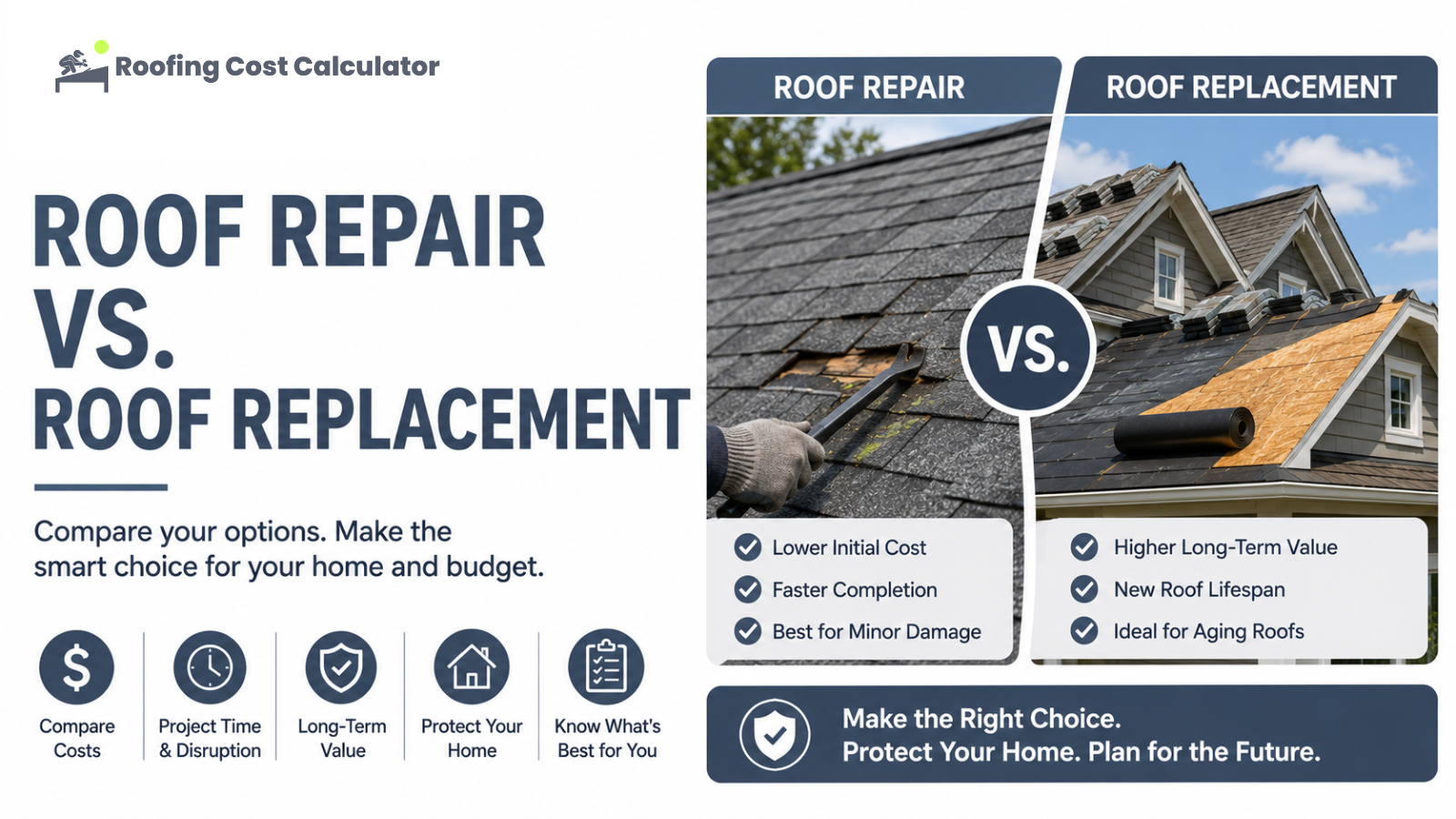
Address Minor Repairs Quickly
Replacing a few damaged shingles early is usually much less expensive than repairing widespread water damage later.
Schedule Professional Inspections
Routine inspections help identify hidden issues before they become costly.
Planning for Roof Replacement
Even a well-maintained roof will eventually require replacement.
Planning ahead allows homeowners to:
- Compare contractor estimates
- Select preferred roofing materials
- Budget gradually
- Avoid emergency replacement during severe weather
Replacing a roof before catastrophic failure often reduces overall project costs.
Frequently Asked Questions
What roofing material lasts the longest?
Natural slate is generally considered one of the longest-lasting roofing materials, with some roofs remaining in service for more than a century.
How long do asphalt shingles last?
Most asphalt shingle roofs last approximately 20 to 30 years, depending on the product, installation quality, maintenance, and local climate.
Can regular maintenance extend roof life?
Yes. Routine inspections, prompt repairs, clean gutters, and proper ventilation can help extend the lifespan of many roofing systems.
Does replacing a few shingles extend the roof's life?
Minor repairs can prolong the useful life of a roof when damage is limited. However, repairs cannot permanently reverse age-related deterioration across the entire roof.
Should I replace my roof if it's not leaking?
Not necessarily. A roof should be evaluated based on its overall condition, age, and inspection findings rather than leaks alone.
Final Thoughts
Every roof eventually reaches the end of its service life, but proper maintenance, quality installation, and timely repairs can help maximize its longevity. Understanding the expected lifespan of different roofing materials allows homeowners to plan ahead, avoid unexpected expenses, and make informed decisions about maintenance or replacement.
If your roof is approaching the end of its expected lifespan or showing signs of deterioration, consider scheduling a professional inspection and using our Roofing Cost Calculator to estimate the cost of a future replacement project.