 Roofing Cost Calculator
A Seasonal Guide for Homeowners (2026)
Replacing a roof is a major home improvement project, and timing can play an important role in both the installation process and the long-term performance of your new roof. While roofing projects can be completed during most times of the year, weather conditions, contractor availability, and local climate all influence the best time to schedule the work.
Many homeowners wait until a leak develops before considering a roof replacement. Unfortunately, emergency replacements often limit your options and may increase costs. Planning ahead allows you to compare contractors, choose your preferred materials, and schedule installation during favorable weather conditions.
This guide explains the advantages and disadvantages of replacing your roof during each season, factors to consider before scheduling your project, and practical tips to help you plan ahead.
Does the Time of Year Really Matter?
Yes—but perhaps not as much as many homeowners think.
Modern roofing materials can often be installed throughout much of the year when weather conditions are suitable. Experienced roofing contractors regularly complete projects during spring, summer, fall, and even winter in many parts of the United States.
However, temperature, moisture, snowfall, and severe weather can affect installation quality, scheduling, and project timelines.
Planning your project during favorable conditions may reduce delays and provide a smoother installation experience.
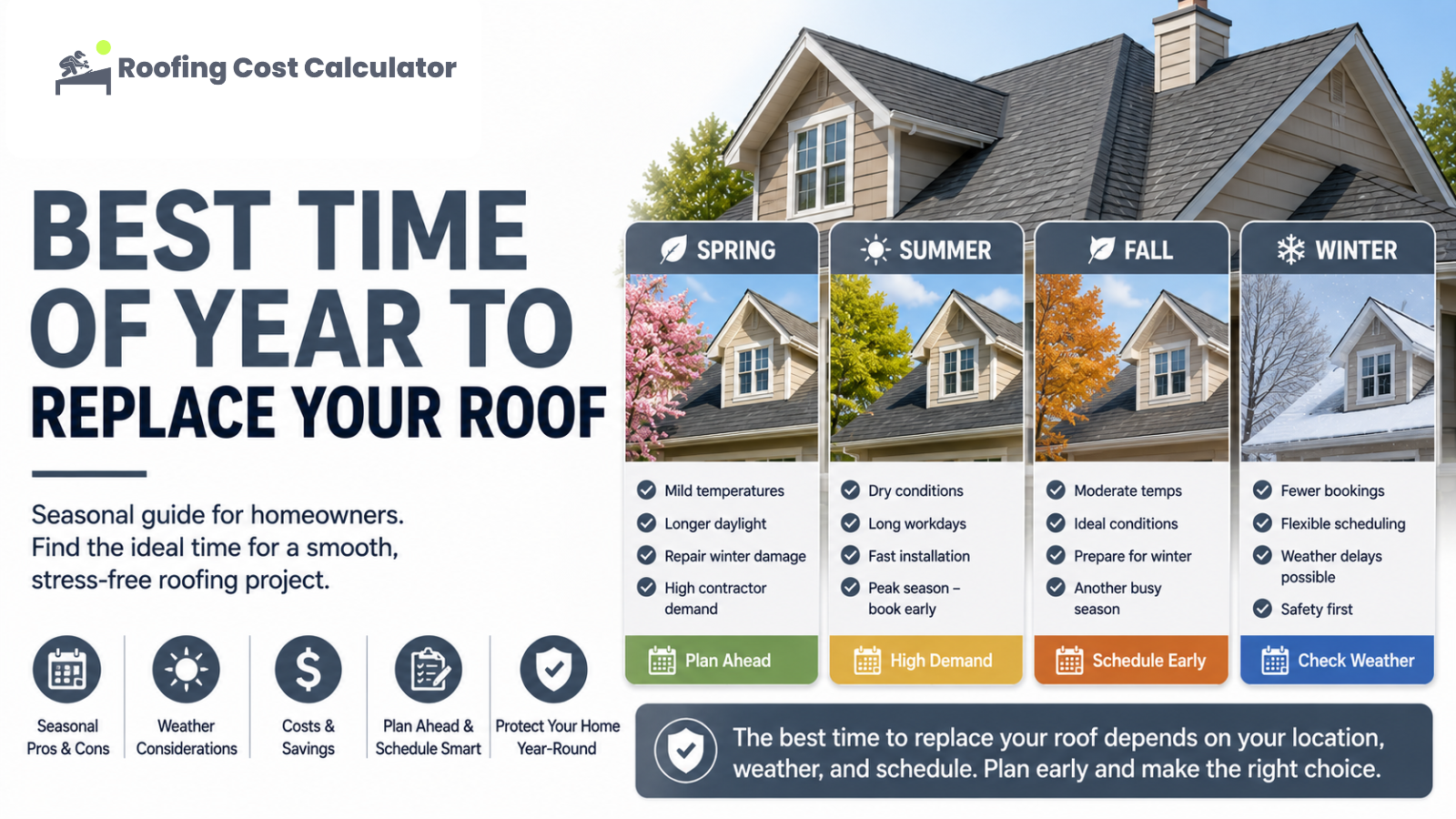
Spring Roof Replacement
Spring is one of the most popular seasons for roof replacement.
Advantages
- Mild temperatures
- Longer daylight hours
- Opportunity to repair winter damage
- Comfortable working conditions
Many homeowners discover roofing problems after snow and ice have melted, making spring an ideal time for inspections and replacement planning.
Considerations
Because demand often increases during spring, reputable contractors may begin booking projects several weeks in advance.
Scheduling early can help secure your preferred installation date.
Summer Roof Replacement
Summer offers excellent weather for roofing projects in many regions.
Advantages
- Consistently dry conditions
- Longer workdays
- Fewer weather interruptions
- Fast installation schedules
Warm temperatures also allow certain roofing materials, such as asphalt shingles, to seal effectively after installation.
Considerations
Extreme heat can make roofing work more challenging in southern states. During periods of excessive heat, contractors may adjust working hours to protect crews and maintain installation quality.
Summer is also one of the busiest seasons for roofing companies, so early scheduling is recommended.
Fall Roof Replacement
Many roofing professionals consider fall one of the best seasons for replacing a roof.
Advantages
- Moderate temperatures
- Lower humidity
- Favorable installation conditions
- Opportunity to prepare for winter
Because weather conditions are generally stable, fall often provides ideal circumstances for installing many roofing materials.
Considerations
High demand during fall can result in longer wait times.
Homeowners who wish to complete a project before winter should schedule estimates several weeks—or even months—in advance.
Winter Roof Replacement
Many homeowners assume roofing projects cannot be completed during winter. While snow, ice, and freezing temperatures may create challenges, winter roof replacement remains possible in many parts of the country.
Advantages
- Shorter contractor waiting lists
- Potential scheduling flexibility
- Emergency replacements can still be completed
Considerations
Winter weather may cause:
- Installation delays
- Snow interruptions
- Limited daylight
- Material handling challenges
Safety remains the highest priority during cold-weather installations.
How Climate Affects Timing
Northern States
Snow and freezing temperatures may shorten the roofing season.
Spring through early fall often provides the most favorable conditions.
Southern States
Extreme summer heat may make spring and fall more comfortable for both installers and homeowners.
Coastal Areas
Hurricane season should be considered when planning major roofing work.
Mountain Regions
Heavy snowfall may require earlier scheduling before winter weather arrives.
When You Shouldn't Wait
Although planning is beneficial, certain situations require immediate action regardless of the season.
Replace your roof promptly if you notice:
- Major leaks
- Structural damage
- Missing large sections of roofing
- Severe storm damage
- Sagging roof areas
- Exposed roof decking
Delaying necessary replacement can allow water damage to spread throughout the home.
Plan Ahead Instead of Waiting for Emergencies
Emergency roof replacement often limits your ability to:
- Compare estimates
- Choose preferred materials
- Research contractors
- Schedule convenient installation dates
Planning ahead gives homeowners more control over the entire process.
Questions to Ask Before Scheduling
Before selecting an installation date, consider:
- What is the current condition of my roof?
- How urgent is replacement?
- What weather is expected during the project?
- How busy are local roofing contractors?
- Will permits be required?
- Are my preferred roofing materials available?
Discussing these questions with a qualified contractor can help you choose an appropriate installation window.
Tips for Scheduling a Roof Replacement
- Arrange inspections before severe weather seasons.
- Request multiple written estimates.
- Schedule several weeks in advance during busy seasons.
- Monitor weather forecasts before installation begins.
- Allow flexibility for weather-related delays.
- Confirm material availability before finalizing the schedule.
Good planning often leads to a smoother installation experience.
Frequently Asked Questions
What is the best month to replace a roof?
There is no single best month for every homeowner. In many parts of the United States, spring and fall provide favorable weather conditions, but the ideal timing depends on your local climate and the condition of your roof.
Can a roof be replaced during winter?
Yes. Many roofing contractors perform winter installations when weather conditions permit, although snow, ice, and freezing temperatures may affect scheduling.
Should I wait until my roof leaks?
No. Replacing a roof before serious leaks develop can help prevent expensive interior damage and emergency repairs.
Are roofing prices lower during certain seasons?
Pricing varies by contractor, location, demand, and material costs. While some homeowners may find greater scheduling flexibility during slower seasons, overall pricing depends on many factors.
How far in advance should I schedule?
During busy seasons, scheduling several weeks—or even a few months—in advance may provide more flexibility and increase your chances of securing your preferred contractor.
Final Thoughts
Although roofs can often be replaced throughout the year, planning your project during favorable weather conditions can improve scheduling flexibility and reduce unexpected delays. The best time ultimately depends on your roof's condition, your local climate, and contractor availability. Most importantly, homeowners should avoid delaying necessary replacement when significant damage is present.
If you're considering replacing your roof, use our Roofing Cost Calculator to estimate your project's cost before requesting contractor quotes. Planning your budget early can help you compare options and make more informed decisions.