 Roofing Cost Calculator
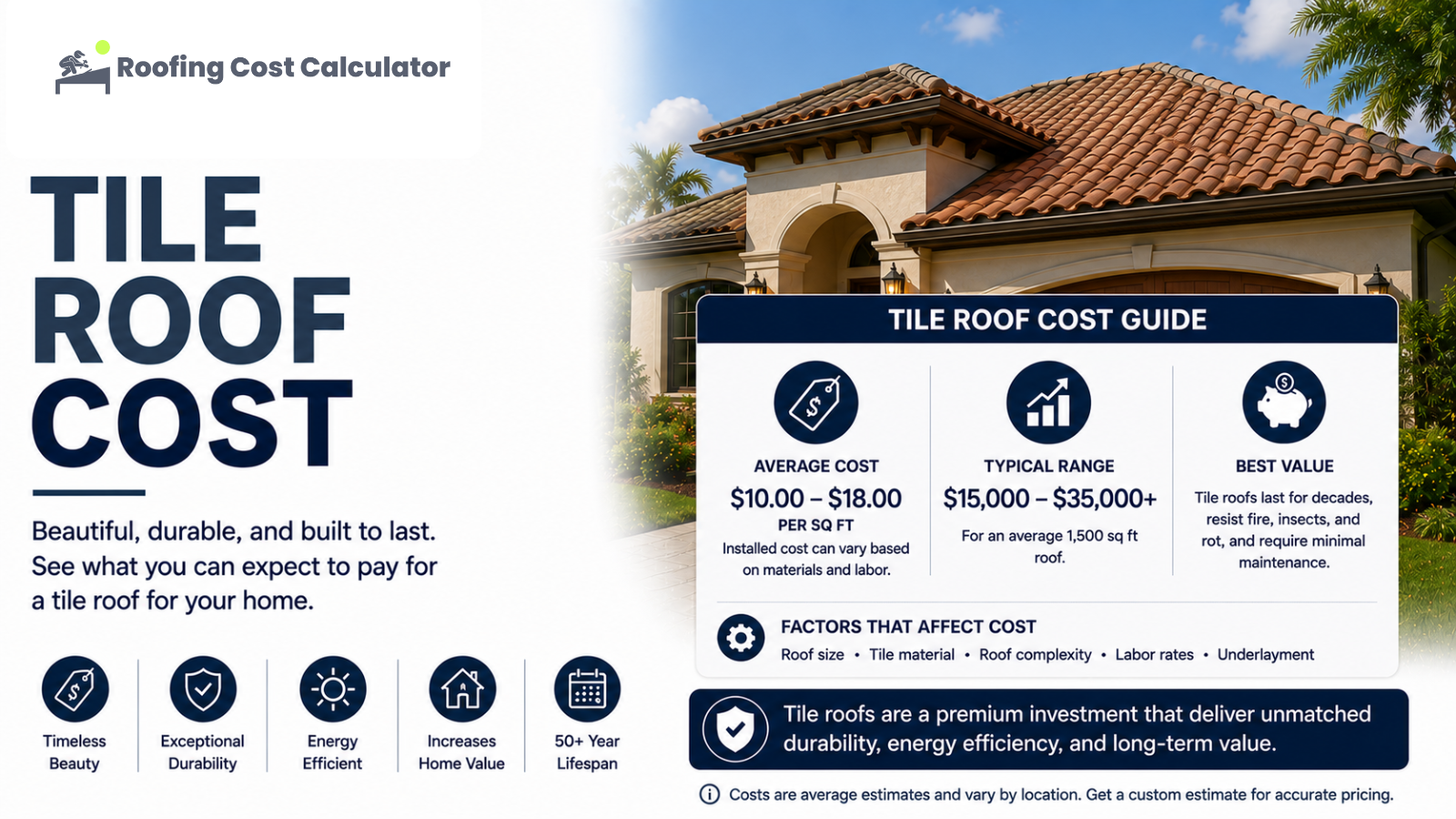
Complete Homeowner Guide (2026)
Tile roofing has been used for centuries and remains one of the most durable and visually striking roofing options available. Whether made from clay or concrete, roof tiles are known for their exceptional longevity, resistance to harsh weather, and timeless appearance.
Although tile roofs generally require a larger upfront investment than asphalt shingles or many metal roofing systems, they can last for decades with relatively little maintenance. For homeowners planning to stay in their homes long-term, a tile roof may provide excellent value over its lifetime.
This guide explains the average cost of a tile roof, the different types of roof tiles, the factors that influence pricing, maintenance requirements, lifespan, and whether tile roofing is the right choice for your home.
Quick Answer
A professionally installed tile roof typically costs between $10 and $22 per square foot, with most residential projects ranging from $15,000 to $45,000 or more, depending on roof size, tile material, labor costs, roof complexity, and geographic location.
Clay tile generally costs more than concrete tile but often offers a longer lifespan and distinctive appearance.
Average Tile Roof Costs
| Roof Size | Estimated Cost |
|---|---|
| 1,000 sq ft | $10,000 – $22,000 |
| 1,500 sq ft | $15,000 – $33,000 |
| 2,000 sq ft | $20,000 – $44,000 |
| 2,500 sq ft | $25,000 – $55,000 |
| 3,000 sq ft | $30,000 – $66,000 |
These estimates include both materials and professional installation. Actual costs vary depending on your home's design and local labor rates.
What Is a Tile Roof?
A tile roof uses individual roofing tiles installed in overlapping rows to create a durable, weather-resistant roofing system.
Unlike asphalt shingles, roof tiles are rigid and designed to last for many decades.
Tile roofs are commonly found on:
- Mediterranean-style homes
- Spanish-style homes
- Southwestern architecture
- Luxury custom homes
- Coastal properties
However, modern tile products are now available in styles that complement many architectural designs.
Types of Roof Tiles
Clay Roof Tiles
Clay tiles are manufactured from natural clay and fired at high temperatures.
Advantages include:
- Exceptional durability
- Rich natural color
- Excellent weather resistance
- Long lifespan
- Fade resistance
Clay tiles are often considered the premium option.
Concrete Roof Tiles
Concrete tiles are made from cement, sand, and water.
Benefits include:
- Lower cost than clay
- Wide variety of colors
- Strong durability
- Excellent fire resistance
- Good weather performance
Concrete tiles have become increasingly popular because they closely resemble clay while generally costing less.
What Affects Tile Roof Cost?
Several factors influence the final project cost.
Roof Size
Larger roofs require:
- More roofing tiles
- More underlayment
- Additional flashing
- More labor
Roof size remains the biggest cost factor.
Clay vs. Concrete
Clay tiles generally cost more than concrete tiles because of the manufacturing process and premium appearance.
Concrete tiles typically provide a more budget-friendly alternative while maintaining excellent durability.
Roof Structure
Tile roofs are significantly heavier than asphalt shingles.
Some homes may require structural reinforcement before installation, increasing overall project costs.
Roof Complexity
Installation becomes more expensive when the roof includes:
- Multiple valleys
- Dormers
- Skylights
- Chimneys
- Steep slopes
- Complex rooflines
More intricate roof designs require additional cutting and labor.
Existing Roof Removal
If an existing roof must be removed before installation, homeowners should expect additional labor and disposal costs.
Labor Costs
Installing roof tiles requires specialized skills and careful placement.
As a result, labor costs are often higher than those for asphalt shingle installations.
Roofing Components
A complete tile roofing system typically includes:
- Underlayment
- Flashing
- Ridge caps
- Hip tiles
- Ventilation components
- Fasteners
- Drip edge
These components help ensure long-term weather protection.
Advantages of Tile Roofing
Tile roofs offer numerous long-term benefits.
Advantages include:
- Extremely long lifespan
- Outstanding curb appeal
- Excellent fire resistance
- Low maintenance
- Strong resistance to insects
- Excellent durability
- Weather resistance
- Energy-efficient thermal performance
Many homeowners choose tile roofing because of its combination of beauty and longevity.
Disadvantages of Tile Roofing
Tile roofs also have some important considerations.
Potential disadvantages include:
- High initial cost
- Heavy weight
- Specialized installation
- More expensive repairs
- Fragility when walked on
- Possible structural upgrades for older homes
Understanding these factors helps homeowners determine whether tile roofing is appropriate for their property.
Expected Lifespan
One of the biggest advantages of tile roofing is its exceptional longevity.
| Tile Type | Expected Lifespan |
|---|---|
| Concrete Tile | 40–60 years |
| Clay Tile | 50–100 years |
Many tile roofs remain functional for several decades with proper installation and maintenance.
Maintenance Requirements
Tile roofs require relatively little routine maintenance.
Recommended tasks include:
- Inspecting the roof twice annually.
- Cleaning gutters.
- Removing leaves and debris.
- Checking flashing.
- Replacing cracked tiles when necessary.
- Inspecting after severe storms.
Walking directly on roof tiles should generally be avoided unless absolutely necessary.
Best Climates for Tile Roofing
Tile roofs perform particularly well in:
- Hot climates
- Coastal regions
- Sunny environments
- Areas with high fire risk
- Warm southern states
They also provide excellent resistance to UV exposure and temperature fluctuations.
Example Roofing Projects
Small Home
Roof Size: 1,200 sq ft
Material: Concrete tile
Estimated Cost: $12,000–$24,000
Medium Home
Roof Size: 2,000 sq ft
Material: Concrete tile
Estimated Cost: $20,000–$40,000
Large Home
Roof Size: 3,000 sq ft
Material: Clay tile
Estimated Cost: $35,000–$66,000
Is a Tile Roof Worth It?
For homeowners planning to stay in their homes for many years, a tile roof can be an outstanding long-term investment.
Tile roofing offers:
- Exceptional lifespan
- Beautiful appearance
- Strong weather resistance
- Low maintenance
- Excellent durability
- High-end curb appeal
Although the initial installation cost is higher than many other roofing materials, the long service life often makes tile roofing an attractive option for homeowners seeking lasting performance.
Frequently Asked Questions
How much does a tile roof cost?
Most professionally installed tile roofs cost between $10 and $22 per square foot, depending on the material, roof complexity, and local labor rates.
Which is cheaper: clay or concrete tile?
Concrete tile is generally less expensive than clay tile while still offering excellent durability and appearance.
How long does a tile roof last?
Concrete tile roofs often last 40 to 60 years, while clay tile roofs may remain in service for 50 to 100 years or longer with proper maintenance.
Does a tile roof require more maintenance?
Not necessarily. Tile roofs generally require little routine maintenance, although cracked tiles should be replaced promptly and periodic inspections are recommended.
Can every home support a tile roof?
Not always. Because tile roofs are much heavier than asphalt shingles, some homes may require structural evaluation or reinforcement before installation.
Final Thoughts
Tile roofing remains one of the most durable and visually appealing residential roofing options available. Whether you choose concrete or clay tiles, you'll benefit from exceptional longevity, low maintenance, and timeless curb appeal. While the initial investment is higher than many alternative materials, many homeowners consider the long-term durability and premium appearance well worth the additional cost.
Before requesting roofing estimates, use our Roofing Cost Calculator to estimate your project's cost based on your roof size and location. Understanding your expected budget will help you compare contractor quotes and choose the roofing material that best fits your home and long-term goals.