 Roofing Cost Calculator
Complete Homeowner Guide (2026)
Metal roofing has become one of the fastest-growing residential roofing options in the United States. Once used primarily on commercial buildings and agricultural structures, today's metal roofs are designed to complement modern, traditional, and luxury homes while providing exceptional durability and long-term performance.
Although a metal roof generally costs more than a traditional asphalt shingle roof, many homeowners view it as a long-term investment because of its impressive lifespan, low maintenance requirements, and resistance to severe weather.
This guide explains how much a metal roof typically costs, the factors that influence pricing, different types of metal roofing, advantages and disadvantages, expected lifespan, maintenance requirements, and whether a metal roof is the right choice for your home.
Quick Answer
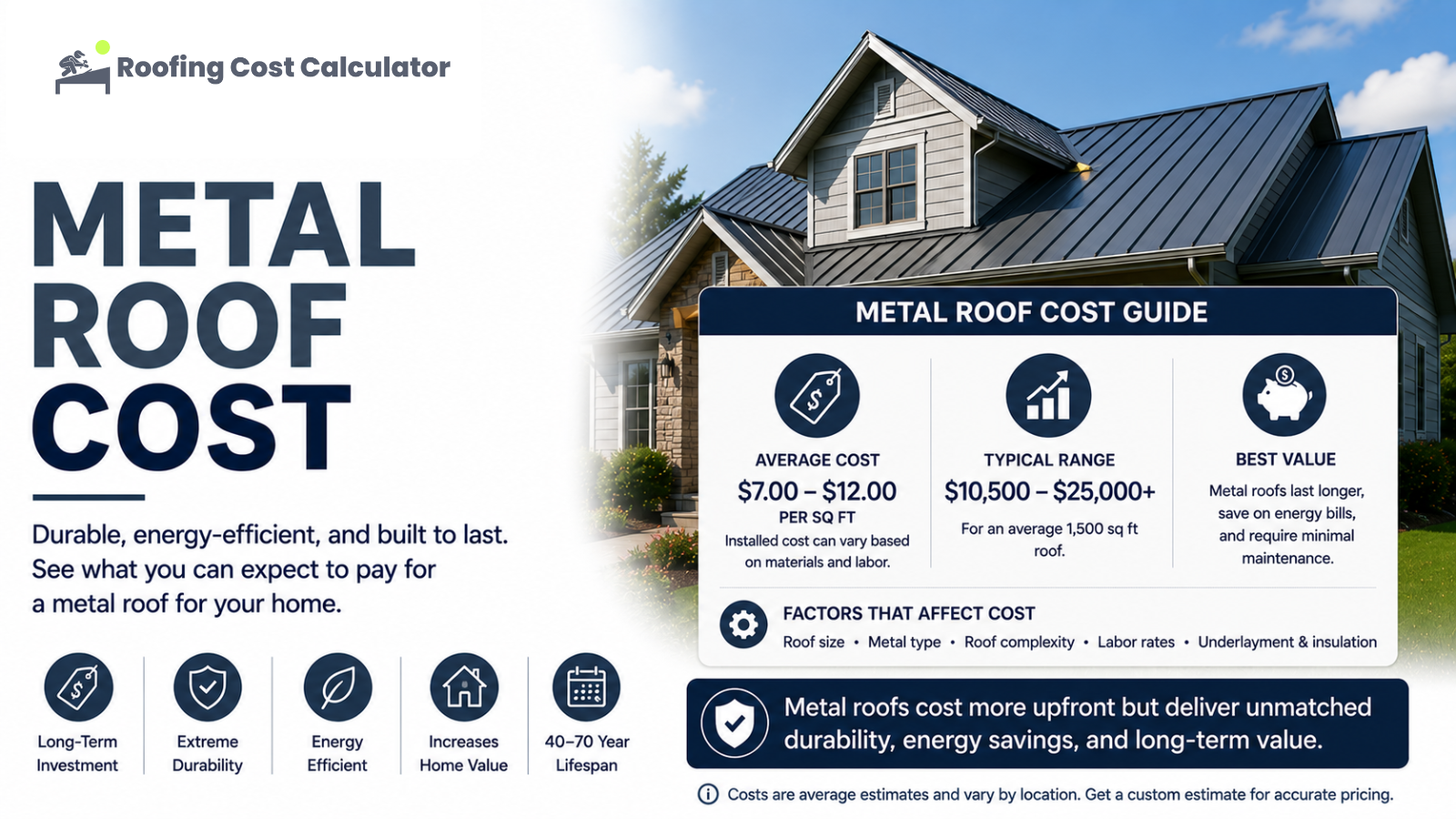
For most homeowners, a metal roof typically costs between $8 and $18 per square foot installed, with total project costs commonly ranging from $12,000 to $35,000 or more, depending on roof size, material, roof complexity, and geographic location.
Although the upfront investment is higher than asphalt shingles, metal roofs often last two to three times longer.
Average Metal Roof Costs
| Roof Size | Estimated Cost |
|---|---|
| 1,000 sq ft | $8,000 – $18,000 |
| 1,500 sq ft | $12,000 – $27,000 |
| 2,000 sq ft | $16,000 – $36,000 |
| 2,500 sq ft | $20,000 – $45,000 |
| 3,000 sq ft | $24,000 – $54,000 |
Actual pricing varies depending on the type of metal roofing, labor costs, roof design, and your location.
What Is a Metal Roof?
A metal roof is made from metal panels or metal shingles designed to provide long-lasting protection against the elements.
Modern residential metal roofs are available in numerous styles and colors, allowing homeowners to achieve a traditional or contemporary appearance while benefiting from exceptional durability.
Many products are manufactured to resemble:
- Traditional shingles
- Slate
- Cedar shake
- Tile roofing
This flexibility has made metal roofing increasingly popular for residential homes.
Types of Metal Roofing
Standing Seam Metal Roofing
Standing seam roofs feature vertical panels connected by raised seams.
Advantages include:
- Modern appearance
- Excellent weather resistance
- Hidden fasteners
- Long lifespan
- Low maintenance
Standing seam systems are generally among the most expensive residential metal roofing options.
Corrugated Metal Panels
Corrugated panels have a distinctive ribbed profile.
They are commonly used on:
- Agricultural buildings
- Garages
- Workshops
- Some residential homes
They are usually less expensive than standing seam systems but offer a more industrial appearance.
Metal Shingles
Metal shingles replicate the appearance of traditional roofing materials while providing many of the benefits of metal construction.
They are popular with homeowners who want the durability of metal without the contemporary appearance of standing seam panels.
What Affects Metal Roof Cost?
Several factors influence the final project price.
Roof Size
Larger roofs require:
- More materials
- More labor
- Additional accessories
Roof size remains the largest factor affecting total cost.
Type of Metal
Pricing varies depending on the material selected.
Common choices include:
- Steel
- Aluminum
- Zinc
- Copper
Premium metals generally cost more but may offer longer service life or unique appearance.
Roof Complexity
Projects become more expensive when the roof includes:
- Multiple valleys
- Dormers
- Skylights
- Chimneys
- Complex rooflines
- Steep slopes
Complex roofs require more cutting, flashing, and installation time.
Existing Roof Removal
Removing old roofing materials increases labor and disposal costs.
Some projects involve multiple roofing layers that must be removed before installation can begin.
Labor Costs
Metal roofing requires specialized installation techniques.
Because installation is generally more complex than asphalt shingles, labor costs are often higher.
Roofing Components
A complete metal roofing system may include:
- Underlayment
- Ice and water barrier
- Ridge caps
- Flashing
- Snow guards (where needed)
- Ventilation components
- Fasteners
These items contribute to the overall project cost.
Advantages of Metal Roofing
Metal roofs offer numerous benefits.
Advantages include:
- Exceptional lifespan
- Excellent wind resistance
- Fire resistance
- Low maintenance
- Modern appearance
- Lightweight construction
- Energy-efficient reflective finishes
- Strong resistance to mold and insects
- Recyclable materials
For homeowners planning to stay in their homes for many years, these advantages often justify the higher initial investment.
Disadvantages of Metal Roofing
Despite its many benefits, metal roofing may not be the right choice for every home.
Potential disadvantages include:
- Higher upfront cost
- Specialized installation requirements
- More expensive repairs
- Noise during heavy rain or hail (depending on installation)
- Limited contractor experience in some areas
Understanding these considerations helps homeowners make informed decisions.
Expected Lifespan
One of the biggest advantages of metal roofing is its longevity.
| Metal Roof Type | Expected Lifespan |
|---|---|
| Steel | 40–70 years |
| Aluminum | 40–60 years |
| Zinc | 60–100 years |
| Copper | 70–100+ years |
Proper installation and routine maintenance can help maximize these service lives.
Maintenance Requirements
Metal roofs require relatively little maintenance.
Recommended tasks include:
- Inspecting the roof twice each year.
- Removing leaves and debris.
- Cleaning gutters.
- Checking flashing and fasteners.
- Inspecting after severe storms.
- Trimming overhanging tree branches.
Compared with many roofing materials, maintenance requirements are generally modest.
Best Climates for Metal Roofing
Metal roofs perform well in many environments.
They are particularly well suited for:
- Snow-prone regions
- Hurricane-prone coastal areas
- Wildfire-prone regions
- Areas with intense sunlight
- Regions experiencing heavy rainfall
Reflective finishes may also help reduce heat absorption in warmer climates.
Example Roofing Projects
Small Home
Roof Size: 1,200 sq ft
Material: Standing seam steel
Estimated Cost: $10,000–$20,000
Medium Home
Roof Size: 2,000 sq ft
Material: Standing seam steel
Estimated Cost: $16,000–$36,000
Large Home
Roof Size: 3,000 sq ft
Material: Premium standing seam aluminum
Estimated Cost: $26,000–$54,000
Is a Metal Roof Worth It?
For many homeowners, yes.
Although the initial investment is higher than asphalt shingles, a metal roof offers:
- Long service life
- Reduced maintenance
- Excellent weather resistance
- Improved durability
- Potential energy efficiency benefits
Homeowners planning to remain in their homes for many years often find that the long-term value offsets the higher installation cost.
Frequently Asked Questions
How much does a metal roof cost?
Most residential metal roofs cost between $8 and $18 per square foot installed, depending on the material, roof complexity, and location.
How long does a metal roof last?
Many metal roofs last 40 to 70 years, while premium materials such as copper and zinc may last considerably longer.
Is a metal roof louder than shingles?
When installed properly with modern underlayment and insulation, many homeowners notice little difference in indoor noise levels during normal rainfall.
Can a metal roof increase home value?
A durable, professionally installed metal roof may improve curb appeal and increase buyer confidence, particularly because of its long expected lifespan.
Is a metal roof suitable for every climate?
Yes. Metal roofing performs well in many climates, including snowy, coastal, rainy, and hot regions, provided the roofing system is designed and installed appropriately.
Final Thoughts
Metal roofing has become one of the most durable and desirable residential roofing options available today. While the initial investment is generally higher than asphalt shingles, the combination of long lifespan, minimal maintenance, excellent weather resistance, and attractive appearance makes metal roofing an appealing choice for many homeowners.
Before requesting contractor estimates, use our Roofing Cost Calculator to estimate your project's cost based on your home's size and location. Understanding your expected budget before comparing quotes can help you make a confident and informed decision.