 Roofing Cost Calculator
Complete Homeowner Guide (2026)
Asphalt shingles are the most popular residential roofing material in the United States, covering millions of homes across the country. Their popularity comes from a combination of affordability, durability, attractive appearance, and relatively simple installation. Whether you're replacing an aging roof or building a new home, asphalt shingles often provide one of the best balances between cost and long-term performance.
However, the total cost of an asphalt shingle roof depends on much more than the price of the shingles themselves. Roof size, labor rates, roof complexity, location, tear-off requirements, and additional components all contribute to the final project cost.
This guide explains everything homeowners should know about asphalt shingle roof costs, including average pricing, lifespan, maintenance, advantages, disadvantages, and the factors that influence the total investment.
Quick Answer
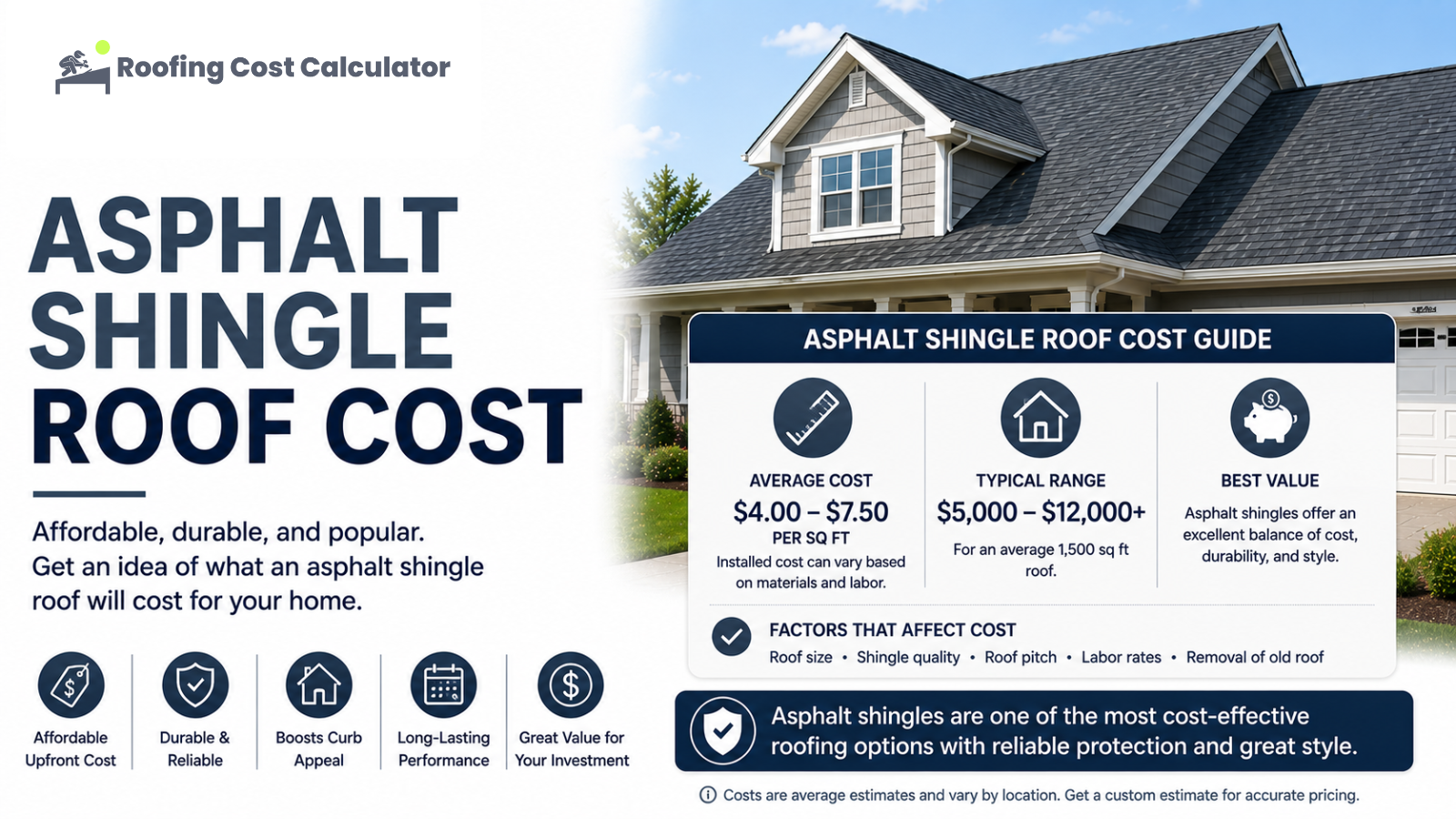
For most homeowners in the United States, installing a new asphalt shingle roof typically costs between $4 and $8 per square foot, with total project costs commonly ranging from $6,000 to $16,000, depending on roof size, material quality, labor, and geographic location.
Architectural shingles generally cost more than traditional 3-tab shingles but offer greater durability, improved appearance, and a longer expected lifespan.
Average Asphalt Shingle Roof Costs
| Roof Size | Estimated Cost |
|---|---|
| 1,000 sq ft | $4,000 – $8,000 |
| 1,500 sq ft | $6,000 – $12,000 |
| 2,000 sq ft | $8,000 – $16,000 |
| 2,500 sq ft | $10,000 – $20,000 |
| 3,000 sq ft | $12,000 – $24,000 |
These figures represent general estimates. Actual pricing varies depending on your location, roof complexity, and contractor rates.
What Are Asphalt Shingles?
Asphalt shingles consist of a fiberglass or organic base mat coated with asphalt and covered by protective mineral granules. They are designed to provide weather resistance while remaining relatively affordable compared to many alternative roofing materials.
Modern asphalt shingles are available in a wide range of:
- Colors
- Styles
- Textures
- Warranty options
This versatility makes them suitable for many architectural styles throughout the United States.
Types of Asphalt Shingles
Three-Tab Shingles
Three-tab shingles are the traditional budget-friendly option.
Advantages include:
- Lower initial cost
- Lightweight
- Easy installation
They typically have a shorter lifespan than premium alternatives.
Architectural Shingles
Architectural shingles (also called dimensional shingles) are currently the most common choice for residential homes.
Benefits include:
- Better appearance
- Greater thickness
- Improved wind resistance
- Longer lifespan
- Better warranties
Although they cost more initially, many homeowners consider them a worthwhile investment.
Premium Designer Shingles
Premium shingles are manufactured to imitate materials such as slate or cedar shake.
They offer:
- High-end appearance
- Enhanced durability
- Premium warranties
However, they also represent the highest-priced asphalt shingle option.
What Affects Asphalt Roof Cost?
Several factors determine the final price of a roofing project.
Roof Size
Larger roofs require:
- More shingles
- More underlayment
- Additional labor
- More disposal
Roof size is usually the single largest cost factor.
Roof Pitch
Steeper roofs require additional safety equipment and longer installation times.
As roof pitch increases, labor costs often increase as well.
Roof Complexity
Features that increase project complexity include:
- Valleys
- Dormers
- Skylights
- Chimneys
- Multiple roof levels
More complex roofs generally require more labor and materials.
Tear-Off of Existing Roofing
If old roofing materials must be removed before installation, disposal and labor costs increase.
Some projects involve multiple existing roofing layers, further increasing the scope of work.
Labor Costs
Labor rates vary significantly across different regions of the United States.
Urban areas often have higher labor costs than rural communities.
Roofing Accessories
A complete roofing system includes more than shingles.
Additional components may include:
- Underlayment
- Ice and water shield
- Ridge vents
- Flashing
- Drip edge
- Roof vents
- Pipe boots
These materials contribute to the overall cost but are essential for proper roof performance.
Advantages of Asphalt Shingles
Asphalt shingles remain the most popular roofing material for several reasons.
Advantages include:
- Affordable installation
- Wide variety of colors
- Attractive appearance
- Easy repairs
- Widely available
- Good weather resistance
- Suitable for many home styles
- Broad contractor availability
For many homeowners, asphalt shingles provide an excellent balance between price and performance.
Disadvantages of Asphalt Shingles
Like every roofing material, asphalt shingles also have limitations.
Potential disadvantages include:
- Shorter lifespan than metal or tile
- Granule loss over time
- Susceptibility to extreme weather
- May require replacement sooner in harsh climates
- Less environmentally durable than some premium materials
Understanding these limitations helps homeowners make informed decisions.
Expected Lifespan
The lifespan of an asphalt shingle roof depends on product quality, installation, maintenance, and local climate.
Typical expectations include:
| Shingle Type | Expected Lifespan |
|---|---|
| Three-Tab | 20–25 years |
| Architectural | 25–35 years |
| Premium Designer | 30–40 years |
Routine maintenance and prompt repairs can help maximize roof life.
Maintenance Requirements
Fortunately, asphalt shingles require relatively little maintenance.
Homeowners should:
- Inspect the roof twice each year.
- Clean gutters regularly.
- Remove branches and debris.
- Replace damaged shingles promptly.
- Monitor flashing around roof penetrations.
- Arrange inspections after severe storms.
Proper maintenance helps extend the useful life of the roofing system.
Best Climates for Asphalt Shingles
Asphalt shingles perform well throughout much of the United States.
They are particularly suitable for:
- Moderate climates
- Suburban neighborhoods
- New residential construction
- Roof replacement projects
In areas with frequent hurricanes, hail, or extreme heat, homeowners may wish to consider premium architectural shingles designed for enhanced weather resistance.
Example Roofing Projects
Small Home
Roof Size: 1,200 sq ft
Material: Architectural shingles
Estimated Cost: $5,500–$9,000
Medium Home
Roof Size: 2,000 sq ft
Material: Architectural shingles
Estimated Cost: $8,000–$16,000
Large Home
Roof Size: 3,000 sq ft
Material: Premium architectural shingles
Estimated Cost: $13,000–$24,000
Is an Asphalt Roof Worth It?
For many homeowners, the answer is yes.
Asphalt shingles continue to dominate the residential roofing market because they offer:
- Excellent value
- Attractive appearance
- Proven durability
- Affordable replacement costs
- Straightforward maintenance
Although premium materials such as metal or tile may last longer, asphalt shingles remain one of the most practical choices for homeowners seeking reliable performance at a reasonable price.
Frequently Asked Questions
How much does an asphalt shingle roof cost?
Most projects range from $4 to $8 per square foot, although total costs vary depending on roof size, labor, and location.
How long do asphalt shingles last?
Most asphalt roofs last between 20 and 35 years, depending on the type of shingle, installation quality, climate, and maintenance.
Are architectural shingles worth the extra cost?
Many homeowners believe so. Architectural shingles generally provide improved durability, longer warranties, and a more attractive appearance compared with traditional three-tab shingles.
Can individual asphalt shingles be replaced?
Yes. One advantage of asphalt roofing is that localized damage can often be repaired by replacing individual shingles rather than replacing the entire roof.
Are asphalt shingles suitable for every climate?
They perform well in many climates, although homeowners in regions with frequent hurricanes, severe hail, or extreme heat may wish to consider upgraded products designed for those conditions.
Final Thoughts
Asphalt shingles remain the most widely used residential roofing material in the United States because they offer an outstanding balance of affordability, durability, appearance, and ease of installation. While project costs vary depending on roof size, labor, and local market conditions, asphalt roofing continues to provide excellent value for homeowners planning a roof replacement.
Before requesting contractor estimates, use our Roofing Cost Calculator to estimate your project's cost based on your home's size and location. Comparing multiple estimates and understanding the factors that influence pricing will help you make a confident, informed decision.