 Roofing Cost Calculator
Which Premium Roofing Material Is the Better Investment? (2026 Guide)
If you're planning to invest in a premium roofing system, two of the most durable options available are metal roofing and tile roofing. Both materials are known for their impressive lifespans, excellent weather resistance, and ability to enhance a home's appearance. However, they differ in cost, weight, maintenance requirements, installation methods, and overall suitability for different climates and home styles.
Metal roofing has grown rapidly in popularity because of its modern appearance, exceptional durability, and relatively lightweight construction. Tile roofing, used for centuries around the world, remains one of the longest-lasting roofing systems available and is especially popular in warm climates.
This guide compares metal roofing and tile roofing side by side to help homeowners choose the material that best fits their budget, location, and long-term goals.
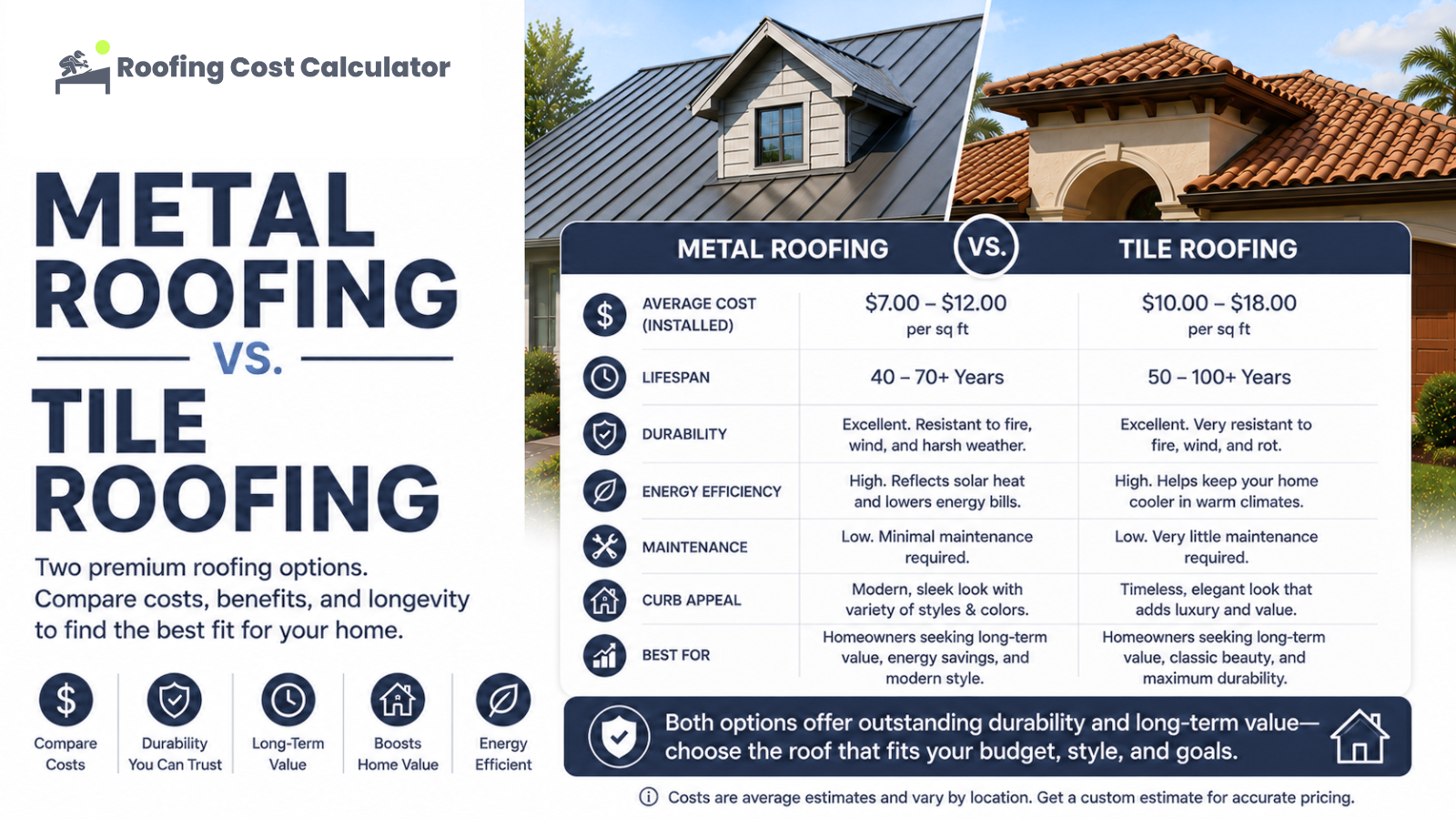
Quick Comparison
| Feature | Metal Roofing | Tile Roofing |
|---|---|---|
| Initial Cost | Lower | Higher |
| Lifespan | 40–70+ years | 40–100+ years |
| Weight | ✅ Lightweight | Heavy |
| Maintenance | Low | Low |
| Fire Resistance | Excellent | Excellent |
| Wind Resistance | Excellent | Very Good |
| Energy Efficiency | Excellent | Excellent |
| Installation Complexity | Moderate | High |
Initial Cost
Both materials cost more than asphalt shingles, but there are differences between them.
Metal Roofing
Typical installed cost:
$8–$18 per square foot
Costs vary depending on whether you choose standing seam panels, metal shingles, aluminum, steel, copper, or zinc.
Tile Roofing
Typical installed cost:
$10–$22 per square foot
Clay tile generally costs more than concrete tile, while structural reinforcement may further increase total project costs.
Winner: 🟢 Metal Roofing
Lifespan
One reason homeowners choose premium roofing materials is their exceptional longevity.
Metal Roofing
Typical lifespan:
- Steel: 40–70 years
- Aluminum: 40–60 years
- Copper: 70–100+ years
- Zinc: 60–100 years
Tile Roofing
Typical lifespan:
- Concrete tile: 40–60 years
- Clay tile: 50–100 years
Both materials can provide decades of reliable protection when properly installed.
Winner: 🟢 Tile
Weight
Weight affects both installation and the home's structural requirements.
Metal Roofing
Metal roofing is relatively lightweight.
Benefits include:
- Easier installation
- Lower structural load
- Suitable for most homes
Tile Roofing
Tile roofs are significantly heavier.
Some homes require structural reinforcement before installation.
Winner: 🟢 Metal Roofing
Maintenance
Both roofing systems require relatively little maintenance.
Metal Roofing
Typical maintenance includes:
- Clearing debris
- Cleaning gutters
- Inspecting flashing
- Checking fasteners
Tile Roofing
Typical maintenance includes:
- Replacing cracked tiles
- Cleaning gutters
- Inspecting flashing
- Removing debris
Neither roofing system requires frequent maintenance compared with asphalt shingles.
Winner: 🟢 Tile
Durability
Metal Roofing
Metal roofs perform exceptionally well against:
- High winds
- Heavy snow
- Rain
- Fire
- UV exposure
Tile Roofing
Tile roofs excel in:
- Fire resistance
- Heat resistance
- Sun exposure
- Insect resistance
- Rot resistance
Both roofing systems are among the most durable residential roofing options available.
Winner: 🟢 Tile
Wind Resistance
Strong winds can significantly affect roofing performance.
Metal Roofing
Standing seam metal roofs often perform exceptionally well in areas subject to hurricanes and severe storms when properly installed.
Tile Roofing
Modern tile roofing systems also offer excellent wind resistance, although individual tiles may occasionally require replacement after extreme weather.
Winner: 🟢 Metal Roofing
Energy Efficiency
Energy efficiency is increasingly important for homeowners.
Metal Roofing
Reflective finishes reduce solar heat gain, helping keep homes cooler during warm weather.
Tile Roofing
Tile roofs naturally create air pockets beneath the tiles, improving insulation and reducing heat transfer.
Both systems can contribute to lower cooling costs depending on climate and installation.
Winner: 🟢 Tile
Appearance
Appearance depends largely on architectural style.
Metal Roofing
Available in:
- Standing seam panels
- Metal shingles
- Modern finishes
- Traditional styles
Works well on contemporary, farmhouse, and many traditional homes.
Tile Roofing
Ideal for:
- Mediterranean homes
- Spanish architecture
- Southwestern homes
- Luxury properties
Offers timeless elegance and distinctive curb appeal.
Winner: Personal preference
Installation
Metal Roofing
Requires specialized installation techniques but is generally easier to handle because of its lighter weight.
Tile Roofing
Tile installation is more labor-intensive.
Individual tiles must be carefully positioned, and installers must avoid cracking them during installation.
Winner: 🟢 Metal Roofing
Repairs
Metal Roofing
Repairs may involve replacing damaged panels or sections.
Matching older finishes may occasionally be challenging.
Tile Roofing
Individual cracked tiles can often be replaced without removing the entire roof, provided matching tiles are available.
Both systems can generally be repaired successfully by experienced roofing contractors.
Winner: 🟢 Tile
Best Climates
Metal Roofing
Excellent for:
- Snowy regions
- Coastal areas
- Hurricane-prone locations
- Rainy climates
- Wildfire-prone areas
Tile Roofing
Excellent for:
- Hot climates
- Desert regions
- Coastal communities
- Southern states
- Areas with intense sunlight
Which Roofing Material Is Right for You?
Choose Metal Roofing If:
- You want a lighter roofing system.
- Your home may not support heavy roofing materials.
- You live in an area with heavy snow or frequent storms.
- You prefer a modern appearance.
- You want lower upfront costs than tile.
Choose Tile Roofing If:
- You prefer a classic Mediterranean or Spanish look.
- You live in a hot climate.
- You plan to stay in your home for many decades.
- Your home is designed to support the additional weight.
- You value exceptional longevity and premium curb appeal.
Pros and Cons
Metal Roofing
Pros
- Lightweight
- Long lifespan
- Fire resistant
- Excellent wind performance
- Low maintenance
- Energy-efficient options
Cons
- Higher upfront cost than asphalt
- Specialized installation
- Some repairs may require matching panels
Tile Roofing
Pros
- Extremely long lifespan
- Elegant appearance
- Fire resistant
- Excellent thermal performance
- Low maintenance
Cons
- Heavy weight
- Higher installation cost
- May require structural reinforcement
- More complex installation
Frequently Asked Questions
Which roof lasts longer?
Both are designed for decades of service. Clay tile, copper, and zinc roofs can sometimes last 70 to 100 years or more when properly maintained.
Which roofing material is lighter?
Metal roofing is significantly lighter than tile roofing, making it suitable for a wider variety of homes.
Which performs better in hot climates?
Both perform well, but tile roofing is particularly well known for its natural thermal properties and long history of use in warm climates.
Which roofing material is better for snowy regions?
Metal roofing is often preferred in snowy climates because snow slides off more easily and the lighter weight reduces structural load.
Is tile roofing worth the higher price?
For homeowners seeking a premium appearance and exceptional longevity, many consider tile roofing a worthwhile long-term investment.
Final Verdict
Both metal roofing and tile roofing are outstanding premium roofing materials that offer decades of reliable performance.
Choose metal roofing if you want a lightweight, durable roof with excellent weather resistance, modern styling, and lower installation costs than tile. It's an outstanding option for homeowners in snowy, rainy, or hurricane-prone regions.
Choose tile roofing if your priorities are timeless architectural beauty, exceptional longevity, and superior performance in hot climates. Although tile roofs require a larger initial investment and a structurally suitable home, they remain one of the longest-lasting roofing systems available.
Before making your final decision, use our Roofing Cost Calculator to compare estimated installation costs for both materials based on your home's size and location. Reviewing realistic project estimates can help you select the roofing system that best matches your budget, climate, and long-term plans.