 Roofing Cost Calculator
Which Roofing Material Is Best for Your Home? (2026 Guide)
Choosing the right roofing material is about more than appearance. Your roof affects your home's protection, maintenance needs, energy efficiency, resale appeal, and long-term costs. Two of the most common residential roofing choices are asphalt shingles and tile roofing. While both protect your home from the elements, they differ significantly in price, lifespan, durability, and maintenance.
Asphalt shingles are the most widely installed roofing material in the United States because they offer excellent value and affordable installation. Tile roofs, on the other hand, are known for their exceptional longevity, premium appearance, and outstanding resistance to heat and fire.
This guide compares asphalt shingles and tile roofing side by side to help you decide which option best suits your home, budget, and long-term plans.
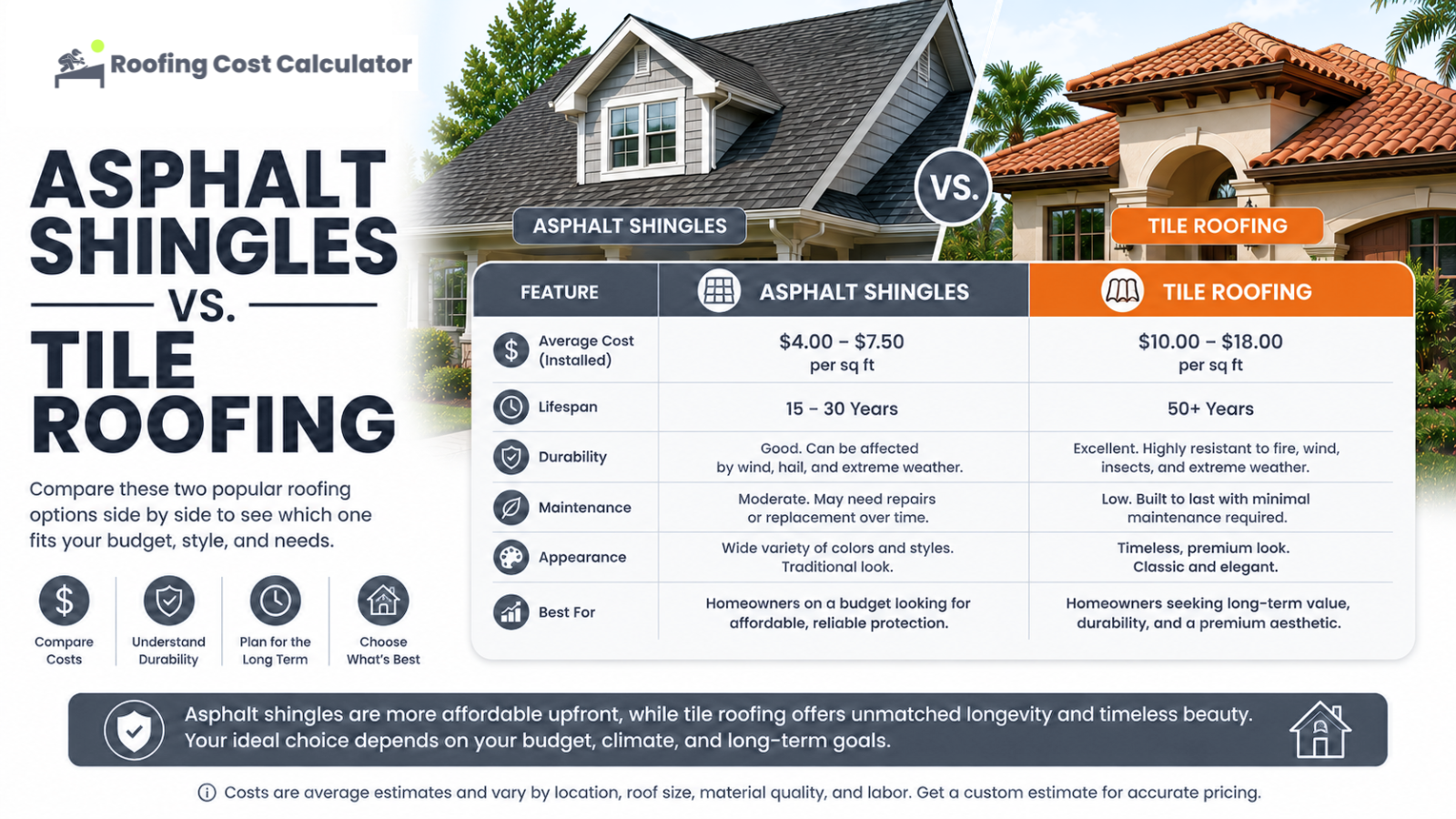
Quick Comparison
| Feature | Asphalt Shingles | Tile Roofing |
|---|---|---|
| Initial Cost | ✅ Lower | Higher |
| Lifespan | 20–35 years | 40–100+ years |
| Maintenance | Moderate | Low |
| Fire Resistance | Good | Excellent |
| Weather Resistance | Good | Excellent |
| Weight | Lightweight | Heavy |
| Energy Efficiency | Good | Excellent |
| Installation Cost | Lower | Higher |
Initial Cost
For many homeowners, cost is the deciding factor.
Asphalt Shingles
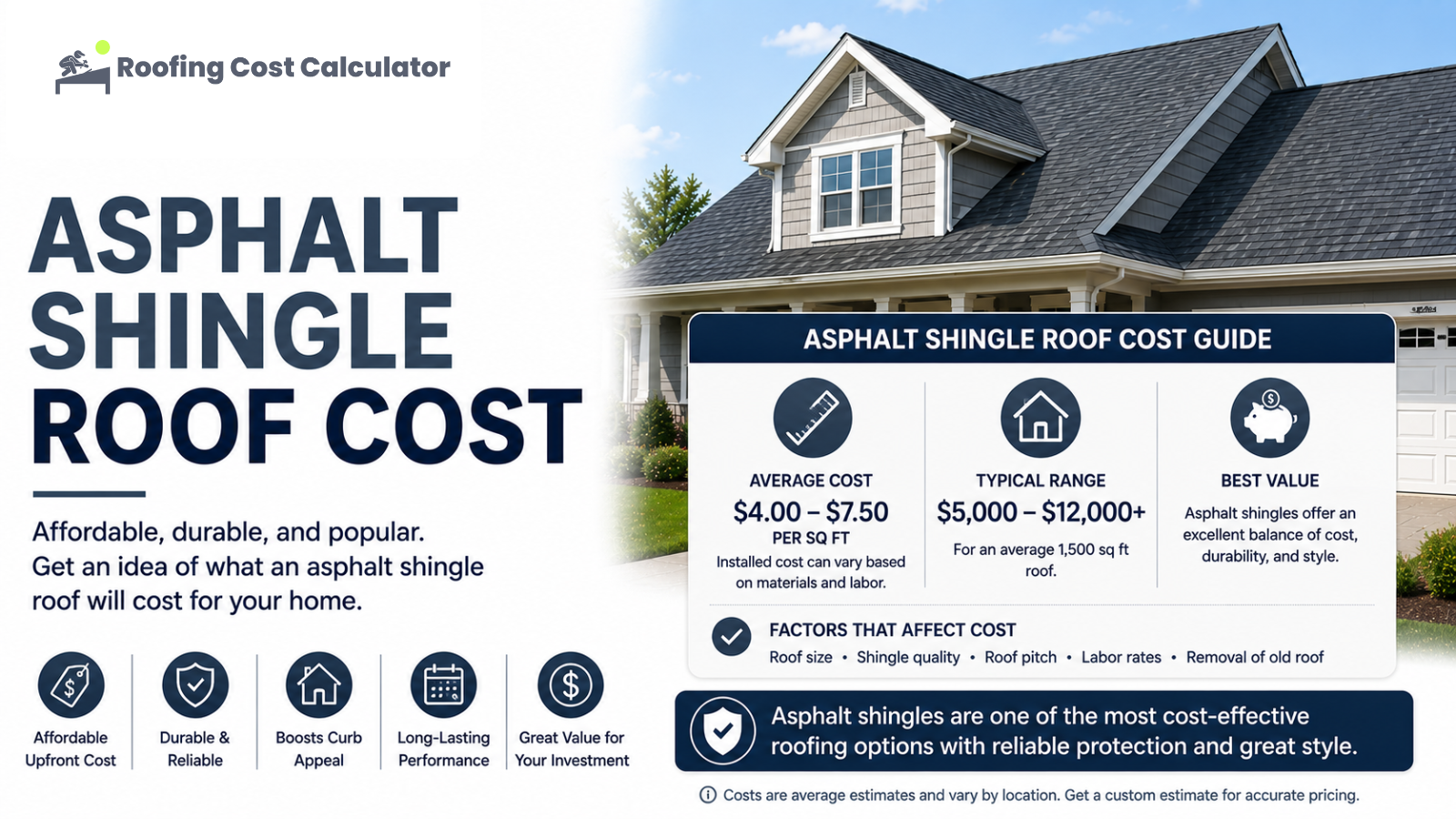
Typical installed cost:
$4–$8 per square foot
Affordable materials and widespread installer availability make asphalt shingles one of the most economical roofing options.
Tile Roofing
Typical installed cost:
$10–$22 per square foot
Tile roofs require premium materials and specialized installation, increasing the total project cost.
Winner: 🟢 Asphalt Shingles
Lifespan
Roof longevity has a major impact on long-term ownership costs.
Asphalt Shingles
Typical lifespan:
- 20–25 years (3-tab)
- 25–35 years (architectural)
Tile Roofing
Typical lifespan:
- Concrete tile: 40–60 years
- Clay tile: 50–100 years
Some properly maintained clay tile roofs remain in service for generations.
Winner: 🟢 Tile Roofing
Maintenance
Asphalt Shingles
Maintenance typically includes:
- Replacing damaged shingles
- Cleaning gutters
- Inspecting flashing
- Monitoring granule loss
Tile Roofing
Tile roofs usually require:
- Periodic inspections
- Replacing cracked tiles when necessary
- Cleaning debris
- Checking flashing
Both require maintenance, but tile roofs generally need fewer repairs over time.
Winner: 🟢 Tile Roofing
Durability
Asphalt Shingles
Modern architectural shingles perform well against normal weather conditions but can deteriorate more quickly under prolonged UV exposure or severe storms.
Tile Roofing
Tile roofing offers outstanding resistance to:
- Fire
- Sunlight
- Heat
- Insects
- Rot
Properly installed tile roofs are among the most durable residential roofing systems available.
Winner: 🟢 Tile Roofing
Energy Efficiency
Asphalt Shingles
Reflective shingles can reduce heat absorption compared with darker roofing materials.
Tile Roofing
Tile roofs naturally create an air space beneath the tiles that helps reduce heat transfer into the home, making them particularly effective in warm climates.
Winner: 🟢 Tile Roofing
Appearance
Appearance depends largely on architectural style.
Asphalt Shingles
Available in:
- Numerous colors
- Multiple textures
- Traditional residential styles
Suitable for nearly every home design.
Tile Roofing
Known for:
- Mediterranean appearance
- Spanish architecture
- Luxury homes
- Elegant curb appeal
- Timeless design
Winner: Depends on your home's style.
Installation
Asphalt Shingles
Installation is relatively straightforward and performed by most roofing contractors.
Projects are often completed more quickly.
Tile Roofing
Tile installation requires specialized knowledge and careful handling because individual tiles can crack if installed improperly.
Winner: 🟢 Asphalt Shingles
Structural Requirements
Asphalt Shingles
Lightweight roofing material suitable for most homes without structural modifications.
Tile Roofing
Because tile roofs are much heavier, some homes require structural reinforcement before installation.
This additional work can increase project costs.
Winner: 🟢 Asphalt Shingles
Repairs
Asphalt Shingles
Individual shingles can usually be replaced easily.
Repairs are widely available and generally less expensive.
Tile Roofing
Individual damaged tiles can also be replaced, but matching older tiles and working with heavier materials may require more specialized labor.
Winner: 🟢 Asphalt Shingles
Home Value
Both roofing systems can increase curb appeal.
Asphalt Shingles
A new asphalt roof reassures buyers that immediate replacement is unlikely.
Tile Roofing
Tile roofs are often viewed as premium upgrades and may enhance the perceived quality of the property.
Winner: 🟢 Tile Roofing
Best Climates
Asphalt Shingles
Best suited for:
- Moderate climates
- Most suburban neighborhoods
- Homeowners seeking affordability
Tile Roofing
Excellent for:
- Hot climates
- Southern states
- Coastal regions
- Areas with intense sunlight
- Fire-prone regions
Which Roofing Material Is Best for You?
Choose Asphalt Shingles If:
- You want the lowest upfront cost.
- You're replacing the roof on a tighter budget.
- Your home wasn't designed for a heavy roofing system.
- You want quick installation.
- You prefer easy and inexpensive repairs.
Choose Tile Roofing If:
- You plan to stay in your home for decades.
- You want exceptional durability.
- You live in a hot climate.
- You value premium curb appeal.
- You're comfortable with a higher initial investment.
Pros and Cons
Asphalt Shingles
Pros
- Affordable
- Easy installation
- Lightweight
- Simple repairs
- Large variety of colors
Cons
- Shorter lifespan
- More frequent replacement
- Moderate weather resistance
Tile Roofing
Pros
- Extremely long lifespan
- Premium appearance
- Fire resistant
- Excellent heat resistance
- Low long-term maintenance
Cons
- Higher cost
- Heavy weight
- Specialized installation
- Possible structural reinforcement
Frequently Asked Questions
Which roof lasts longer?
Tile roofs generally last much longer than asphalt shingles, with clay tile often lasting 50–100 years or more.
Which roofing material is more affordable?
Asphalt shingles have a much lower upfront installation cost.
Is a tile roof worth the extra money?
For homeowners planning to remain in their homes long-term, the durability and longevity of tile roofing may justify the higher initial investment.
Can every home support a tile roof?
Not always. Because tile roofs are significantly heavier than asphalt shingles, some homes require structural evaluation before installation.
Which roofing material performs better in hot climates?
Tile roofing generally performs exceptionally well in warm climates because of its natural thermal properties and excellent resistance to prolonged sun exposure.
Final Verdict
Both asphalt shingles and tile roofing are excellent roofing materials, but they serve different homeowner priorities.
Choose asphalt shingles if your goal is to keep installation costs affordable while still receiving dependable performance and attractive curb appeal. They remain the most practical choice for many homes across the United States.
Choose tile roofing if you're looking for a premium roofing system that offers exceptional durability, outstanding longevity, superior heat resistance, and timeless architectural appeal. Although the upfront investment is higher, many homeowners appreciate the long-term value and reduced need for replacement.
Before making your final decision, use our Roofing Cost Calculator to estimate the cost of each roofing option based on your home's size and location. Comparing realistic project estimates can help you select the roofing material that best fits your budget, climate, and long-term plans.