 Roofing Cost Calculator
Which Roofing Material Is Best for Your Home? (2026 Guide)
Choosing a new roof is one of the biggest decisions a homeowner can make. Two of the most popular residential roofing materials in the United States are asphalt shingles and metal roofing. Both offer reliable protection, attractive designs, and a wide range of options, but they differ significantly in cost, lifespan, maintenance, energy efficiency, and long-term value.
For some homeowners, asphalt shingles provide the perfect balance of affordability and performance. For others, the longer lifespan and durability of a metal roof justify the higher upfront investment.
This guide compares asphalt shingles and metal roofing side by side to help you determine which material best fits your budget, climate, and long-term goals.
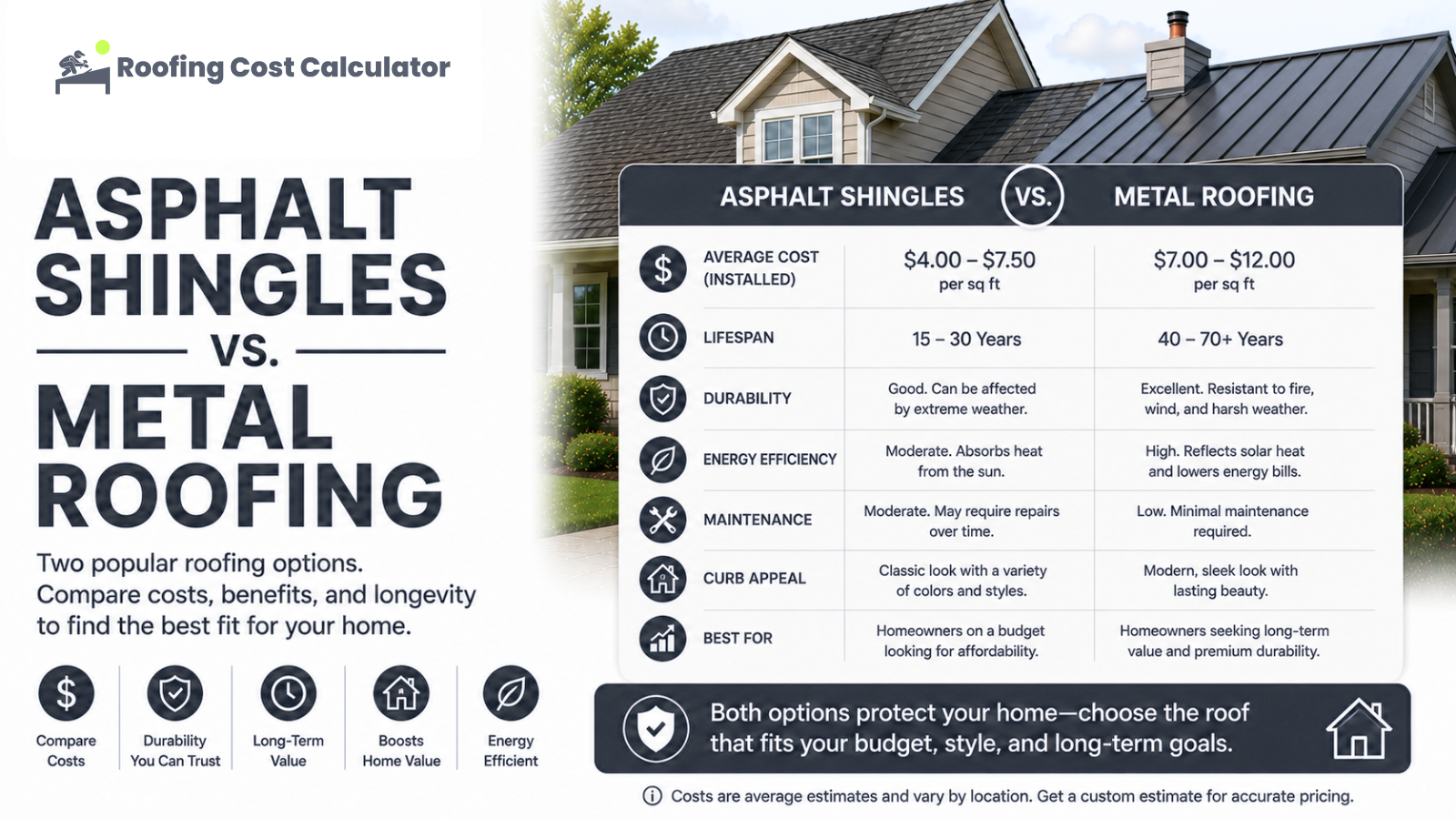
Quick Comparison
| Feature | Asphalt Shingles | Metal Roofing |
|---|---|---|
| Initial Cost | ✅ Lower | Higher |
| Lifespan | 20–35 years | 40–70+ years |
| Maintenance | Moderate | Low |
| Weather Resistance | Good | Excellent |
| Fire Resistance | Good | Excellent |
| Energy Efficiency | Good | Very Good |
| Installation Cost | Lower | Higher |
| Long-Term Value | Very Good | Excellent |
Initial Cost
For most homeowners, cost is one of the first considerations.
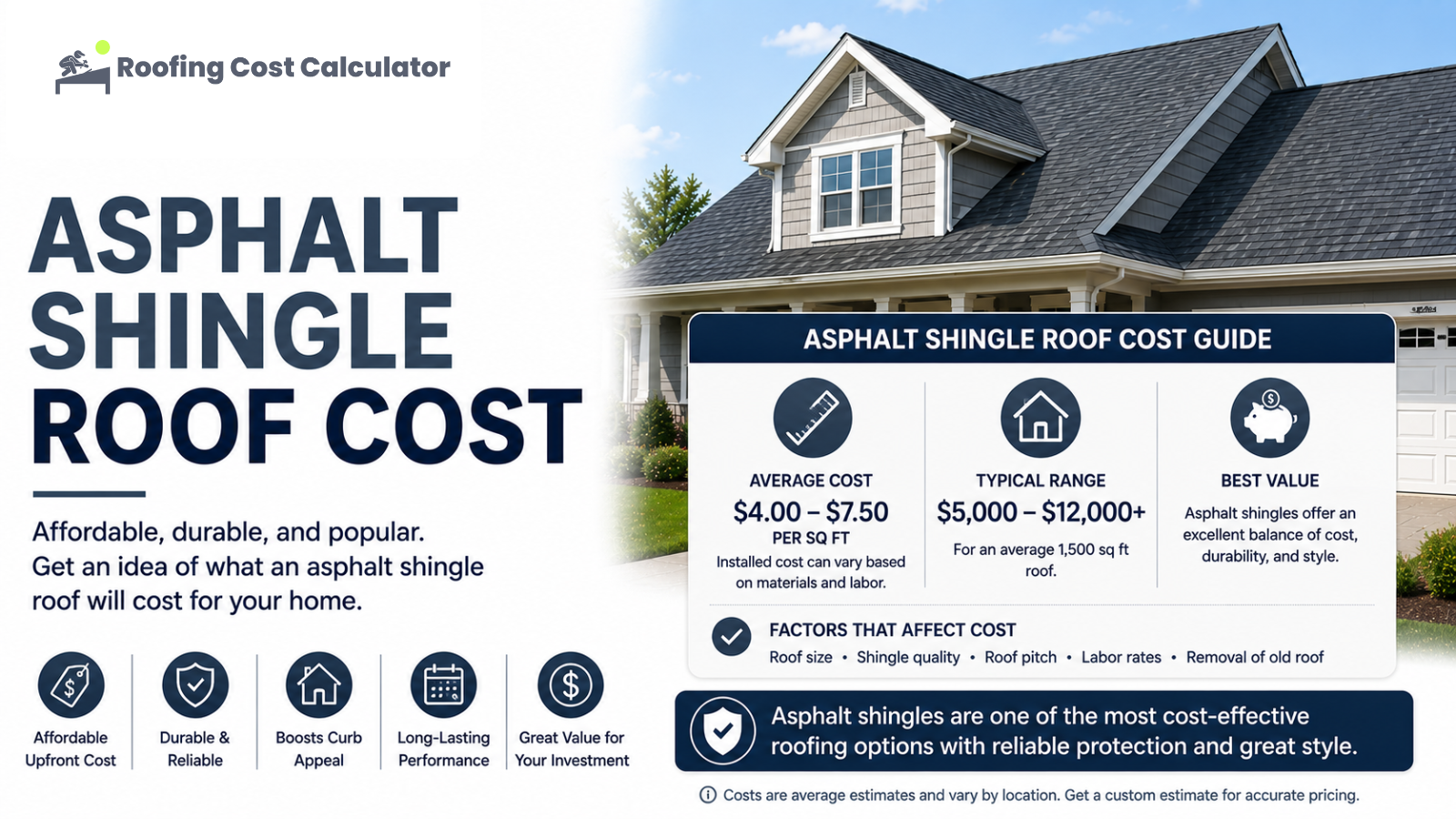
Asphalt Shingles
Typical installed cost:
$4–$8 per square foot
Because materials and installation are relatively affordable, asphalt shingles remain the most common roofing material in the United States.
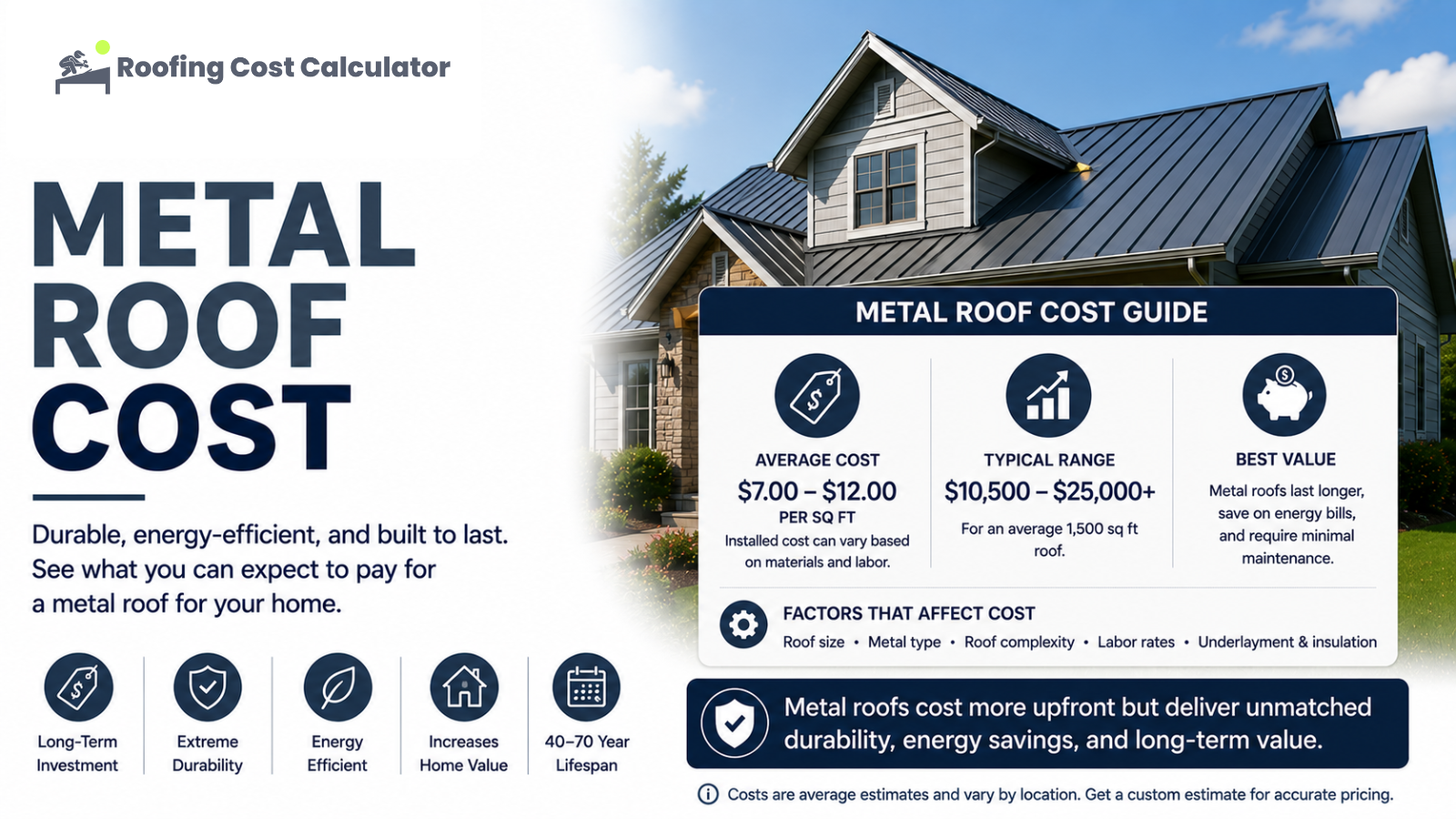
Metal Roofing
Typical installed cost:
$8–$18 per square foot
The higher price reflects both the cost of the materials and the specialized installation required.
Winner: 🟢 Asphalt Shingles (Lower upfront cost)
Lifespan
Roof longevity has a major impact on long-term value.
Asphalt Shingles
Most asphalt roofs last:
- 20–25 years (3-tab)
- 25–35 years (architectural)
Metal Roofing
Most residential metal roofs last:
- 40–70 years
Premium metals such as copper or zinc may last even longer.
Winner: 🟢 Metal Roofing
Maintenance Requirements
Asphalt Shingles
Routine maintenance includes:
- Replacing damaged shingles
- Cleaning gutters
- Inspecting flashing
- Monitoring granule loss
Metal Roofing
Metal roofs generally require:
- Periodic inspections
- Cleaning debris
- Checking flashing and fasteners
Overall maintenance is usually less frequent.
Winner: 🟢 Metal Roofing
Weather Resistance
Both materials perform well, but their strengths differ.
Asphalt Shingles
Perform well in:
- Moderate climates
- Normal rainfall
- Typical wind conditions
Premium shingles often offer improved wind resistance.
Metal Roofing
Excels in:
- Heavy snow
- Strong winds
- Wildfire-prone areas
- Heavy rain
- Coastal environments
Metal roofing sheds snow easily and is highly resistant to fire.
Winner: 🟢 Metal Roofing
Energy Efficiency
Roofing materials influence heat absorption.
Asphalt Shingles
Modern reflective shingles help reduce heat absorption, but darker colors generally absorb more heat.
Metal Roofing
Many metal roofs feature reflective coatings that reduce solar heat gain, potentially improving indoor comfort in warm climates.
Winner: 🟢 Metal Roofing
Appearance
Appearance is largely a matter of personal preference.
Asphalt Shingles
Available in:
- Many colors
- Multiple textures
- Traditional residential styles
Suitable for nearly every neighborhood.
Metal Roofing
Available in:
- Standing seam panels
- Metal shingles
- Slate-look panels
- Tile-look systems
Often chosen for contemporary or premium homes.
Winner: Tie
Installation
Asphalt Shingles
Installation is widely understood by roofing contractors and is generally completed more quickly.
Metal Roofing
Requires specialized training and careful installation techniques.
Finding experienced installers may be more difficult in some areas.
Winner: 🟢 Asphalt Shingles
Repairs
Asphalt Shingles
Individual shingles can often be replaced without disturbing the rest of the roof.
Repairs are generally straightforward.
Metal Roofing
Repairs may require matching panels or specialized replacement techniques.
Depending on the roofing system, repairs can be more involved.
Winner: 🟢 Asphalt Shingles
Home Value
Both materials can improve curb appeal.
Asphalt Shingles
A new asphalt roof gives buyers confidence that immediate roofing expenses are unlikely.
Metal Roofing
Because of its long lifespan and durability, metal roofing may appeal to buyers seeking a low-maintenance home.
Winner: 🟢 Metal Roofing
Environmental Impact
Asphalt Shingles
Many shingles are recyclable, although recycling opportunities vary by location.
Metal Roofing
Metal roofs often contain recycled material and are themselves highly recyclable at the end of their service life.
Winner: 🟢 Metal Roofing
Best Climates
Asphalt Shingles
Ideal for:
- Moderate climates
- Most suburban neighborhoods
- Homeowners seeking affordable installation
Metal Roofing
Ideal for:
- Snowy regions
- Hurricane-prone areas
- Coastal environments
- Hot climates
- Wildfire-prone locations
Which Roof Is Better for Different Homeowners?
Choose Asphalt Shingles If:
- You're working with a limited budget.
- You plan to sell within the next 10–15 years.
- You want a traditional residential appearance.
- You prefer lower upfront costs.
- You want easy repairs.
Choose Metal Roofing If:
- You plan to stay in your home for decades.
- You want the longest possible roof lifespan.
- You live in an area with severe weather.
- You value energy efficiency.
- You want minimal long-term maintenance.
Pros and Cons
Asphalt Shingles
Pros
- Lower installation cost
- Widely available
- Easy repairs
- Large variety of colors
- Fast installation
Cons
- Shorter lifespan
- More maintenance over time
- Less resistant to extreme weather
Metal Roofing
Pros
- Exceptional durability
- Long lifespan
- Fire resistant
- Low maintenance
- Excellent weather performance
- Energy-efficient options
Cons
- Higher upfront cost
- Specialized installation
- Repairs may be more expensive
Frequently Asked Questions
Which roof lasts longer?
Metal roofing generally lasts significantly longer than asphalt shingles, often providing 40–70 years of service compared with approximately 20–35 years for asphalt.
Which roofing material is cheaper?
Asphalt shingles have a substantially lower upfront installation cost.
Which roof requires less maintenance?
Metal roofs generally require less routine maintenance over their lifespan.
Is a metal roof worth the extra cost?
For homeowners planning to remain in their home for many years, the longer lifespan and durability may justify the higher initial investment.
Which roofing material adds more home value?
Both can improve curb appeal, but many buyers appreciate the long-term durability and low maintenance associated with metal roofing.
Final Verdict
There is no single "best" roofing material for every homeowner.
Choose asphalt shingles if your priorities are affordability, traditional appearance, and lower initial costs. They remain an excellent choice for millions of homes and provide dependable performance when properly installed and maintained.
Choose metal roofing if you are looking for exceptional durability, a roof that may last for decades, reduced maintenance, and superior performance in demanding weather conditions. Although the upfront investment is higher, many homeowners find the long-term value worthwhile.
Before making your final decision, use our Roofing Cost Calculator to estimate the cost of both roofing options based on your home's size and location. Comparing realistic estimates can help you determine which material best fits your budget and long-term plans.