 Roofing Cost Calculator
Simple Maintenance Tips to Extend Your Roof's Lifespan (2026 Guide)
Your roof is one of the most important parts of your home, protecting everything beneath it from rain, wind, snow, sunlight, and changing temperatures. While every roof will eventually need replacement, regular maintenance can help maximize its lifespan, reduce repair costs, and prevent unexpected problems.
Many roofing issues begin as small defects that go unnoticed. A missing shingle, clogged gutter, or damaged flashing may seem insignificant at first, but over time these issues can lead to water damage, mold growth, and expensive structural repairs.
Fortunately, roof maintenance doesn't have to be complicated. By performing routine inspections and addressing minor issues promptly, homeowners can often avoid major repairs and keep their roofing system performing well for many years.
This guide explains practical roof maintenance tips, seasonal care recommendations, and common mistakes homeowners should avoid.
Why Roof Maintenance Matters
Regular maintenance offers several important benefits.
A well-maintained roof can:
- Extend the life of roofing materials.
- Reduce repair costs.
- Prevent water damage.
- Improve energy efficiency.
- Protect your home's structure.
- Preserve your property's value.
- Help identify problems before they become emergencies.
Preventive maintenance is usually much less expensive than repairing extensive damage after a roof failure.
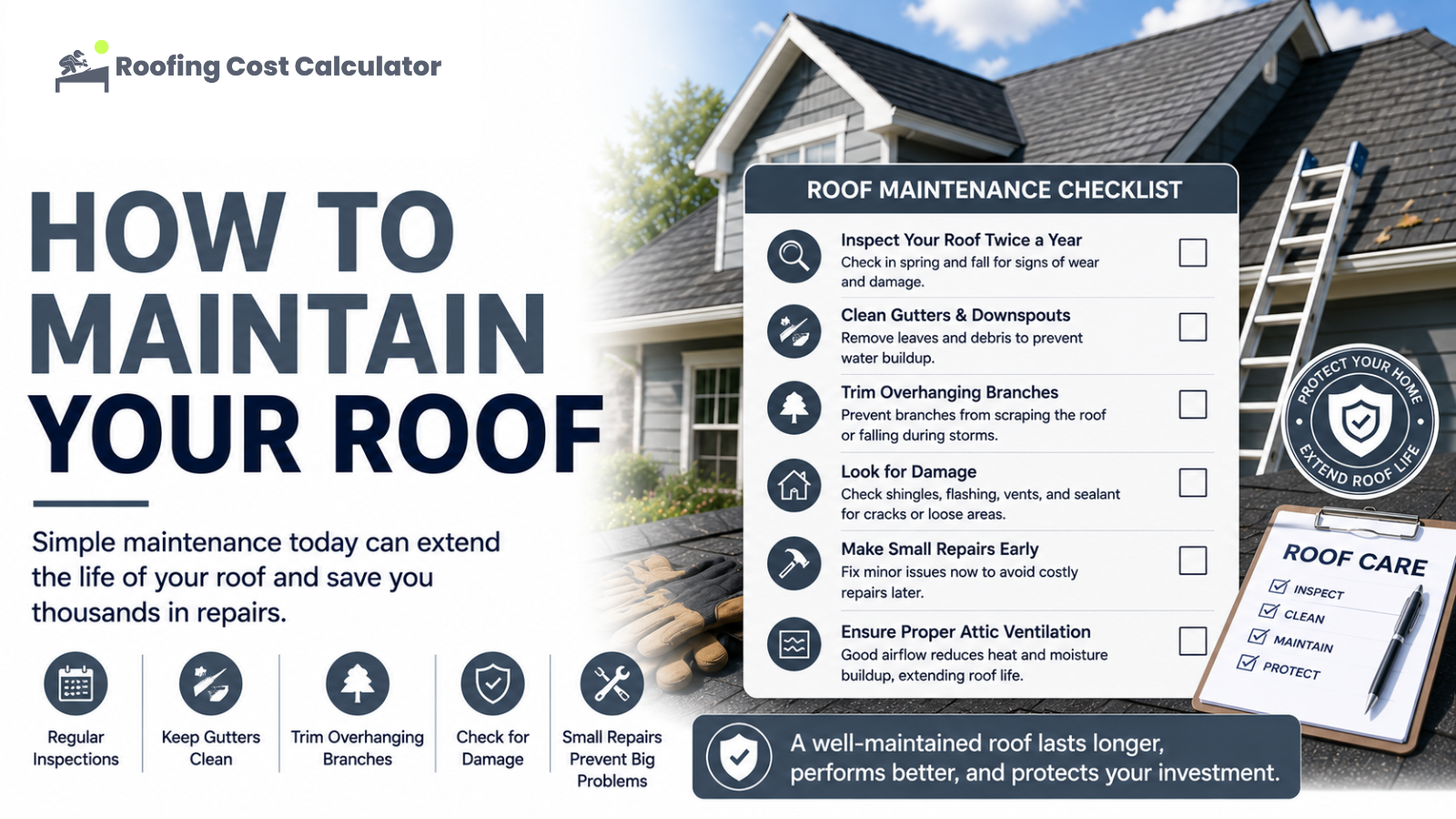
Inspect Your Roof Twice Each Year
A visual inspection should be performed at least twice annually.
The best times are:
- Spring
- Fall
You should also inspect your roof after severe storms, strong winds, hail, or heavy snowfall.
Look for:
- Missing shingles
- Cracked shingles
- Curling shingles
- Loose flashing
- Debris accumulation
- Moss growth
- Sagging areas
Many small problems can be identified before they become costly repairs.
Keep Gutters Clean
Clean gutters play a vital role in protecting your roof.
When gutters become blocked by leaves and debris, water may back up beneath roofing materials or overflow near the home's foundation.
Clean gutters:
- Improve drainage.
- Reduce standing water.
- Help prevent ice dams.
- Minimize moisture damage.
Many homeowners clean gutters at least twice each year, although homes surrounded by trees may require more frequent cleaning.
Remove Leaves and Debris
Leaves, pine needles, branches, and other debris can trap moisture against roofing materials.
Over time, this moisture may contribute to:
- Moss growth
- Algae
- Wood rot
- Premature deterioration
Removing debris regularly helps the roof dry more efficiently after rainfall.
Trim Overhanging Tree Branches
Trees provide shade but may also create roofing problems.
Overhanging branches can:
- Scratch shingles
- Drop leaves onto the roof
- Break during storms
- Allow animals easier access
Keeping branches trimmed reduces the risk of physical damage.
Watch for Moss and Algae
Dark streaks and moss are common on roofs, particularly in damp or shaded environments.
While algae are often cosmetic, thick moss can retain moisture against the roof surface.
If moss becomes excessive, consult a roofing professional about safe removal methods. Avoid aggressive pressure washing, which may damage certain roofing materials.
Check Flashing and Roof Penetrations
Flashing protects vulnerable areas where the roof meets other structures.
Inspect flashing around:
- Chimneys
- Skylights
- Plumbing vents
- Roof valleys
- Dormers
Loose or damaged flashing is one of the most common causes of roof leaks.
Inspect the Attic
Your attic can reveal roofing problems before they appear inside your living space.
Look for:
- Water stains
- Wet insulation
- Mold
- Damp wood
- Sunlight entering through the roof
A dry, well-ventilated attic contributes to a healthier roofing system.
Address Small Repairs Quickly
Small roofing problems rarely improve on their own.
Replacing a few damaged shingles or repairing loose flashing early may prevent:
- Interior water damage
- Mold growth
- Structural deterioration
- Larger repair bills
Prompt attention often saves money in the long run.
Avoid Walking on the Roof
Walking on a roof can:
- Damage shingles.
- Crack roofing tiles.
- Increase the risk of injury.
Whenever possible, inspect the roof from the ground using binoculars or hire a qualified roofing professional for a detailed inspection.
Seasonal Roof Maintenance
Spring
Inspect for winter damage.
Check for:
- Missing shingles
- Ice damage
- Loose flashing
- Blocked gutters
Summer
Look for:
- Heat-related wear
- Storm damage
- Debris accumulation
Trim nearby vegetation if necessary.
Fall
Prepare the roof for winter by:
- Cleaning gutters
- Removing leaves
- Inspecting flashing
- Repairing damaged shingles
Winter
After major snowstorms:
- Watch for ice dams.
- Check ceilings for leaks.
- Monitor attic ventilation.
- Avoid removing snow unless it creates a safety concern.
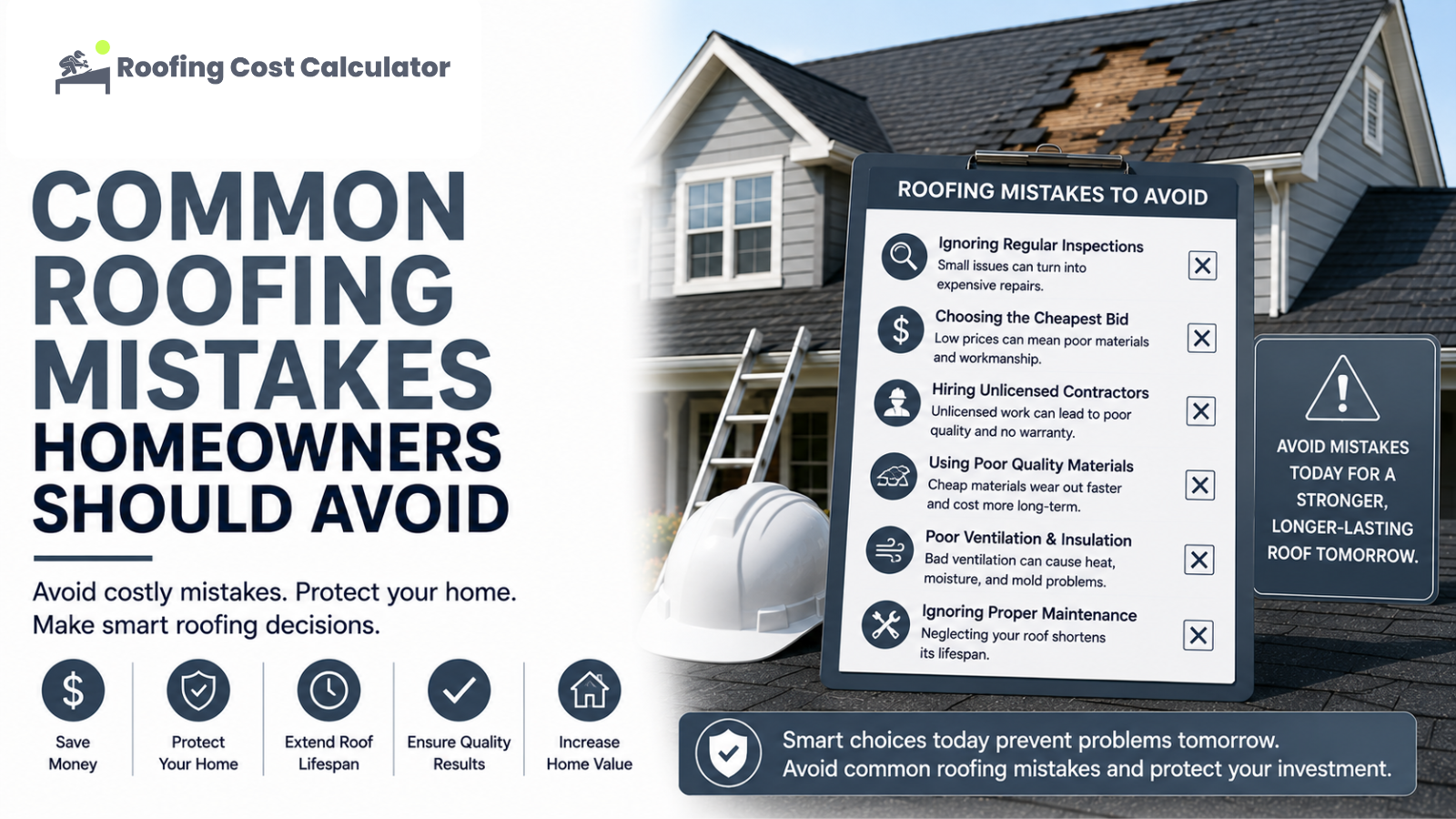
Common Roof Maintenance Mistakes
Avoid these common errors:
- Ignoring small leaks
- Skipping routine inspections
- Allowing gutters to clog
- Using pressure washers on roofing materials
- Delaying repairs
- Walking unnecessarily on the roof
- Hiring unqualified contractors
Preventing these mistakes helps maximize the life of your roofing system.
When to Call a Professional
Some roofing work should always be left to experienced contractors.
Contact a professional if you notice:
- Sagging roof sections
- Multiple leaks
- Extensive storm damage
- Structural concerns
- Large areas of missing roofing material
- Damage following hail or hurricanes
Professional inspections often identify hidden issues that homeowners cannot safely detect.
Frequently Asked Questions
How often should I inspect my roof?
Most homeowners should perform a visual inspection every spring and fall, as well as after severe storms.
Can roof maintenance extend the life of my roof?
Yes. Routine maintenance helps identify problems early and may significantly increase the useful life of many roofing systems.
Is moss harmful to my roof?
Heavy moss growth can trap moisture and accelerate deterioration. It should be removed carefully using methods appropriate for the roofing material.
Should I pressure wash my roof?
In many cases, no. High-pressure washing may damage shingles and other roofing materials. Follow the manufacturer's recommendations or consult a roofing professional.
What is the most important maintenance task?
Regular inspections and keeping gutters clean are two of the simplest and most effective ways to protect your roof.
Final Thoughts
Regular roof maintenance is one of the best investments homeowners can make. By inspecting your roof throughout the year, cleaning gutters, removing debris, and addressing small issues promptly, you can help maximize the life of your roofing system while reducing the likelihood of expensive repairs.
If your inspections reveal significant wear, recurring leaks, or widespread damage, use our Roofing Cost Calculator to estimate the cost of a roof replacement before requesting contractor estimates.