 Roofing Cost Calculator
10 Costly Errors That Can Shorten the Life of Your Roof (2026 Guide)
A roof is one of the most important investments in any home. Whether you're replacing an aging roof, repairing storm damage, or simply performing routine maintenance, avoiding common mistakes can save thousands of dollars and help your roof last for decades.
Many roofing problems are not caused by poor materials but by poor decisions. Delaying repairs, hiring inexperienced contractors, neglecting maintenance, or choosing the wrong roofing materials can all reduce the lifespan of an otherwise good roofing system.
Fortunately, most of these mistakes are entirely preventable.
This guide highlights the most common roofing mistakes homeowners make and explains how to avoid them.
Why Roofing Mistakes Can Be Expensive
Unlike many home improvement projects, roofing mistakes often remain hidden until water begins entering the home.
A small issue can eventually lead to:
- Interior water damage
- Mold growth
- Damaged insulation
- Rotting roof decking
- Structural repairs
- Higher energy bills
Addressing problems early is almost always less expensive than repairing widespread damage later.
Mistake 1: Waiting Too Long to Replace an Aging Roof
Many homeowners postpone roof replacement until leaks become severe.
Unfortunately, by the time water reaches the interior of the home, hidden damage may already exist beneath the roofing materials.
Replacing a roof before major deterioration occurs can help prevent much larger repair costs.
Mistake 2: Ignoring Small Leaks
A small leak may appear harmless, but even minor water intrusion can damage insulation, ceilings, drywall, and wooden framing over time.
Never assume a leak will stop on its own.
If you notice water stains or dripping during rain, arrange for an inspection as soon as possible.
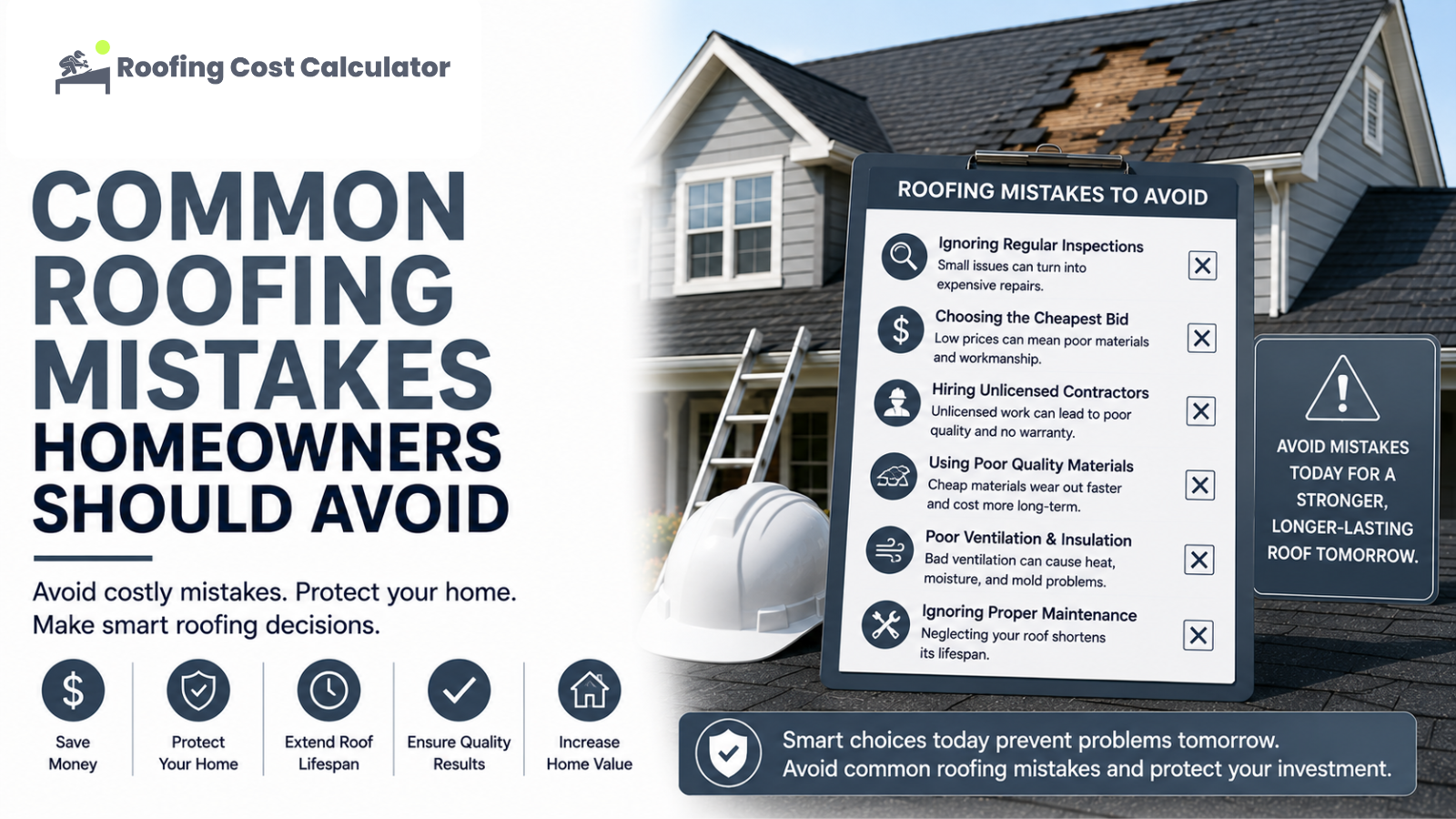
Mistake 3: Choosing the Lowest Estimate
Price is important, but the cheapest contractor is not always the best value.
Extremely low estimates may indicate:
- Lower-quality materials
- Incomplete work
- Limited warranties
- Inexperienced installers
- Unexpected additional charges
Compare several written estimates before making a decision.
Mistake 4: Skipping Regular Roof Inspections
Many roofing problems develop gradually.
Routine inspections help identify:
- Missing shingles
- Loose flashing
- Moss growth
- Storm damage
- Clogged gutters
Performing simple inspections twice each year can prevent expensive surprises.
Mistake 5: Neglecting Gutters
Blocked gutters prevent water from draining properly.
Overflowing water may damage:
- Roofing materials
- Fascia boards
- Soffits
- Exterior walls
- Foundations
Cleaning gutters regularly is one of the simplest ways to protect your roof.
Mistake 6: Walking on the Roof Unnecessarily
Walking on roofing materials increases the risk of:
- Broken shingles
- Cracked tiles
- Damaged flashing
- Personal injury
Whenever possible, inspect the roof from the ground using binoculars or hire a qualified roofing professional.
Mistake 7: Ignoring Attic Ventilation
Proper attic ventilation helps regulate both temperature and moisture.
Poor ventilation can contribute to:
- Higher attic temperatures
- Moisture buildup
- Mold
- Ice dams
- Premature aging of roofing materials
A balanced ventilation system supports the long-term health of the entire roofing system.
Mistake 8: Choosing the Wrong Roofing Material
Every roofing material has advantages and disadvantages.
Factors to consider include:
- Climate
- Budget
- Roof slope
- Maintenance requirements
- Expected lifespan
- Appearance
Selecting a roofing material suited to your home and local weather conditions often provides better long-term performance.
Mistake 9: Delaying Storm Damage Repairs
After severe weather, homeowners sometimes postpone inspections because the roof appears undamaged from the ground.
However, storms may cause hidden problems such as:
- Lifted shingles
- Damaged flashing
- Hail impacts
- Small punctures
- Loose fasteners
Early inspection can prevent more extensive repairs later.
Mistake 10: Failing to Plan Ahead
Roof replacement is a major investment.
Waiting until the roof fails completely often limits your options.
Planning ahead allows you to:
- Compare contractors.
- Research roofing materials.
- Schedule work during favorable weather.
- Budget gradually.
- Avoid emergency replacements.
A little preparation can make the entire project less stressful.
Good Roofing Habits
Homeowners can help maximize roof life by following a few simple habits.
These include:
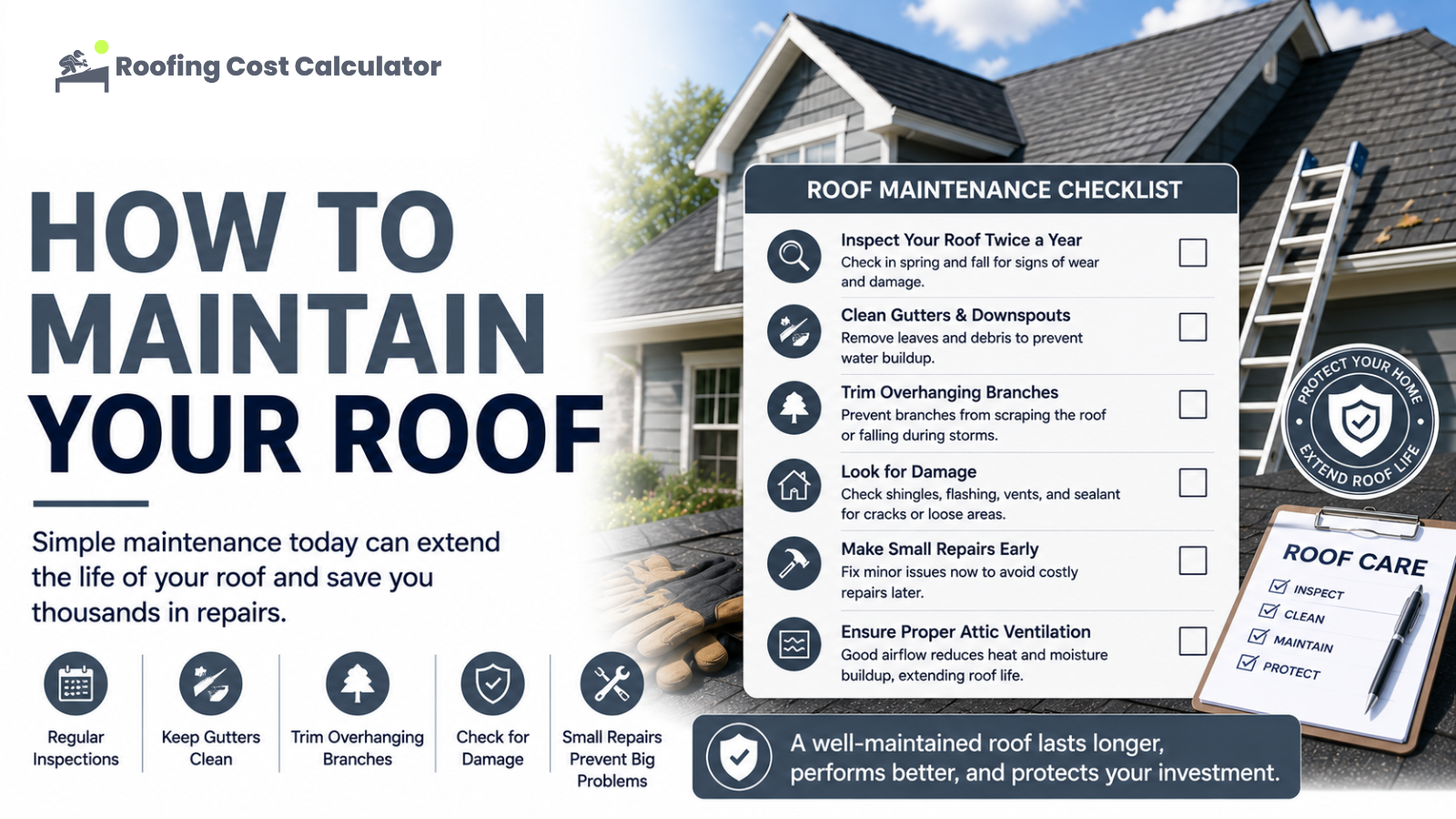
- Inspecting the roof every spring and fall.
- Cleaning gutters regularly.
- Removing leaves and debris.
- Trimming nearby trees.
- Repairing minor damage promptly.
- Keeping attic ventilation unobstructed.
- Hiring qualified roofing professionals.
Consistent maintenance often extends roof life while reducing long-term costs.
Warning Signs You Should Never Ignore
Arrange a professional inspection if you notice:
- Missing shingles
- Multiple leaks
- Sagging roof sections
- Granules collecting in gutters
- Water stains on ceilings
- Visible daylight in the attic
- Loose flashing
- Storm damage
These signs may indicate problems requiring prompt attention.
Frequently Asked Questions
What is the biggest mistake homeowners make?
One of the most common mistakes is delaying repairs after the first signs of roof damage. Early repairs are usually far less expensive than waiting until widespread deterioration occurs.
Can poor maintenance shorten roof life?
Yes. Neglecting inspections, clogged gutters, and unresolved damage can significantly reduce the lifespan of many roofing systems.
Is it worth getting multiple roofing estimates?
Yes. Comparing several written estimates allows homeowners to evaluate pricing, materials, warranties, and contractor experience before making a decision.
Should I inspect my roof after every storm?
It's a good idea to perform a visual inspection after severe weather, particularly following high winds or hail.
How can I make my roof last longer?
Regular maintenance, prompt repairs, clean gutters, proper attic ventilation, and professional inspections all contribute to maximizing roof lifespan.
Final Thoughts
Many expensive roofing problems begin with small, preventable mistakes. By inspecting your roof regularly, maintaining gutters, addressing minor issues promptly, and hiring qualified contractors, you can protect your home and extend the life of your roofing system.
Planning ahead is equally important. Understanding your roof's condition before major problems develop gives you more time to compare contractors, select the right materials, and budget for future improvements.
If you're considering a roof replacement, use our Roofing Cost Calculator to estimate your project's cost and compare roofing options before requesting contractor estimates.