 Roofing Cost Calculator
A Complete Homeowner Checklist (2026 Guide)
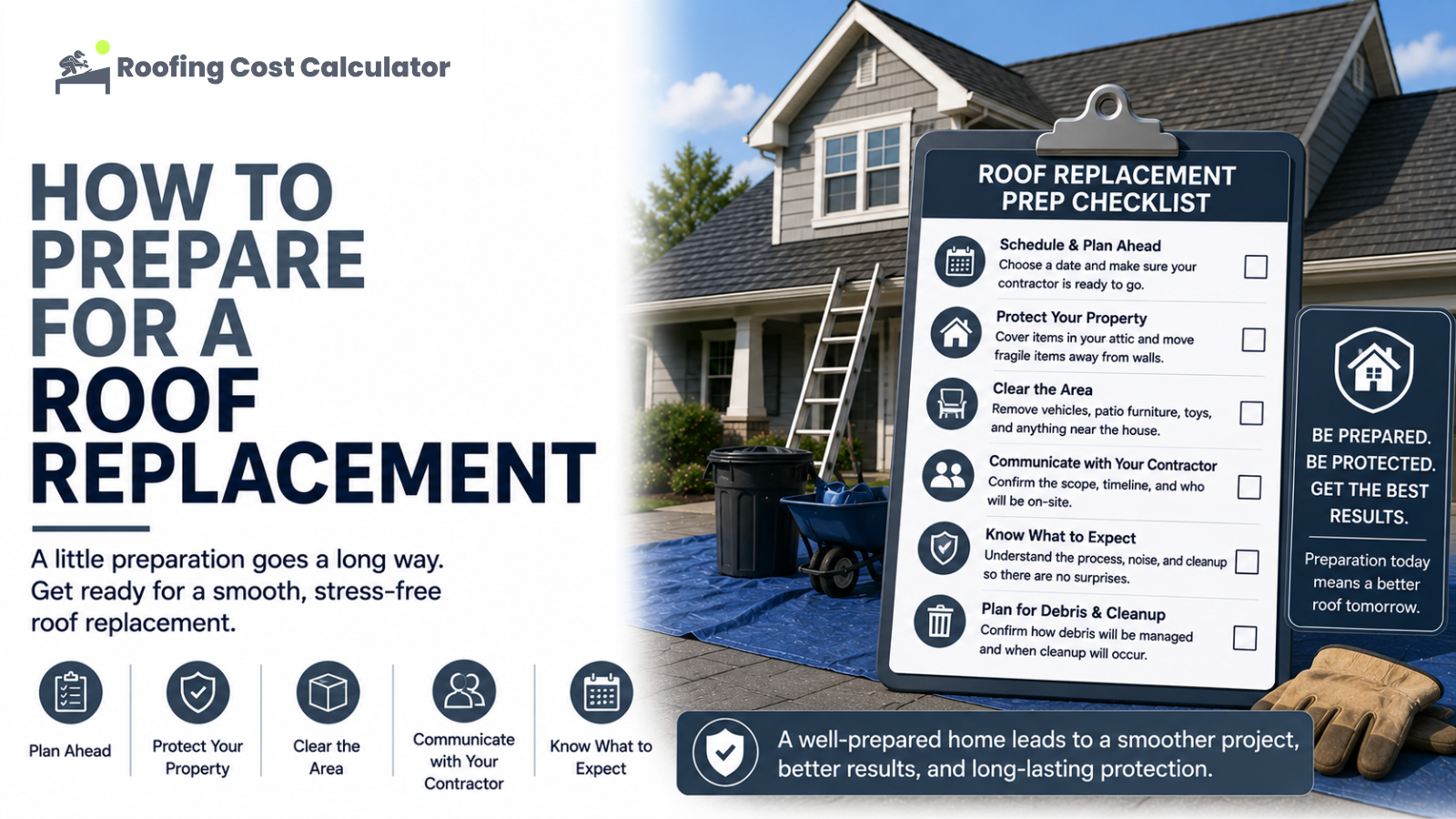
Replacing a roof is one of the largest home improvement projects most homeowners will undertake. Although experienced roofing contractors handle the installation itself, there are several simple steps homeowners can take before work begins to make the project safer, smoother, and less stressful.
Preparing your property ahead of time helps protect your belongings, minimizes disruptions, and allows the roofing crew to work more efficiently. It also gives you the opportunity to ask questions, understand the project timeline, and avoid last-minute surprises.
This guide explains how to prepare your home before roof replacement, what to expect during installation, and what to check after the project is complete.
Why Preparation Matters
Roof replacement is more than simply installing new shingles.
During the project, contractors may:
- Remove existing roofing materials.
- Deliver heavy materials.
- Use ladders and scaffolding.
- Generate noise and vibrations.
- Move around the entire exterior of your home.
A little preparation helps reduce inconvenience while protecting both your home and your belongings.
Schedule the Project Carefully
Before work begins, confirm:
- Start date
- Estimated completion date
- Daily working hours
- Weather contingency plans
- Material delivery schedule
Although roofing projects are often completed within a few days, weather conditions may occasionally affect the timeline.
Move Vehicles Away From the House
Roofing crews need space for:
- Material delivery
- Dump trailers
- Equipment
- Ladders
Parking vehicles away from the work area also helps protect them from falling debris or dust.
Protect Items in the Attic
Roof replacement often causes vibrations throughout the home.
If you use your attic for storage, consider covering valuable items with plastic sheets or moving fragile belongings temporarily.
Pay special attention to:
- Electronics
- Furniture
- Holiday decorations
- Cardboard boxes
- Family keepsakes
Dust may enter through small gaps during construction.
Remove Fragile Wall Decorations
Hammering and vibrations may affect items hanging on interior walls.
Consider temporarily removing:
- Mirrors
- Picture frames
- Shelves
- Decorative artwork
- Collectibles
This simple step reduces the risk of accidental damage.
Secure Outdoor Furniture
Move outdoor items away from the work area whenever possible.
Examples include:
- Patio furniture
- Grills
- Potted plants
- Children's toys
- Garden decorations
Although contractors often protect landscaping, clearing the area makes the project safer and more efficient.
Trim Trees if Necessary
Overhanging branches may interfere with roofing work.
Pruning nearby trees before installation can:
- Improve roof access.
- Reduce safety risks.
- Prevent branches from damaging new roofing materials.
Inform Your Neighbors
Roof replacement can be noisy.
Letting nearby neighbors know about the project in advance is a thoughtful courtesy, particularly if construction will begin early in the morning.
Prepare Children and Pets
Roof replacement can be stressful for both children and pets because of the constant noise.
Consider:
- Keeping pets indoors in a quiet room.
- Walking dogs before work begins.
- Planning activities away from home if young children are sensitive to loud sounds.
Keeping everyone comfortable helps reduce anxiety during the project.
Confirm Material Choices
Before installation starts, verify that all project details are correct.
Review:
- Roofing material
- Color
- Underlayment
- Flashing
- Ventilation improvements
- Warranty information
Confirming everything beforehand helps avoid misunderstandings later.
Understand the Installation Process
Although every project is different, roof replacement typically includes:
- Protecting the property.
- Removing old roofing materials.
- Inspecting the roof deck.
- Completing necessary repairs.
- Installing underlayment.
- Installing new roofing materials.
- Replacing flashing.
- Final cleanup.
- Final inspection.
Knowing what to expect helps homeowners feel more confident throughout the project.
During the Roof Replacement
While work is underway:
- Stay clear of active work areas.
- Follow any safety instructions provided by the contractor.
- Avoid walking beneath ladders.
- Keep children away from construction zones.
- Expect noise throughout much of the day.
Most projects progress quickly once installation begins.
After the Project Is Complete
Before considering the project finished, walk around the property with the contractor.
Check for:
- Clean gutters
- Removed debris
- Proper flashing installation
- Uniform roofing appearance
- Proper cleanup
- Nails or sharp objects around the property
Ask any remaining questions before making final payment, if applicable.
Keep Your Documentation
Store important paperwork in a safe location.
This may include:
- Contract
- Warranty documents
- Final invoice
- Product information
- Maintenance recommendations
These records may be useful for future maintenance, insurance purposes, or when selling your home.
Tips for a Smooth Roofing Project
A successful roof replacement often comes down to good communication.
Helpful tips include:
- Ask questions before work begins.
- Confirm the project schedule.
- Review warranties carefully.
- Maintain clear access around the home.
- Report concerns promptly.
- Keep emergency contact information available.
Good communication helps prevent misunderstandings throughout the project.
Frequently Asked Questions
Should I stay home during roof replacement?
Many homeowners remain at home, although some choose to leave during the noisiest portions of the project. The decision depends on your comfort level and personal circumstances.
How long does roof replacement usually take?
Many residential roof replacements are completed within one to several days, although larger or more complex roofs may require additional time.
Should I cover items in my attic?
Yes. Roofing work can create dust and vibrations, so covering stored belongings is generally recommended.
Can I use my driveway during installation?
Your contractor may request temporary access for material deliveries and equipment. It's usually best to move vehicles before work begins.
What should I check after the roof is finished?
Inspect the property for cleanliness, verify the roof's appearance, review warranty documents, and ask the contractor to explain any maintenance recommendations.
Final Thoughts
Preparing for a roof replacement doesn't require extensive effort, but taking a few simple steps before installation can make the entire project smoother and safer. By protecting your belongings, clearing the work area, confirming project details, and maintaining open communication with your contractor, you'll be better prepared for a successful roofing project.
If you're planning a roof replacement, use our Roofing Cost Calculator to estimate your project's cost before requesting contractor quotes. Understanding your potential budget ahead of time can help you compare options and make informed decisions.