 Roofing Cost Calculator
Understanding What Determines the Price of a New Roof (2026 Guide)
Replacing a roof is a significant investment, and one of the first questions homeowners ask is why roofing estimates can vary so much. Two homes of similar size may receive noticeably different quotes because roof replacement costs depend on far more than just the number of square feet.
Everything from the roofing material you choose to the complexity of your roof, local labor rates, permit requirements, and even the weather in your area can influence the final price.
Understanding these cost factors will help you compare contractor estimates more confidently, avoid unexpected expenses, and make informed decisions before your project begins.
This guide explains the most important factors that affect roof replacement costs and how each one contributes to your overall budget.
Quick Answer
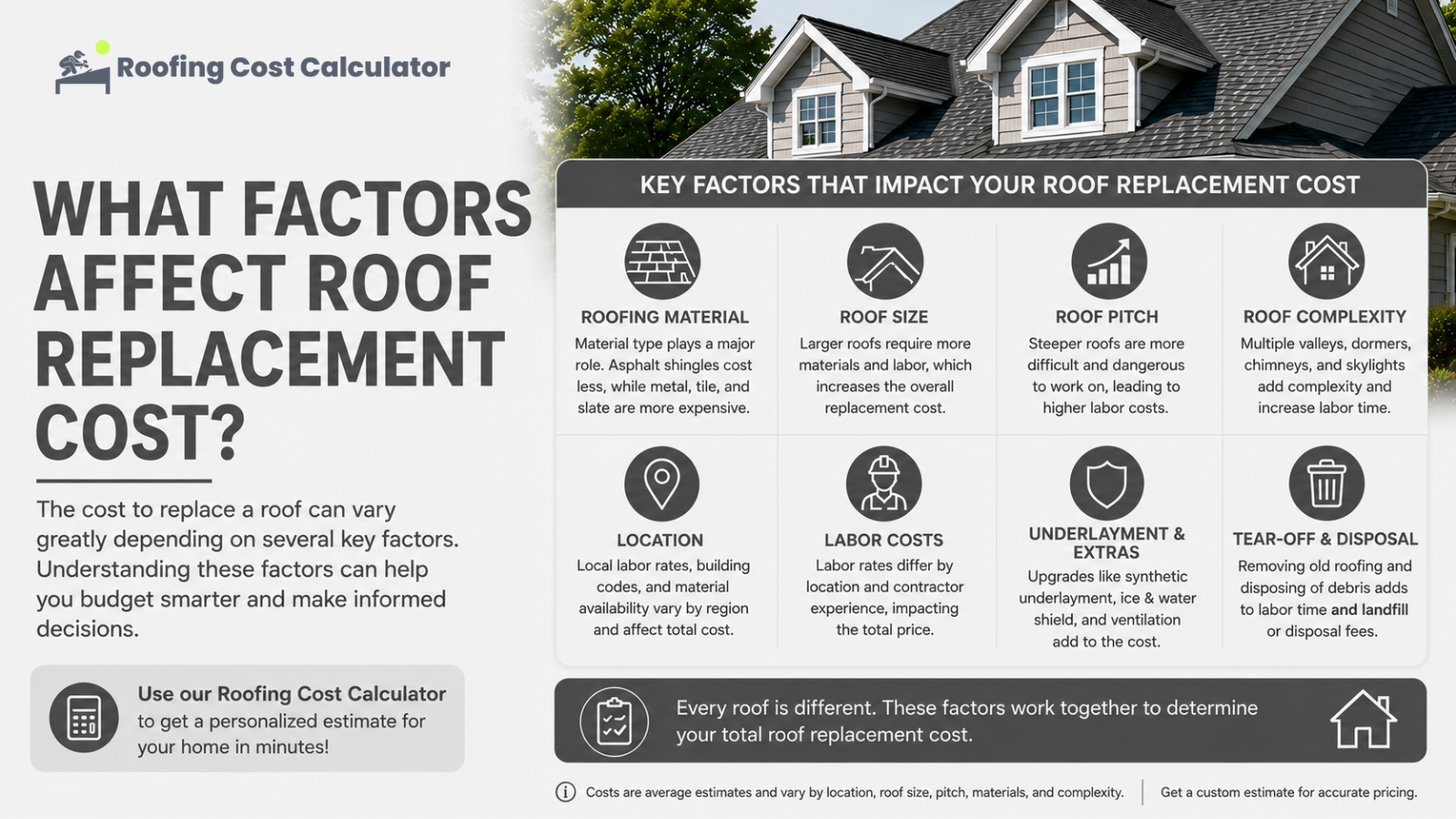
The biggest factors that influence roof replacement cost include:
- Roof size
- Roofing material
- Roof pitch
- Roof complexity
- Labor costs
- Geographic location
- Removal of the existing roof
- Structural repairs
- Permits and inspections
- Roofing accessories
Every roofing project is unique, which is why estimates can vary even for similar homes.
Roof Size
Roof size is usually the single largest factor affecting cost.
Larger roofs require:
- More roofing materials
- More underlayment
- More flashing
- More fasteners
- More labor
- More waste disposal
As roof area increases, total project costs increase accordingly.
Roofing Material
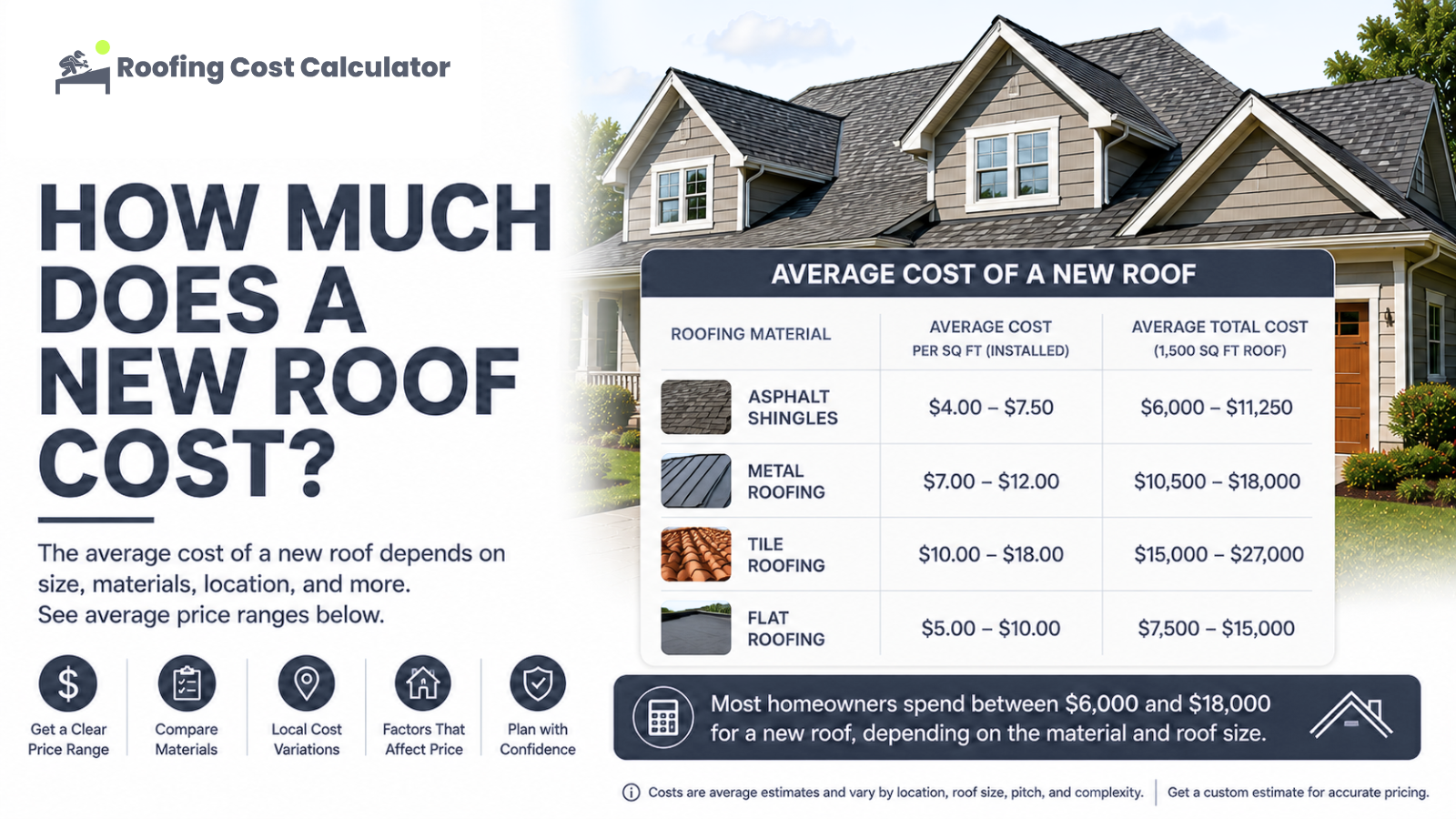
Different roofing materials have different installation costs and expected lifespans.
Typical installed costs include:
| Roofing Material | Typical Installed Cost |
|---|---|
| Asphalt Shingles | $4–$8 / sq ft |
| Metal Roofing | $8–$18 / sq ft |
| Tile Roofing | $10–$22 / sq ft |
Premium materials generally cost more initially but may offer longer service lives and lower maintenance requirements.
Roof Pitch
Steeper roofs are more difficult to work on.
Higher roof pitches often require:
- Additional safety equipment
- Slower installation
- More labor hours
- Specialized staging
As roof pitch increases, labor costs often rise as well.
Roof Complexity
Simple roofs cost less to replace than complex ones.
Features that increase project costs include:
- Valleys
- Dormers
- Skylights
- Chimneys
- Multiple roof sections
- Intersecting rooflines
- Decorative architectural features
Complex roofs require more cutting, flashing, and installation time.
Labor Costs
Labor represents a significant portion of every roofing project.
Labor rates vary based on:
- Region
- Contractor experience
- Local demand
- Cost of living
Projects in major metropolitan areas often cost more than similar projects in rural communities.
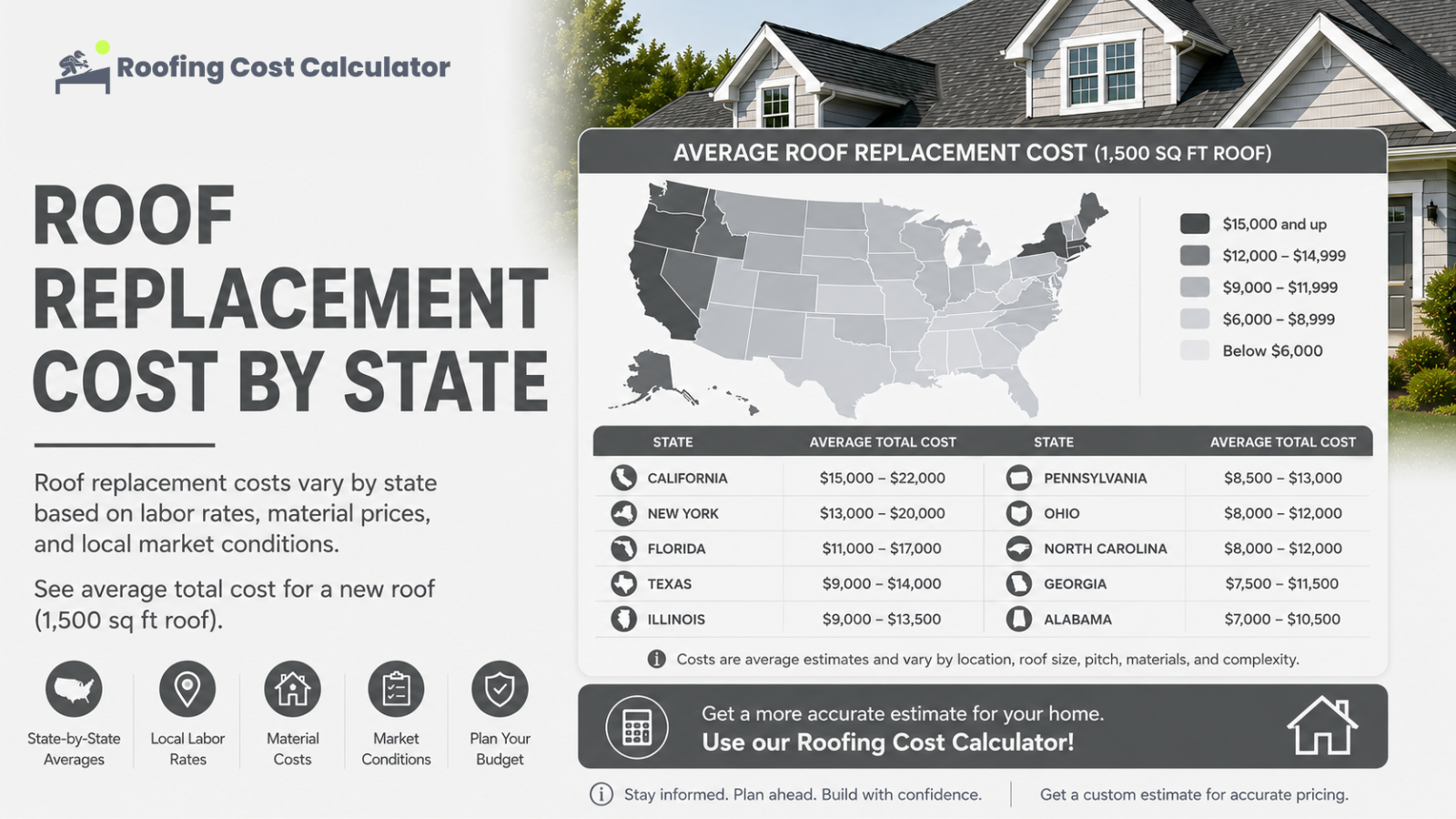
Geographic Location
Roofing prices vary considerably across the United States.
Factors include:
- Local wages
- Climate
- Building codes
- Permit fees
- Transportation costs
- Material availability
State-specific pricing often provides a more accurate estimate than relying on national averages alone.
Removing the Existing Roof
Many roof replacements require the existing roofing materials to be removed first.
The cost of tear-off depends on:
- Roof size
- Number of existing roofing layers
- Material being removed
- Disposal fees
Homes with multiple roofing layers generally require additional labor.
Structural Repairs
During roof replacement, contractors may discover hidden damage such as:
- Rotten roof decking
- Water-damaged framing
- Mold
- Insect damage
- Damaged sheathing
These repairs are difficult to predict before the old roof is removed, but they are essential for ensuring the new roof is installed on a sound structure.
Roofing Components
A complete roofing system includes much more than shingles or panels.
Additional components often include:
- Underlayment
- Ice and water shield
- Ridge caps
- Flashing
- Drip edge
- Ventilation components
- Pipe boots
- Fasteners
These materials help protect the roof from moisture and improve long-term performance.
Building Permits and Inspections
Some roofing projects require permits or inspections depending on local regulations.
Permit costs vary by municipality and may increase the overall project budget.
Your roofing contractor can usually explain which permits are required in your area.
Seasonal Demand
Roofing prices may fluctuate throughout the year.
During busy seasons:
- Contractor schedules fill more quickly.
- Material demand may increase.
- Homeowners may have fewer scheduling options.
Planning ahead often provides greater flexibility.
Warranty Options
Different roofing systems include different warranty coverage.
You may encounter:
- Manufacturer warranties
- Workmanship warranties
- Extended warranty options
Although enhanced warranties may increase the upfront cost, they can provide additional long-term protection.
How to Keep Costs Under Control
While some factors cannot be changed, homeowners can often reduce expenses by:
- Comparing at least three written estimates.
- Replacing the roof before major damage develops.
- Selecting materials appropriate for the home's climate.
- Maintaining the existing roof regularly.
- Understanding exactly what is included in each estimate.
Choosing the lowest quote is not always the best long-term value.
Frequently Asked Questions
What affects roof replacement cost the most?
Roof size, roofing material, labor costs, and roof complexity are usually the largest cost factors.
Why do contractor estimates differ?
Companies may use different materials, warranty coverage, labor rates, and installation methods, resulting in different prices.
Can roof pitch increase cost?
Yes. Steeper roofs generally require additional labor and safety equipment, increasing installation costs.
Do permits affect roofing costs?
In some areas, permit fees and required inspections contribute to the overall project budget.
Can I estimate my roof replacement cost before requesting quotes?
Yes. A roofing cost calculator provides a useful estimate based on roof size, roofing material, and location before obtaining professional estimates.
Final Thoughts
Roof replacement costs depend on many interconnected factors, from the size and design of your roof to the materials you choose and the labor rates in your area. Understanding these variables helps homeowners compare estimates more effectively and avoid unexpected expenses during the project.
For the most accurate planning, use our Roofing Cost Calculator to estimate your roof replacement cost based on your home's size, preferred roofing material, and state. It's a simple way to build a realistic budget before contacting local roofing contractors.