 Roofing Cost Calculator
Complete Homeowner Guide (2026)
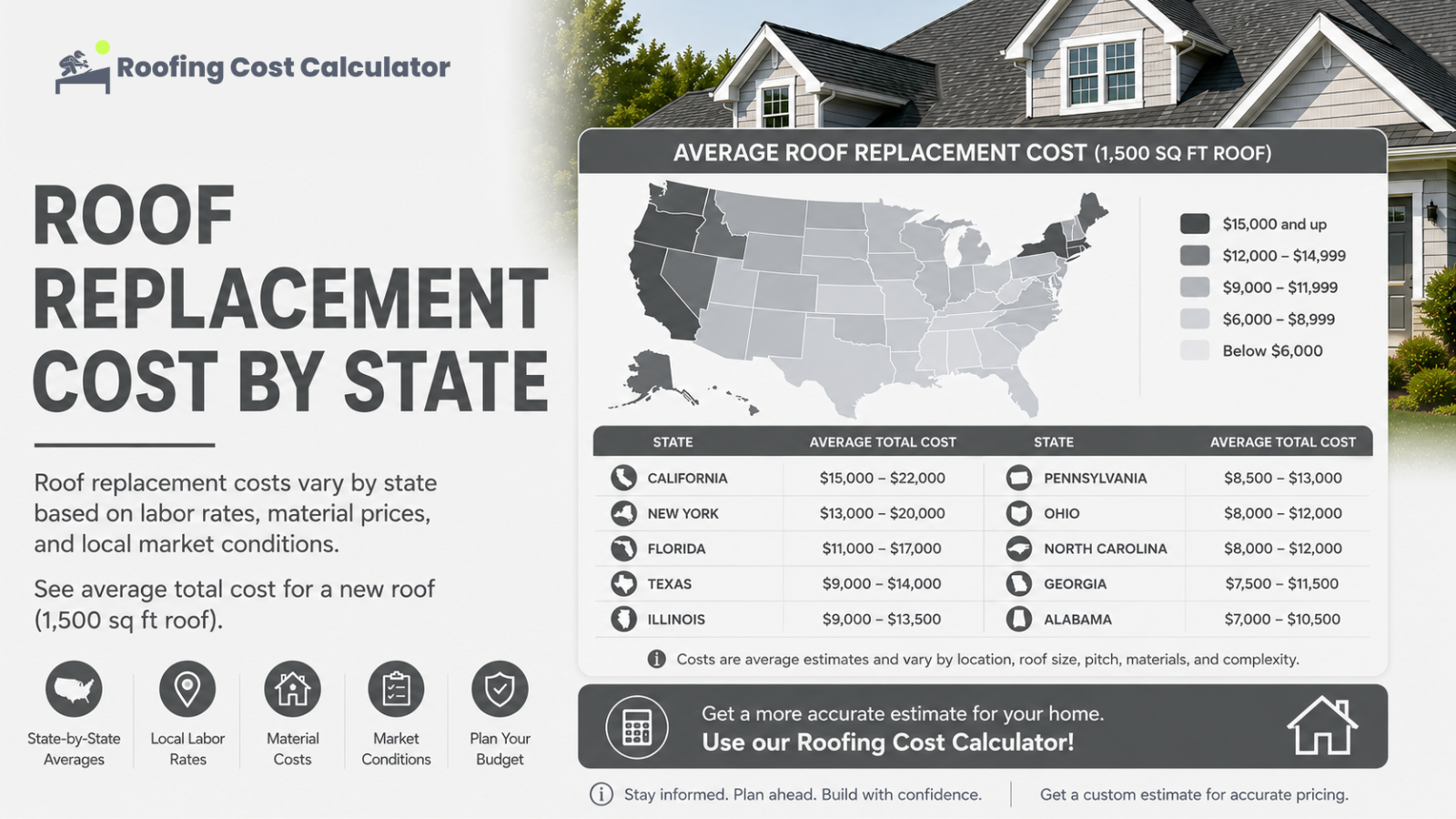
One of the biggest surprises homeowners encounter when planning a roof replacement is how much pricing can vary from one state to another. While two homes may have nearly identical roofs, the total project cost can differ significantly depending on where they are located.
Regional labor rates, local building codes, climate, permit requirements, material availability, and market demand all influence the final price of a roofing project. Because of these differences, understanding roofing costs in your state can help you create a more realistic budget before requesting contractor estimates.
This guide explains why roof replacement costs vary across the United States, the factors behind those differences, and how to estimate roofing costs more accurately using state-specific pricing.
Quick Answer
Roof replacement costs vary considerably throughout the United States.
Most homeowners can expect to pay anywhere from $4 to $12 per square foot installed, although premium materials and complex roof designs may increase costs.
States with higher labor costs or stricter building requirements often experience higher overall roofing prices.
Why Roofing Costs Vary by State
Several factors contribute to regional pricing differences.
These include:
- Local labor costs
- Building permit requirements
- Climate
- Material availability
- Transportation costs
- Roofing demand
- Cost of living
- Local building codes
Each of these factors influences the final estimate you receive from roofing contractors.
Labor Costs
Labor is one of the largest components of any roofing project.
Contractors operating in areas with higher wages and living costs generally charge more for installation than contractors working in lower-cost regions.
Labor costs may also increase during busy roofing seasons when demand is especially high.
Climate
Climate affects both roofing materials and installation practices.
Examples include:
Snow-Prone States
Roofs may require additional protection against ice dams and heavy snow loads.
Hurricane-Prone States
Building codes may require enhanced wind-resistant roofing systems.
Hot Southern States
Reflective roofing materials and heat-resistant underlayments may be recommended.
Coastal Regions
Salt air may influence material selection, particularly for metal roofing systems.
Local Building Codes
Every state—and often every municipality—has its own building requirements.
Depending on your location, roofing projects may require:
- Building permits
- Structural inspections
- Wind-resistant installation methods
- Fire-resistant materials
- Specific ventilation standards
Meeting these requirements can affect the total project cost.
Material Availability
Some roofing materials are more common in certain regions.
Examples include:
- Asphalt shingles throughout much of the United States.
- Tile roofs in warm southern climates.
- Metal roofs in snowy northern regions.
- Specialized materials in coastal communities.
Transportation and supply availability may influence local pricing.
Typical Roof Replacement Cost Ranges
Although prices vary, many homeowners can expect approximately:
| Roof Size | Estimated Cost |
|---|---|
| 1,000 sq ft | $4,000–$10,000 |
| 1,500 sq ft | $6,000–$15,000 |
| 2,000 sq ft | $8,000–$20,000 |
| 2,500 sq ft | $10,000–$25,000 |
| 3,000 sq ft | $12,000–$30,000 |
Premium roofing materials may exceed these ranges.
Roofing Material Also Matters
State pricing is only one part of the equation.
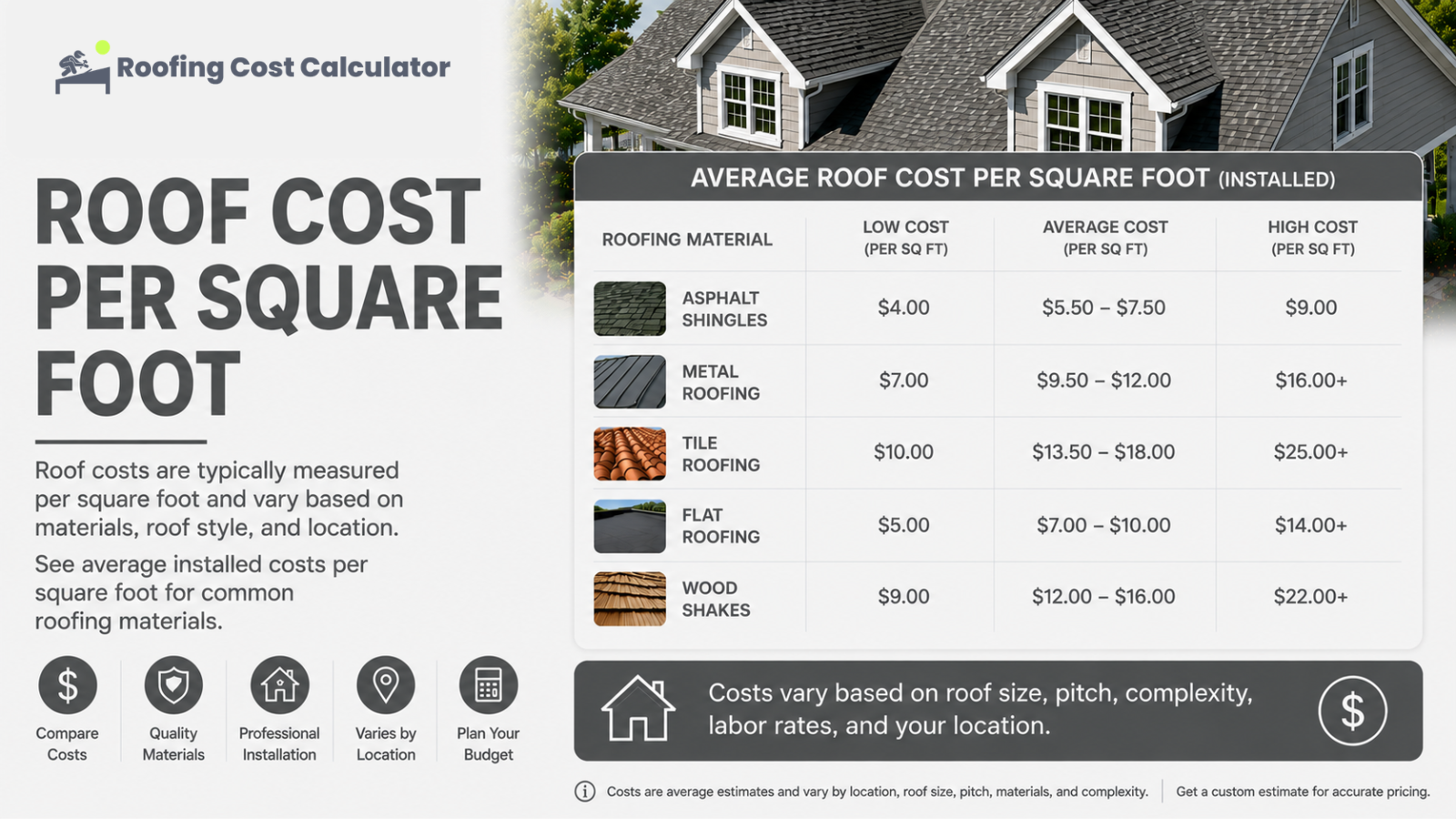
Average installed costs include:
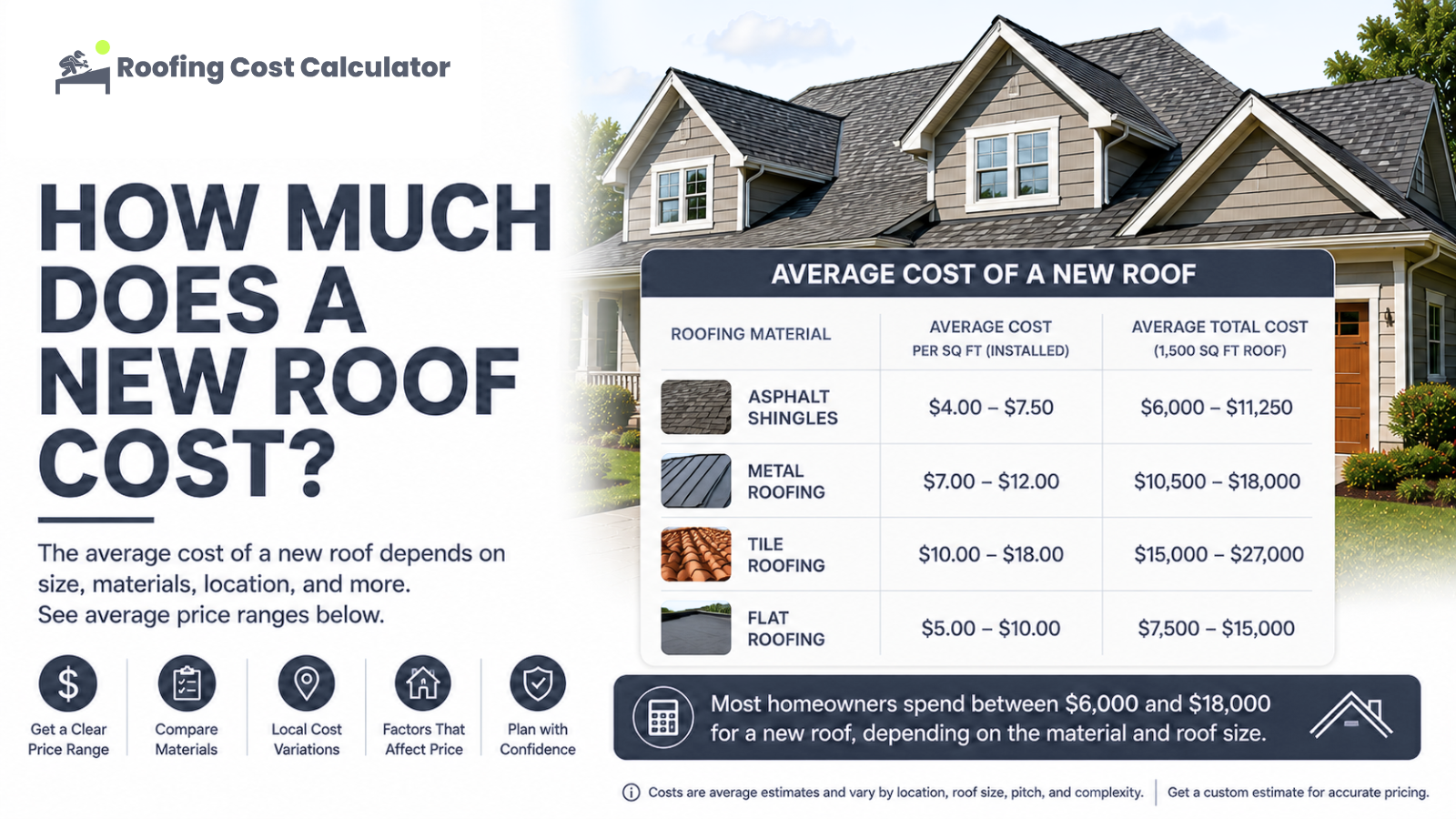
| Roofing Material | Typical Cost |
|---|---|
| Asphalt Shingles | $4–$8 / sq ft |
| Metal Roofing | $8–$18 / sq ft |
| Tile Roofing | $10–$22 / sq ft |
Selecting a different roofing material often has a greater impact on total cost than location alone.
Should You Compare Multiple Estimates?
Absolutely.
Even within the same city, contractor estimates may vary because of:
- Labor rates
- Material brands
- Warranty coverage
- Project scheduling
- Company overhead
Obtaining several written estimates allows homeowners to compare both pricing and value.
Factors That Increase Roof Replacement Costs
Your roof may cost more if it includes:
- Multiple roof levels
- Steep slopes
- Dormers
- Skylights
- Chimneys
- Complex valleys
- Extensive flashing
- Structural repairs
- Tear-off of multiple roofing layers
These factors increase both labor time and material requirements.
Planning Your Roofing Budget
Before contacting contractors, homeowners should:
- Measure the approximate roof size.
- Decide which roofing material they prefer.
- Research local permit requirements.
- Understand their insurance coverage, if applicable.
- Compare several estimates.
- Use a roofing cost calculator to estimate project costs.
Planning ahead often helps homeowners avoid unexpected expenses.
Why Use State-Specific Estimates?
National averages provide a useful starting point, but they cannot account for regional differences.
State-specific estimates help homeowners:
- Build a more realistic budget.
- Compare local contractor quotes.
- Understand regional labor trends.
- Plan future home improvements with greater confidence.
Using localized estimates generally provides a more accurate picture than relying on national averages alone.
Frequently Asked Questions
Why does roof replacement cost more in some states?
Labor rates, local building codes, permit requirements, climate, and material availability all influence regional roofing costs.
Are national roofing averages accurate?
National averages provide a helpful reference, but state and local pricing often differs significantly.
Should I compare estimates from several contractors?
Yes. Comparing multiple written estimates allows homeowners to evaluate pricing, workmanship, materials, and warranties.
Does roofing material affect state pricing?
Yes. Premium materials such as metal or tile generally increase total project costs regardless of location.
Can I estimate my roof replacement before requesting quotes?
Yes. A roofing cost calculator provides a useful starting point for estimating costs based on roof size, roofing material, and state.
Final Thoughts
Roof replacement costs vary across the United States because every region has different labor markets, building codes, weather conditions, and material costs. While national averages are useful, homeowners should always consider local pricing when planning a roofing project.
Our Roofing Cost Calculator uses state-specific pricing to provide more localized estimates than national averages alone. Simply enter your roof size, choose your preferred roofing material, and select your state to receive a personalized estimate before contacting roofing contractors.