 Roofing Cost Calculator
How Roofing Contractors Estimate Roof Replacement Costs (2026 Guide)
When homeowners begin planning a roof replacement, one of the first pricing terms they'll encounter is cost per square foot. Roofing contractors frequently estimate projects using the roof's square footage because it provides a simple way to calculate material requirements, labor, and overall project costs.
However, the cost per square foot is not a fixed number. The final price depends on the roofing material you choose, your roof's design, labor rates, your location, and several other factors.
Understanding how roofing costs are calculated can help you compare contractor estimates more confidently and develop a realistic budget before your project begins.
This guide explains average roofing costs per square foot, what influences pricing, and how homeowners can estimate the cost of a new roof.
Quick Answer
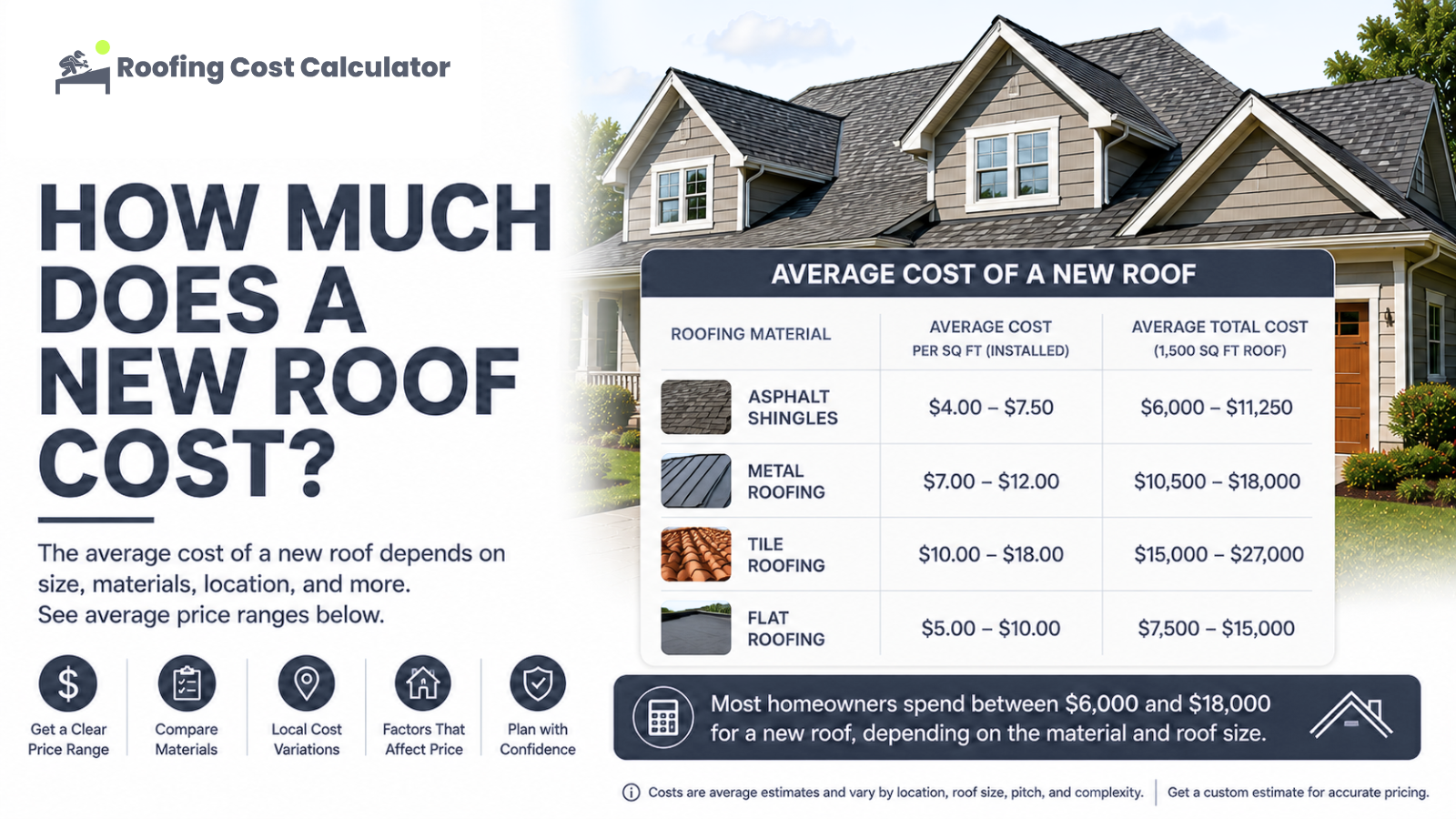
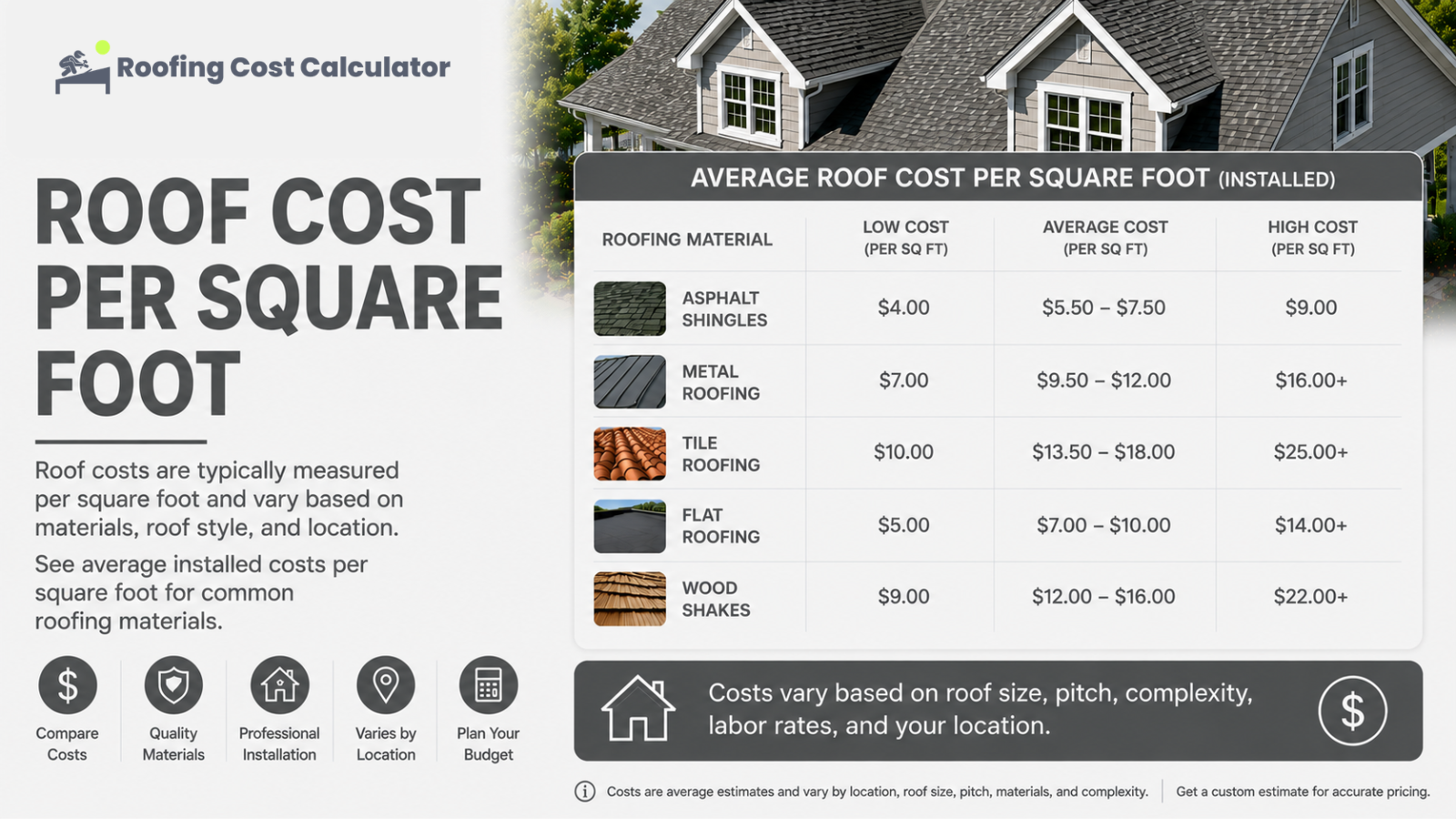
In 2026, residential roof replacement typically costs between $4 and $12 per square foot installed, depending on the roofing material and project complexity.
Typical ranges include:
| Roofing Material | Installed Cost per sq ft |
|---|---|
| Asphalt Shingles | $4–$8 |
| Metal Roofing | $8–$18 |
| Tile Roofing | $10–$22 |
These estimates include both materials and professional installation.
What Does "Cost Per Square Foot" Mean?
Roofing contractors often estimate projects based on the total roof area rather than the home's living area.
The total roof area includes every roof surface, including:
- Main roof sections
- Garages
- Porches
- Dormers
- Overhangs
Because roofs have slopes and angles, the actual roofing surface is usually larger than the home's floor area.
Average Roofing Cost by Roof Size
Using typical residential pricing:
| Roof Size | Estimated Cost |
|---|---|
| 1,000 sq ft | $4,000–$12,000 |
| 1,500 sq ft | $6,000–$18,000 |
| 2,000 sq ft | $8,000–$24,000 |
| 2,500 sq ft | $10,000–$30,000 |
| 3,000 sq ft | $12,000–$36,000 |
Actual costs depend on roofing material, labor, and local conditions.
Why Roofing Prices Vary
Roofing Material
The roofing material has the greatest effect on pricing.
Generally:
- Asphalt shingles have the lowest installed cost.
- Metal roofing costs more but offers a longer lifespan.
- Tile roofing has the highest installation cost among the three common residential materials.
Roof Pitch
Steeper roofs require:
- Additional safety equipment
- More installation time
- Greater labor effort
As roof pitch increases, installation costs usually increase as well.
Roof Complexity
Complex roofs require additional cutting and flashing.
Examples include:
- Multiple valleys
- Dormers
- Skylights
- Chimneys
- Intersecting rooflines
More complex roofs usually cost more per square foot.
Roof Accessibility
Easy-to-access roofs generally require less labor.
Limited access, landscaping obstacles, or multi-story homes may increase installation time and overall project cost.
Geographic Location
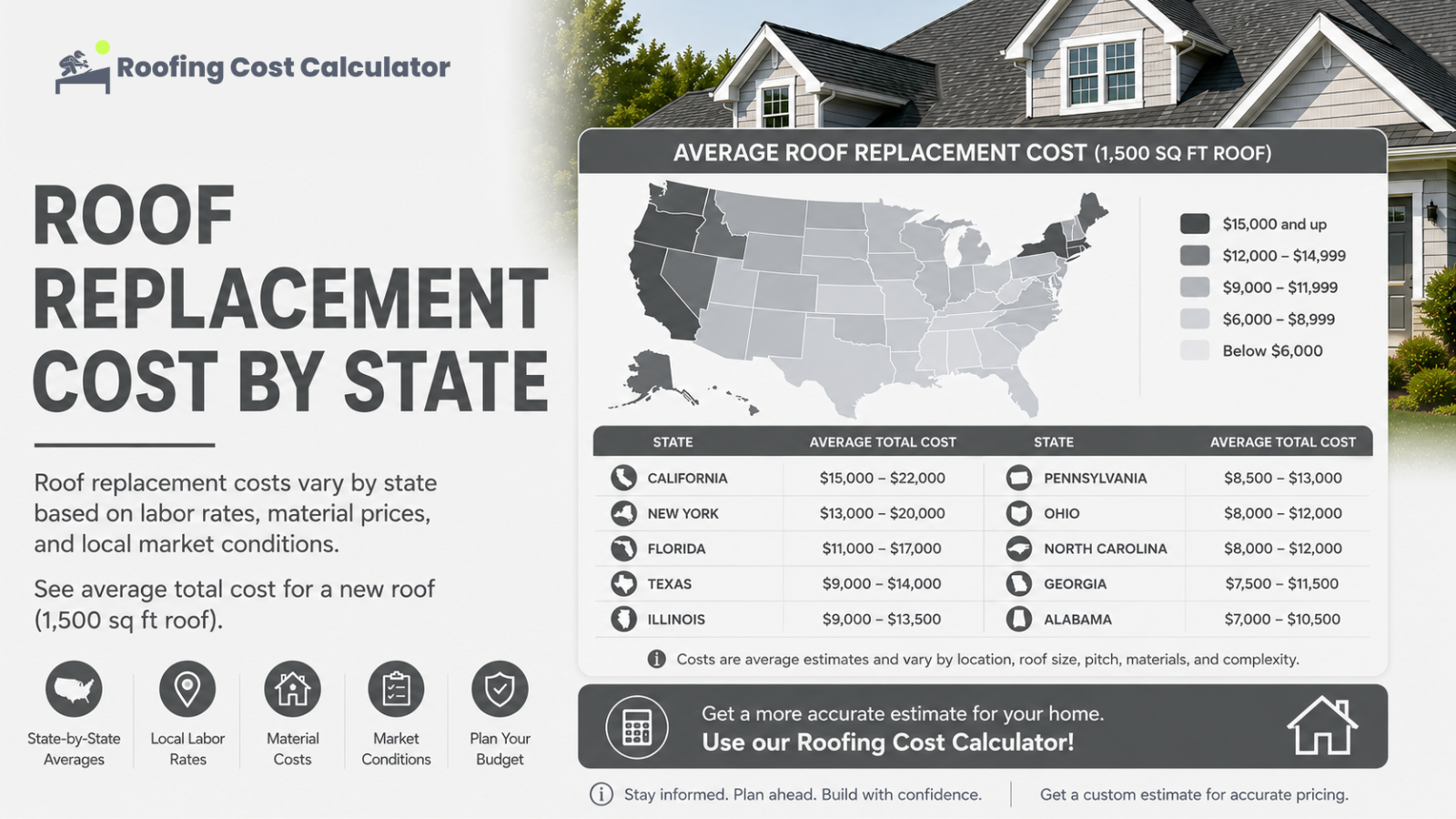
Roofing prices vary considerably throughout the United States.
Labor rates, permit fees, transportation costs, and local demand all influence regional pricing.
What's Included in the Price?
Most complete roofing estimates include:
- Roofing materials
- Underlayment
- Flashing
- Ridge vents
- Drip edge
- Labor
- Fasteners
- Cleanup
- Disposal of old roofing materials (when specified)
Always review your contractor's proposal carefully to understand exactly what is included.
Costs That May Not Be Included
Some roofing projects require additional work.
Examples include:
- Structural repairs
- Damaged roof decking
- Permit fees
- Skylight replacement
- Chimney repairs
- Additional ventilation
- Gutter replacement
These items may increase the total project cost.
Estimating Your Roof Cost
A simple estimate begins by:
- Determining the approximate roof size.
- Selecting a roofing material.
- Applying an estimated cost per square foot.
- Considering roof complexity and location.
While this provides a useful starting point, a professional estimate is needed for an accurate project cost.
How Contractors Measure Roofs
Professional roofing contractors may use:
- Physical measurements
- Roof inspection software
- Satellite imagery
- Aerial measurement services
- Digital roof reports
These methods help calculate the actual roofing surface rather than relying solely on house dimensions.
Ways to Reduce Roofing Costs
Homeowners may reduce project costs by:
- Comparing several contractor estimates.
- Planning ahead instead of waiting for emergency replacement.
- Choosing materials that fit both budget and climate.
- Maintaining the existing roof to avoid additional structural damage.
- Scheduling inspections before small problems become major repairs.
The lowest estimate is not always the best value. Experience, workmanship, and warranty coverage should also be considered.
Frequently Asked Questions
How much does roofing cost per square foot?
Most residential roof replacements cost approximately $4 to $12 per square foot installed, depending on the roofing material and project complexity.
Why is my roof larger than my house?
Roof measurements include sloped surfaces, overhangs, garages, and other roof sections. As a result, the total roofing area is usually greater than the home's floor area.
Does roof pitch affect pricing?
Yes. Steeper roofs generally require more labor, additional safety equipment, and longer installation times.
What roofing material is the most affordable?
Asphalt shingles are typically the least expensive residential roofing material to install.
How can I estimate my roofing cost?
Using a roofing cost calculator provides a practical starting point based on your roof size, roofing material, and location before requesting contractor quotes.
Final Thoughts
Understanding roofing costs per square foot helps homeowners compare estimates, build realistic budgets, and make informed decisions before replacing a roof. While national averages provide useful guidance, your final price will depend on roof size, material selection, labor rates, roof complexity, and local market conditions.
For a more personalized estimate, use our Roofing Cost Calculator. Simply enter your roof size, choose your preferred roofing material, and select your state to receive an estimate tailored to your project.