 Roofing Cost Calculator
A Step-by-Step Guide for Homeowners (2026)
Replacing a roof is one of the largest investments many homeowners will make, so it's natural to want a realistic estimate before contacting contractors. While only a professional inspection can provide an exact quote, understanding how roof replacement costs are calculated can help you build a reliable budget and compare estimates more confidently.
Roofing contractors don't simply multiply the size of your house by a fixed price. Instead, they evaluate many factors, including the actual roof area, roofing material, roof complexity, labor rates, and regional pricing.
This guide explains how roof replacement costs are estimated, what information you'll need, and how you can calculate an approximate project cost before requesting professional quotes.
Quick Answer
To estimate the cost of a new roof, you'll need to consider:
- Roof size
- Roofing material
- Cost per square foot
- Roof pitch
- Roof complexity
- Labor costs
- Existing roof removal
- Geographic location
Using these factors together provides a much more accurate estimate than relying on national averages alone.
Step 1: Estimate Your Roof Size
The first step is determining the approximate size of your roof.
Remember that roof size is usually larger than your home's floor area because roofs have slopes, overhangs, garages, and other architectural features.
For example:
| Approximate Roof Size | Typical Home |
|---|---|
| 1,000 sq ft | Small home |
| 1,500 sq ft | Medium home |
| 2,000 sq ft | Average family home |
| 2,500 sq ft | Large home |
| 3,000+ sq ft | Large or multi-story home |
A roofing contractor will calculate the actual roof area during an inspection, but these estimates provide a useful starting point.
Step 2: Choose Your Roofing Material
The material you select has a major impact on the total project cost.
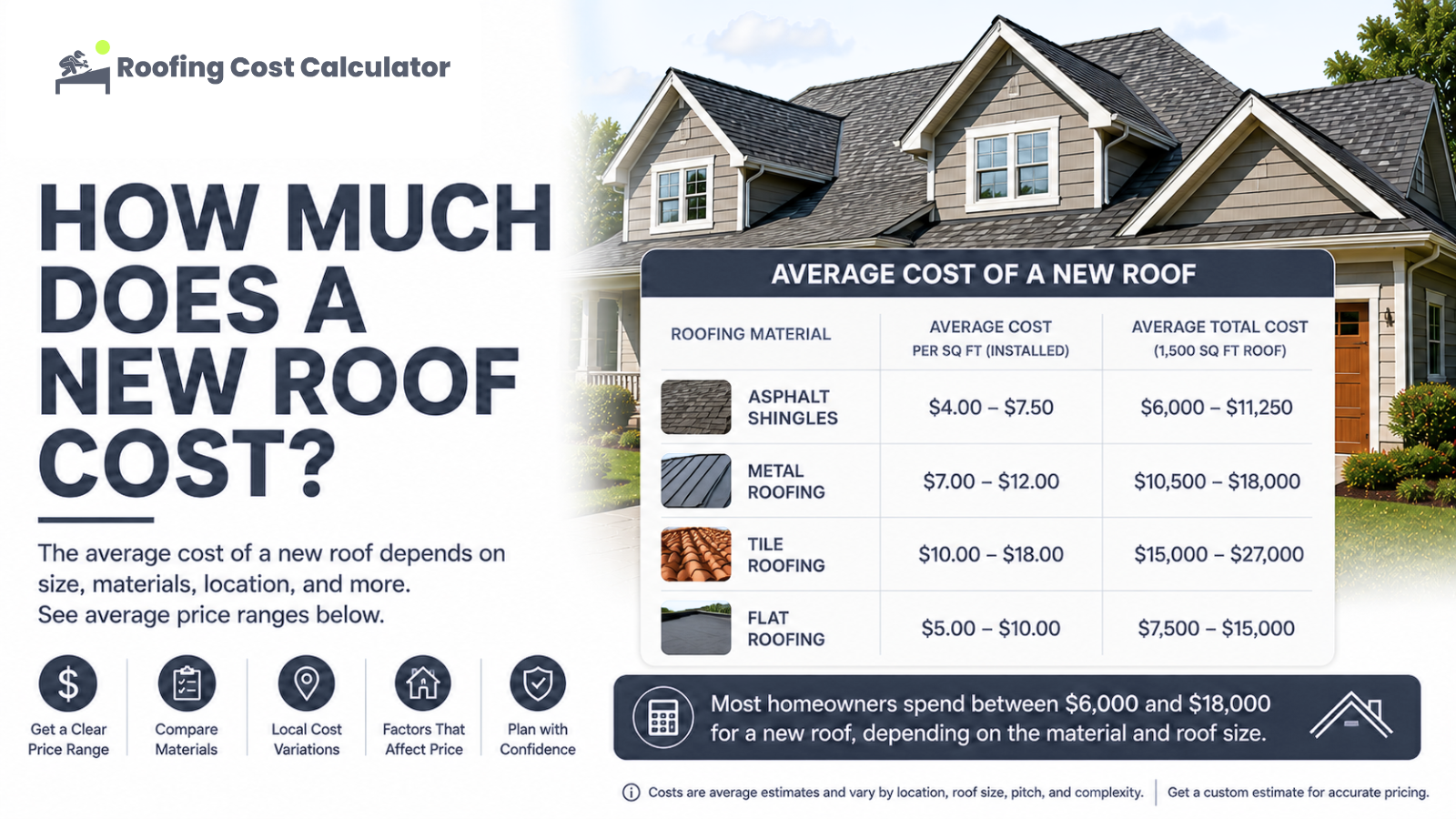
Typical installed costs include:
| Roofing Material | Estimated Cost per sq ft |
|---|---|
| Asphalt Shingles | $4–$8 |
| Metal Roofing | $8–$18 |
| Tile Roofing | $10–$22 |
Premium materials generally cost more initially but often provide longer service lives.
Step 3: Multiply by Cost Per Square Foot
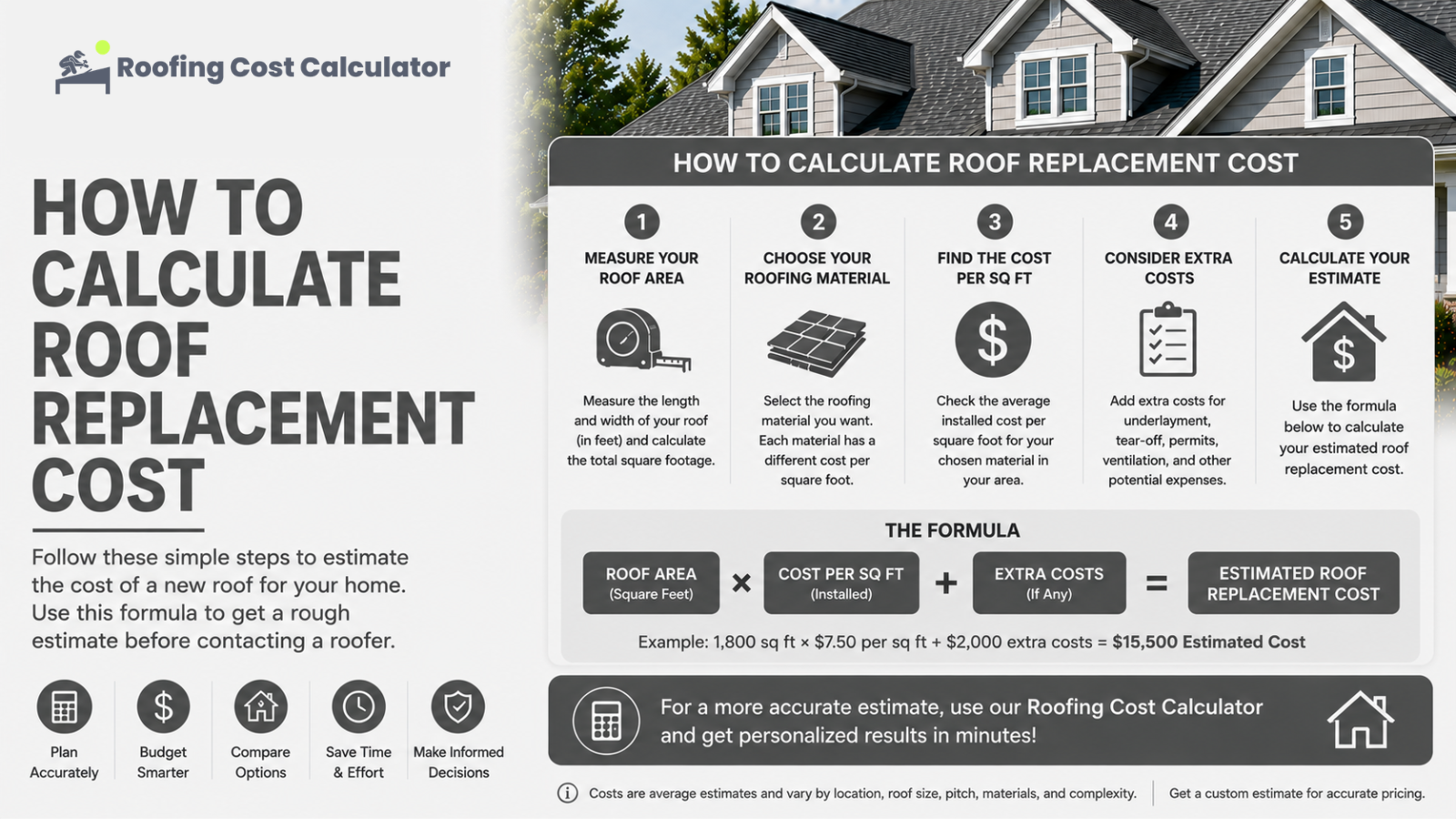
A basic estimate is calculated by multiplying:
Roof Size × Estimated Cost per Square Foot
For example:
A 2,000-square-foot roof with architectural asphalt shingles costing approximately $6 per square foot would produce an estimated project cost of:
2,000 × $6 = $12,000
Remember that this is only a preliminary estimate.
Step 4: Consider Roof Complexity
Not every roof is equally simple to install.
Features that increase labor include:
- Dormers
- Valleys
- Chimneys
- Skylights
- Multiple roof levels
- Steep roof sections
Complex roofs generally cost more because they require additional labor, flashing, and material cutting.
Step 5: Include Roof Tear-Off
If your existing roof must be removed, additional costs may include:
- Labor
- Disposal
- Dumpster fees
- Recycling charges (where applicable)
Removing multiple roofing layers often increases costs further.
Step 6: Consider Structural Repairs
During replacement, contractors occasionally discover hidden problems beneath the old roofing material.
Examples include:
- Rotten roof decking
- Water damage
- Damaged framing
- Mold
- Insect damage
Because these issues are difficult to identify before removing the old roof, homeowners should allow room in their budget for unexpected repairs.
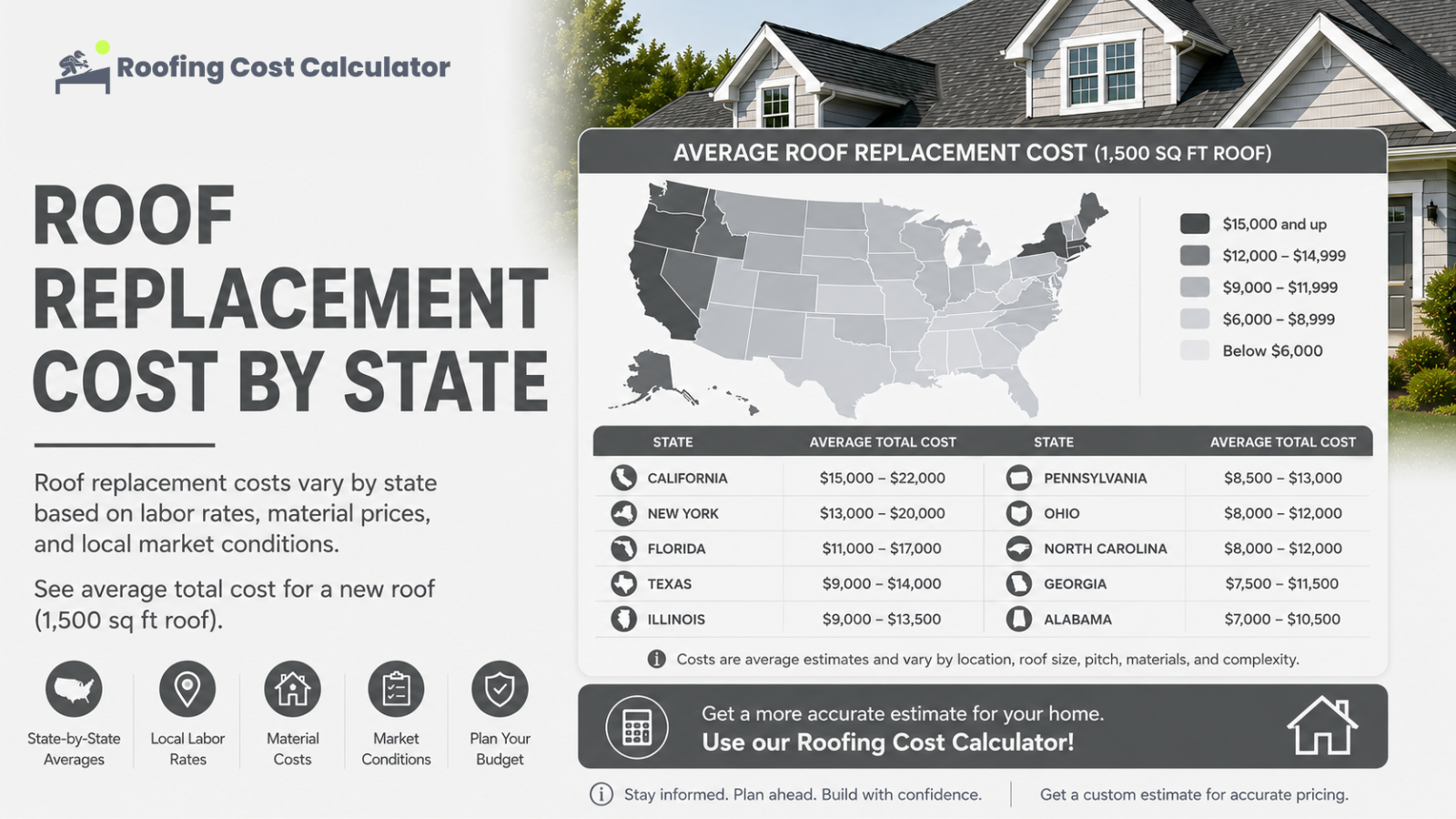
Step 7: Add Regional Pricing
Roof replacement costs vary throughout the United States.
Factors include:
- Local labor rates
- Cost of living
- Building codes
- Permit requirements
- Material transportation
- Contractor demand
Using state-specific estimates generally provides a more accurate budget than relying solely on national averages.
Additional Costs to Consider
Some projects include optional or required upgrades.
Examples include:
- Improved attic ventilation
- Flashing replacement
- Ridge vents
- Drip edge
- Ice and water barrier
- Skylight replacement
- Gutter replacement
Discuss these items with your contractor when reviewing estimates.
Why Estimates Can Differ
Homeowners are often surprised when contractor quotes vary.
Different estimates may reflect:
- Different roofing products
- Different labor rates
- Warranty differences
- Company overhead
- Project scheduling
- Included accessories
Comparing several written estimates helps you understand what each contractor is offering.
Why Use a Roofing Cost Calculator?
While manual calculations are helpful, an online calculator simplifies the process.
A roofing cost calculator can:
- Estimate costs based on roof size.
- Compare different roofing materials.
- Adjust pricing for your state.
- Provide immediate budget estimates.
- Help prepare before requesting contractor quotes.
It serves as a practical planning tool—not a replacement for a professional inspection.
Tips for Getting Accurate Estimates
To improve estimate accuracy:
- Measure your roof as accurately as possible.
- Select the roofing material you're most interested in.
- Consider your roof's complexity.
- Account for local pricing.
- Request multiple contractor quotes.
- Review each proposal carefully.
The more information you have, the easier it is to compare estimates fairly.
Frequently Asked Questions
Can I calculate roof replacement cost myself?
Yes. While you won't get an exact price, using your approximate roof size, roofing material, and local pricing provides a useful estimate for planning purposes.
Why is my roof larger than my home's square footage?
Roofs include sloped surfaces, overhangs, garages, and other sections that increase the total roofing area beyond the home's interior floor area.
Does roof complexity affect pricing?
Absolutely. Features such as dormers, skylights, chimneys, and steep slopes increase both labor and material requirements.
Why do contractor estimates vary?
Differences in materials, labor rates, warranties, and project scope often result in different prices.
What's the easiest way to estimate roof replacement cost?
A roofing cost calculator provides one of the quickest ways to estimate project costs based on your home's size, roofing material, and state.
Final Thoughts
Calculating roof replacement costs doesn't have to be complicated. By understanding the factors that influence pricing—including roof size, roofing material, labor, roof complexity, and regional costs—you can develop a realistic budget before contacting contractors.
Our Roofing Cost Calculator simplifies the process by combining these variables into an easy-to-use estimate tailored to your project. While it's not a substitute for a professional quote, it's an excellent starting point for planning your next roof replacement.